








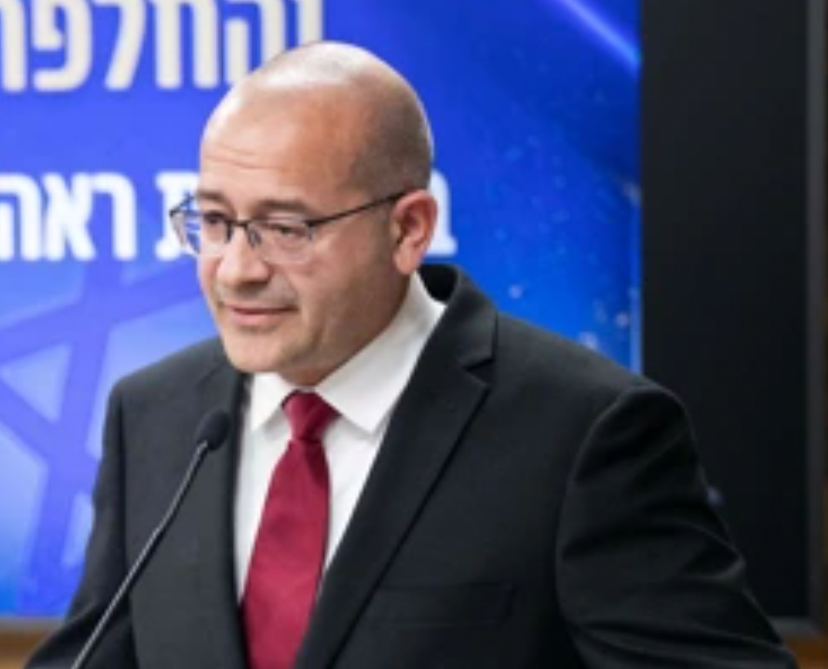
Israel’s spy chief pressed the United States to join it in fresh strikes on Iran during a visit to Washington last week, according to two people briefed on the meetings.
Roman Gofman, the director of Mossad, met CIA director John Ratcliffe and other Trump administration officials, the sources said, and also travelled to Miami to see Steve Witkoff, the president’s special envoy, who has been jointly leading US diplomacy on Iran and Ukraine. In the meetings, Gofman set out Israeli intelligence on Iran, including material relating to its nuclear programme.
The visit came days after Trump said on 9 November that he would hold off on strikes against Iran, following a meeting with the prime minister of Qatar. Doha has been mediating indirect talks between Washington and Tehran aimed at avoiding a return to full-scale war, and Gulf leaders have separately urged Trump not to attack, fearing that Iran would retaliate against Gulf Arab states.
Gofman was not the only Israeli voice making the case in Washington. Around the same time, Ron Dermer, a former minister and close confidant of Benjamin Netanyahu, was also in the United States advocating for a joint attack in meetings with administration officials, the two sources said. They described the outreach as part of an effort by Netanyahu to persuade Trump to launch a new attack on Iran, with the Israeli prime minister said to believe the opportunity is narrowing. One source said Israel was concerned the United States could begin drawing down its substantial military deployment in the region before the end of the year.
Netanyahu is serving as caretaker prime minister after an inconclusive election last month, and political rivals have accused him of seeking to escalate the conflict to shore up his weakened standing. He denies the charge.
A White House official said Trump believed Washington’s economic pressure campaign had been so “devastating” to Iran that there was no need for “major combat operations”, while adding that the president kept all options open to ensure Iran never obtained a nuclear weapon. The official did not comment on any meeting between Gofman and Ratcliffe. The CIA also declined to comment, and Netanyahu’s office, which handles media inquiries for Mossad, did not immediately respond to a request for comment.
The war began on 28 February with a joint US-Israeli attack that killed Iran’s top leader and prompted Iranian strikes on US-allied Gulf Arab states. A fragile ceasefire has formally held since April, but the two sides have repeatedly exchanged fire, including this week, when the United States bombed an Iranian island and Iran launched attacks on Kuwait and Bahrain. Trump has alternated in recent weeks between threatening new strikes and winding down hostilities, and US officials say he does not appear to have made up his mind about how to resolve a conflict that has become politically unpopular.
Israel’s own military assesses that Iran does not pose an imminent threat to Israel, meaning immediate military action is not necessary, the two sources said. Two European officials added that, although Iran’s economy was under pressure, there was no indication the government was close to collapse, and they questioned what a renewed offensive could achieve.
This account rests on a single Reuters report based on anonymous sources. None of the governments involved has confirmed what was said in the meetings.
Sources: Reuters, “Israeli spy chief lobbied for joint Iran strikes on US visit, sources say”, 18 November 2026 — https://www.reuters.com/world/middle-east/israeli-spy-chief-lobbied-joint-iran-strikes-us-visit-sources-say-2026-11-18/