








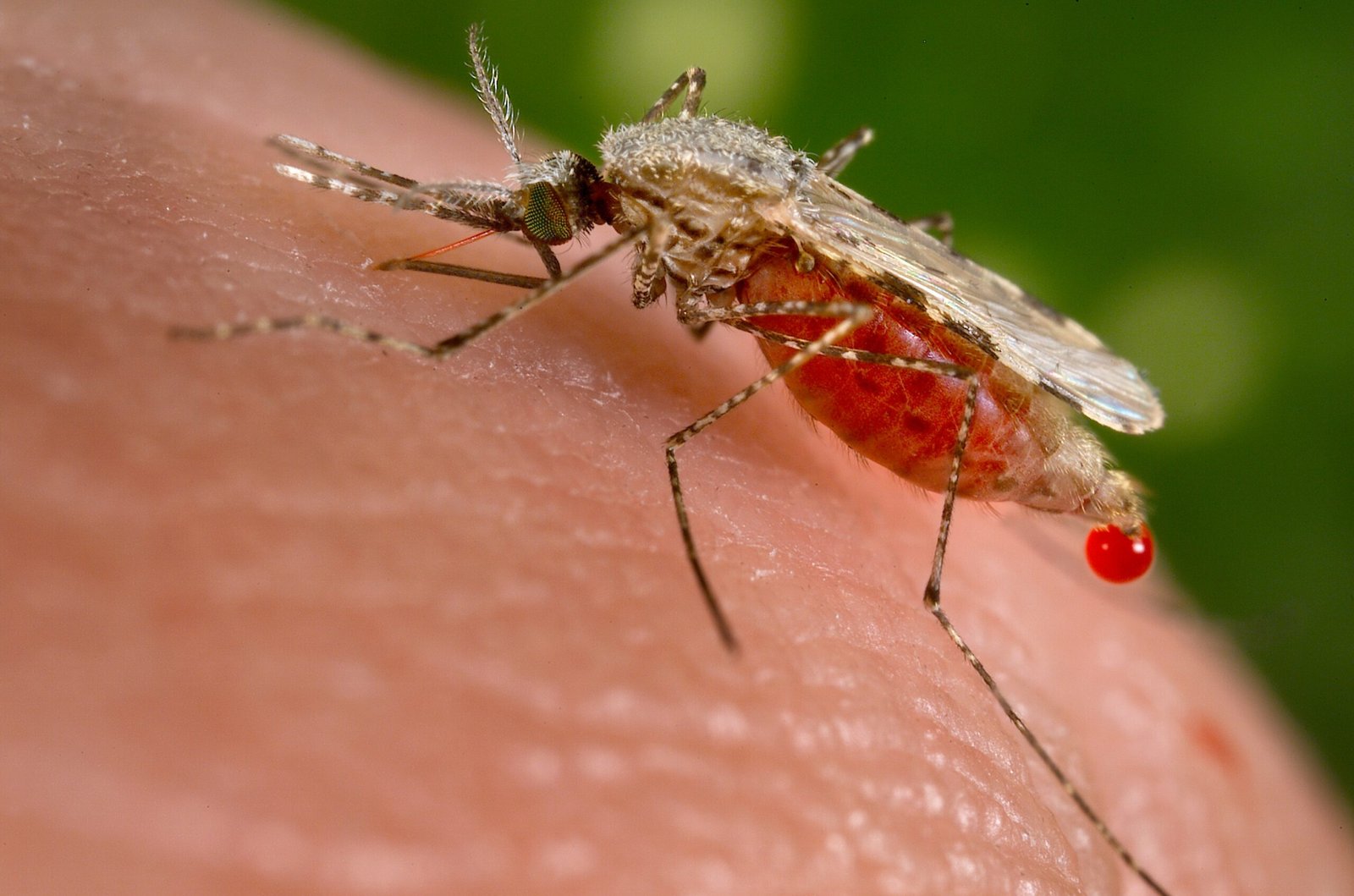
Malaria cases across sub-Saharan Africa could climb to 422 million a year if the bed nets, indoor spraying and preventive treatment that hold the disease in check were withdrawn, researchers have warned. The figure, published today in Nature Communications, represents a 131 per cent increase on current estimates — a measure of how much of the progress against malaria depends on interventions that are now under funding strain.
The team, led by researchers at the University of Copenhagen and Imperial College London, with colleagues at the Gates Foundation’s Institute for Disease Modelling, built a new mapping method that reads environmental conditions from 30-metre Landsat 8 satellite imagery. A contrastive representation-learning framework — a form of machine learning — turned the satellite pictures into environmental profiles, which were then fed into a Bayesian hierarchical model to estimate transmission potential. The authors say the approach predicts malaria risk more accurately than existing methods.
Applied to contemporary population data, the model estimates 422 million cases a year across sub-Saharan Africa if major interventions were withdrawn, with a wide uncertainty range of 275 million to 582 million. The World Health Organization estimated about 263 million malaria cases worldwide in 2023, with sub-Saharan Africa accounting for around 95 per cent of them, and about 597,000 deaths. Progress has stalled in recent years as funding has tightened: in April 2025 the WHO reported that more than 40 per cent of planned campaigns to distribute insecticide-treated nets, intended to reach 425 million people, were delayed or at risk of disruption.
The study also maps where disruption would hit hardest, showing which areas are most dependent on sustained intervention coverage. The authors say the findings quantify the structural vulnerability of malaria control gains — the hard-won reductions of the past two decades rest on programmes that must keep running.
The central estimate in this article comes from a single peer-reviewed study published today, and modelling of this kind carries wide uncertainty, as the 275–582 million range shows. The WHO figures are background context and have not been independently verified by The Hourly News.
Sources: Nature Communications — “Estimating malaria burden in sub-Saharan Africa under intervention disruption using satellite-derived representations” (https://www.nature.com/articles/s41467-026-79054-y); World Health Organization malaria estimates.