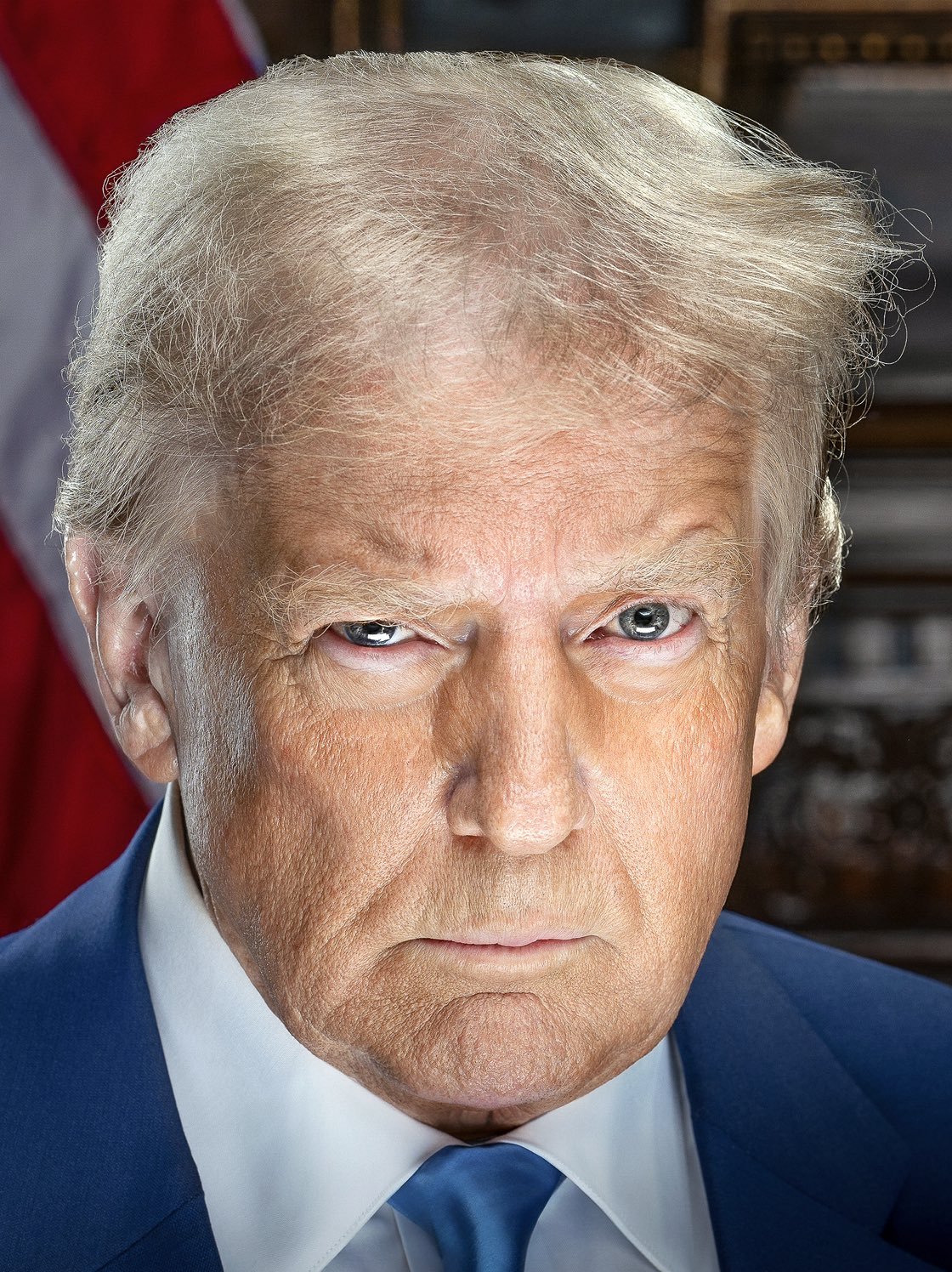







Donald Trump has said any agreement with Iran must be permanent, so that no future American president can allow Tehran to acquire a nuclear weapon.
Speaking by telephone to Fox News on Saturday, the president said he was determined to secure a lasting deal rather than one a successor could unwind.
“If we have an incompetent president in four years, or 15 years, or 20 years, I’m going to make a deal that is going to be permanent. I’m not going to let somebody allow them to have a nuclear weapon,” Mr Trump told anchor Kayleigh McEnany on “Saturday in America”.
He said he had never been particularly interested in regime change in Iran, while describing the country’s new leadership as more reasonable than its predecessors but very difficult to negotiate with.
“I never cared too much about the [Iranian] regime. … I’ve taken out two regimes already. I’ve taken out the first group, the second group, we’re dealing with the third group; so you can call it the ultimate regime change,” he said. “Probably these people are more reasonable, and they’re very difficult. I mean we make a deal and they break it the next day.”
The remarks came a day after Mr Trump told a White House press conference, on his return from China, that Tehran wanted an agreement but not one that was acceptable to him. “We want to make a real deal, not a fake deal. … They’ve been bullshitting people for 51 years,” he said, with Vice President JD Vance and Secretary of State Marco Rubio standing behind him.
Mr Vance, asked whether the war against Iran earlier this year had been worth it after the Democrats won the Senate in the midterm elections, said the goal of keeping Iran from obtaining a nuclear weapon was “absolutely what we need to be doing”. Mr Trump said he agreed with Mr Vance’s assessment and would “do it again” if asked, because Iran could not be allowed to have a nuclear weapon.
Iran’s foreign minister, Abbas Araghchi, told an Iranian newspaper on Saturday that Tehran remained open to an agreement with Washington, Reuters reported, but that giving up its enriched uranium was a “red line” and that a fair solution could still be reached. His deputy, Kazem Gharibabadi, said after talks with a Qatari delegation in Tehran that Iran would not agree to transfer its enriched uranium abroad under any circumstances.
Negotiations remain stalled. Axios reported on Friday that US special envoys Steve Witkoff and Jared Kushner met senior Qatari officials in Berlin on 19 November to discuss terms for resuming the ceasefire between the US and Iran.
The diplomatic activity comes amid reports that Washington and Israel are weighing a renewed military offensive against Iran. CBS News reported on Friday, citing sources familiar with the discussions, that Jerusalem was increasingly concerned about Tehran rebuilding its ballistic missile production and moving military and nuclear infrastructure underground. Mr Trump told Israel’s Channel 12 on Thursday that he was “not rushing into any decision”, adding: “We will see what happens after the beginning of the year.” That report of a possible renewed offensive rests on unnamed sources and has not been confirmed by either government.
On Saturday, US Central Command marked 130 consecutive days of its blockade of Iran, and dismissed as false an Iranian Revolutionary Guard Corps claim that its forces had struck a US F-16 fighter jet and forced it to make an emergency landing. “All US military fighter jets in the Middle East are safe and accounted for,” Central Command said.
In a joint statement on Thursday, the US, Britain, France and Germany called on Iran to restore international inspections of its nuclear facilities, warning that the whereabouts of its highly enriched uranium stockpile remained unverified after a year and a half without full monitoring by the International Atomic Energy Agency.
Sources: Fox News interview as reported by JNS; Reuters; CBS News; Axios; US Central Command.