







Record rainfall has swamped cities across northern Peru and coastal Ecuador, killing at least 34 people in Ecuador and leaving thousands of families wading through waist-high water as an exceptionally strong El Niño drenches South America’s Pacific coast.
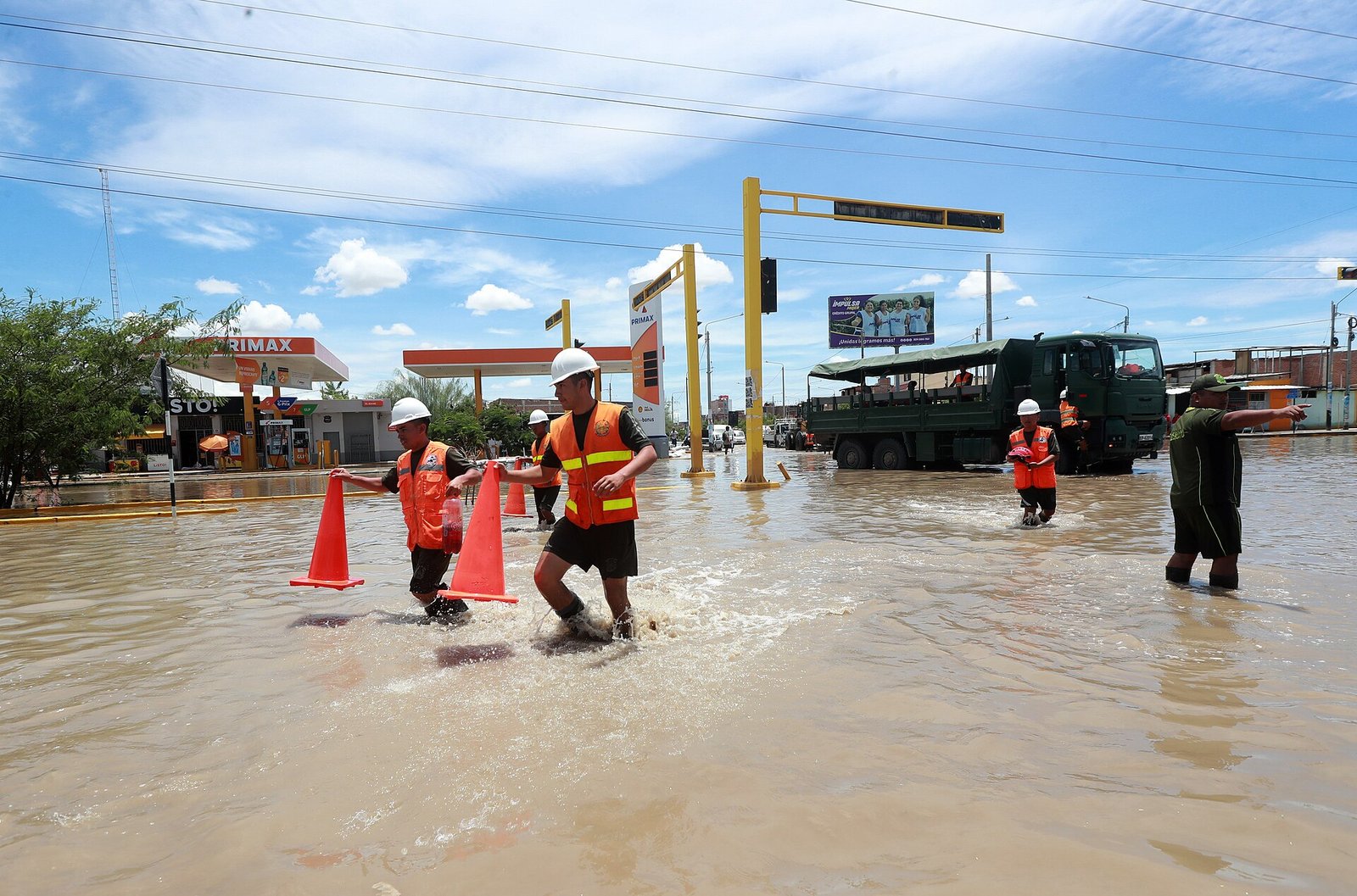
In Piura, the regional capital of north-western Peru, streets filled with waist-high water after 12 hours of heavy rain that began on Thursday. Around 2,000 families have been affected, according to preliminary reports from the National Institute of Civil Defense. One weather station in the city recorded 143 millimetres of rain in 24 hours, an all-time high for the area.
Rescue crews pulled 400 people from flooded homes in Piura, and about a dozen residents were still reported trapped. Floodwater forced the relocation of patients from the respiratory infections ward at the city’s José Cayetano Heredia Hospital, with the most serious cases moved to intensive care. The Plaza de Armas and many businesses and public buildings were also affected.
“This is just the first heavy rain from the El Niño phenomenon and look at how it’s treating us,” resident Pierre Garavito told reporters, as a refrigerator bobbed in the water inside his home in Piura’s Santa Margarita neighbourhood. “I’ve lost everything.”
Peru’s armed forces have deployed personnel and pumping equipment to clear the water, though some residents complained of delays, with machines reportedly stopping for lack of fuel. Peru’s national meteorology service warned that moderate to heavy rainfall could continue in parts of the region for the following four days, and red alerts for Piura and the neighbouring Tumbes region have been extended through Monday.
Further north, the Tumbes River swelled to nearly double its danger threshold and flooded part of the Pan-American Highway, Peru’s main north-south road. The Peruvian navy also blamed El Niño for heavy ocean swells that damaged infrastructure along the country’s Pacific coast and forced the temporary closure of dozens of ports.
President Keiko Fujimori postponed a trip to Colombia to deal with the crisis and said she plans to travel to the affected areas.
Across the border in Ecuador, the National Secretariat for Risk Management reported on Friday that 34 people had died and 47,000 had been affected by heavy rains linked to El Niño. Two of the victims died on Friday when a mudslide struck their homes. In the western city of Manta, residents waded through chest-deep water and floated on mattresses after two rivers broke their banks, while families were evacuated in Esmeraldas province after two more rivers overflowed.
Landslides and washouts have damaged more than 50 road sections across Ecuador and closed at least 10 routes, including the main highway connecting Quito to the Pacific coast. The severe weather also disrupted preparations for local elections on Sunday, forcing officials to relocate at least 21 polling stations.
Peru and Ecuador are among several Latin American countries that have declared national emergencies because of El Niño, which involves a rise in sea surface temperatures in the central and eastern equatorial Pacific that changes wind and rain patterns around the world. This year’s episode is projected to be the strongest on record.
On Friday, United Nations agencies warned that hunger was set to worsen significantly in 16 global hotspots over the coming six months, mainly because of armed conflict and extreme weather events, including El Niño. The Food and Agriculture Organization and the World Food Programme said Sudan, South Sudan, Somalia, northern Nigeria and Yemen face the greatest danger.
Sources: Al Jazeera (https://www.aljazeera.com/news/2026/11/28/el-nino-linked-deluges-flood-cities-in-peru-ecuador); Associated Press, via reporting on the Piura rainfall record and rescue figures.