








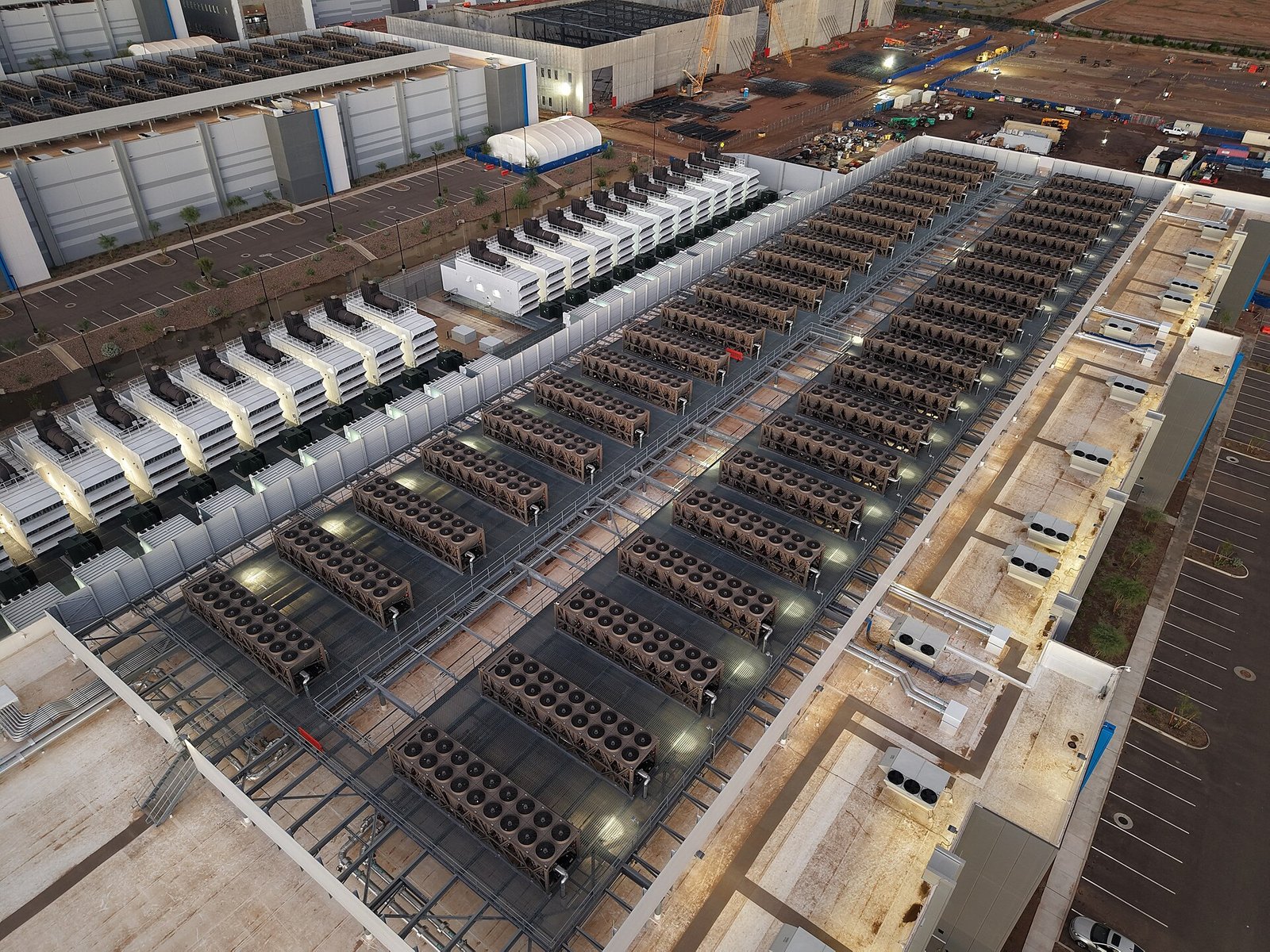
Until a few years ago, Susumu Goto’s house in Kashiwa, north-east of Tokyo, looked out on a grassy field where neighbours played baseball and football. Today, two 31-metre-tall data centres owned by Hong Kong-based asset manager PAG loom in front of it. At least once a month, tests of the backup generators send black fumes into the sky and the smell of burning fuel hangs in the air.
“Every morning when I step outside, my whole view is swallowed up by the buildings,” said Goto, a 76-year-old retired car mechanic. “It feels oppressive. Seeing that day after day takes a real mental toll.”
Goto is not alone. About 60 per cent of Japan’s data centres are in and around the densely populated Tokyo metropolitan area, home to about 37 million people, and growing opposition from residents has prompted a review of an industry the government is counting on to drive economic growth.
In Tokyo’s Koto ward, near Tokyo Bay, Ayano Sasaki worries about what will happen once Singapore-based Empyrion Digital finishes its 51-metre data centre, due for completion in 2029. Her apartment building stands 3.7 metres from the site of the planned facility, where 1.2 million litres of heavy oil will be buried underground. The area is designated as both flood-prone and among the capital’s highest earthquake-risk zones.
“It’s incredible that something like this can be built here without any special regulations,” said Sasaki, a 37-year-old nurse.
Residents in Koto have filed appeals with Tokyo demanding binding rules on noise, heat, fuel safety and the placement of data centres. The petitions are awaiting deliberation in the metropolitan assembly. In Inzai, another city near Tokyo, residents are suing the city and a building inspection firm, arguing that a project by Britain’s Colt Data Centre Services was wrongly approved as an office rather than a factory or warehouse.
Loose regulation and political stability have made Japan a magnet for data centre investment even as other countries have put administrative brakes on the industry. Consultancy JLL expects Japan’s data centre market, measured by revenue, to grow to $33.4 billion by 2030 from $23.4 billion in 2024.
The government is now drafting an action plan aimed partly at heading off disputes, due to be finalised by the end of the year. The industry group Japan Data Center Council, as well as Tokyo and several other local governments, have also drawn up best-practice guidelines this year as data centres have crept ever closer to homes.
The backlash is not unique to Japan. Local opposition blocked or delayed around 120 data centre projects in the United States worth nearly $200 billion in the first half of 2026, according to Data Center Watch, and residents from Tokyo’s suburbs to the Australian outback are now pushing back against an AI build-out that markets have been counting on.
Sources: Reuters, “Japan’s data center boom faces growing revolt from urban residents” (26 November 2026), https://bworldonline.com/world/2026/11/26/796892/japans-data-center-boom-faces-growing-revolt-from-urban-residents/ — Note: this report is single-sourced to Reuters and has not been independently verified.