









Iran’s currency has fallen through 3 million rials to the US dollar for the first time, a grim milestone in a slide driven by war, sanctions and inflation running close to 90 per cent.
The dollar traded at 3 million rials in Tehran’s exchange shops on Sunday, according to the Associated Press, with free-market trackers putting the rate at about 3.04 million rials by midday. It is the first time the currency has crossed the threshold. On Saturday the dollar was quoted at about 2.99 million rials, up from 2.94 million on Friday, according to the tracking site Bonbast, cited by Reuters.
The speed of the fall is stark. The dollar cost about 1.15 million rials a year ago, and about 1.6 million in early April, meaning the rial has lost roughly 45 per cent of its value in eight months. It crossed 1 million rials in March 2025 and 2 million in August. At the time of the 2015 nuclear deal, a dollar bought about 32,000 rials.
Iran’s central bank still quotes an official rate of about 1.96 million rials to the dollar, but it is the free-market rate that most Iranians actually pay, and the gap between the two has become a measure of the pressure on households. Savings held in rials are evaporating, and imported goods — from medicines to machinery — grow more expensive with each new low.
The figures behind the slide are severe. Consumer prices in October were 88.7 per cent higher than a year earlier, according to Iran’s Statistical Centre, with the 12-month average at 76.8 per cent. Food prices rose 112.6 per cent over the same period, meaning the cost of feeding a family has more than doubled in a year.
Iran’s economy has been battered by a nine-month war with the United States and Israel, an American naval blockade of its ports and expanded US sanctions on its financial sector and energy exports. The central bank tried to steady the currency in October, letting each citizen buy up to $10,000 at close to the market rate, restricting cryptocurrency exchanges and banning bank loans for buying gold and foreign currency. The measures bought only a few weeks of calm.
President Masoud Pezeshkian has described the economic squeeze as a “silent war”. A central bank aide called the rial’s fall temporary last month and blamed what he called false American predictions of economic collapse. But one Tehran-based economist has warned that 4 million rials to the dollar by the end of the Iranian year in March is not an unlikely scenario if the current pressures continue.
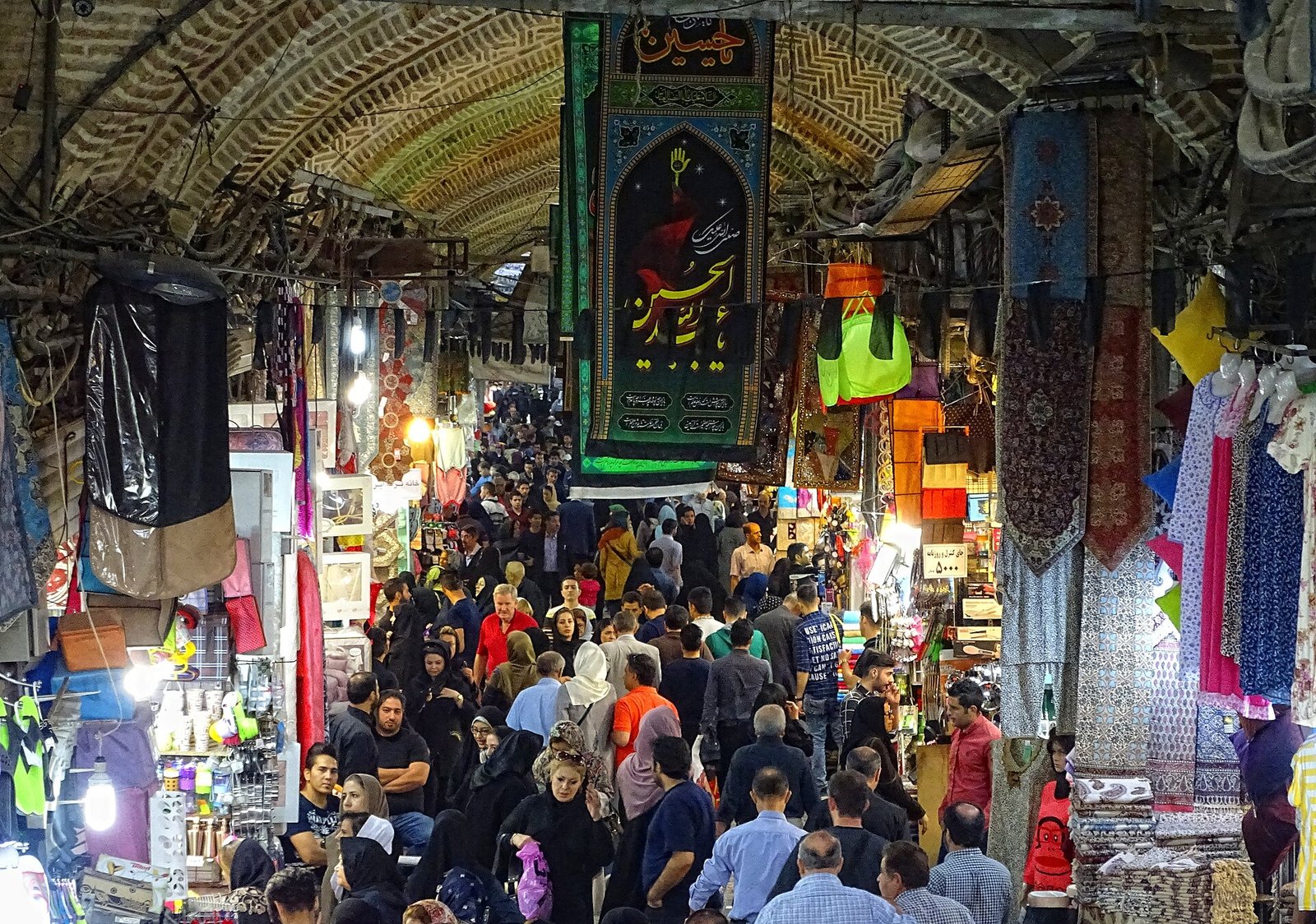
For ordinary Iranians, the milestone is less a number than a daily reality: wages that buy less each week, savings that shrink in the drawer, and a currency that no longer holds its value from one month to the next.
Sources: Associated Press (https://apnews.com) and Reuters (https://www.reuters.com) reporting on the rial’s fall, the Bonbast and Alanchand free-market trackers, and Iran’s Statistical Centre inflation figures for October 2026.