








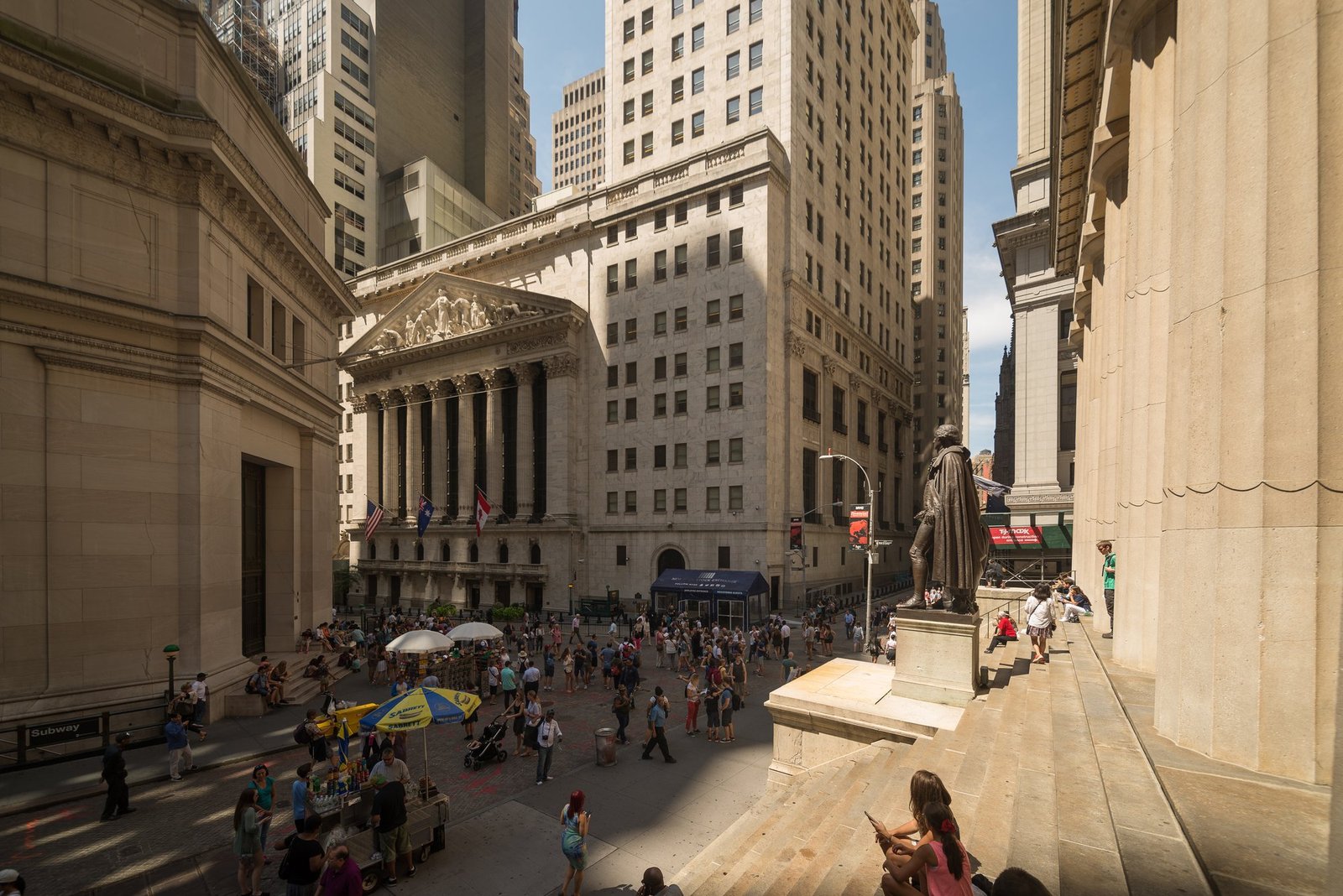
Wall Street ended a bruising week split on Friday, with technology shares leading a partial rebound after Thursday’s punishing sell-off — but all three major American indexes still finished the week in the red.
The Nasdaq Composite rose 1.1 per cent, or 264.43 points, to 24,579.42, while the S&P 500 added 0.3 per cent, or 23.13 points, to 7,376.86. The Dow Jones Industrial Average went the other way, falling 0.5 per cent, or 237.33 points, to 51,285.73.
The weekly figures were considerably worse. The Nasdaq fell 3.4 per cent on the week, its fourth consecutive weekly decline, according to Reuters. The S&P 500 lost 2.7 per cent — its worst week since the market disruption around President Donald Trump’s tariff announcements in April 2025, according to the Associated Press — while the Dow fell 0.9 per cent and the Russell 2000 lost 2.1 per cent.
Friday’s bounce only partly repaired the damage from Thursday, when the Nasdaq plunged 5.5 per cent, or 1,421.52 points, to 24,315, entering correction territory after falling more than 10 per cent from its October peak. About $2.5 trillion was wiped from the Nasdaq’s market value in a single session. The Dow lost 3.4 per cent on Thursday and the S&P 500 fell about 4.4 per cent, with all 11 of its major sectors finishing lower.
Chipmakers led Friday’s recovery. The Philadelphia Semiconductor Index climbed 4.2 per cent after falling more than 12 per cent on Thursday, Advanced Micro Devices gained about 11 per cent, and Nvidia advanced 2.8 per cent after falling 9.3 per cent and 3.2 per cent in the previous two sessions, according to the Associated Press.
The turbulence followed the Democratic Party’s victories in the US midterm elections on 3 November, which gave the party control of both chambers of Congress. Investors began reassessing the outlook for artificial intelligence investment, data-centre construction and federal regulation, while questioning whether the enormous capital spending on AI infrastructure will generate returns to justify current technology valuations. Voters also approved more than 40 ballot measures restricting data centres, CBS News reported, citing research by political consulting firm Redbud Consulting.
Friday’s stronger-than-expected October jobs report — 165,000 new jobs — added a second concern. Federal funds futures put the probability of an interest-rate rise at the Federal Reserve’s 8–9 December meeting at about 80 per cent, according to LSEG data cited by Reuters, and higher borrowing costs weigh on growth stocks and on the financing of data centres and computing equipment.
Attention now turns to Tuesday’s October consumer price figures and earnings from CoreWeave, Applied Materials and Cisco Systems, which should offer fresh evidence on demand for AI infrastructure. Marvin Loh, senior global macro strategist at State Street, told Reuters the market faced continuing uncertainty about regulatory policy and the potential slowdown in data-centre investment. The S&P 500 remained 7.8 per cent higher for 2026 at Friday’s close, according to the Associated Press, but the Nasdaq was still in correction territory.
Sources: Associated Press; Reuters; CNN Business; CBS News.