








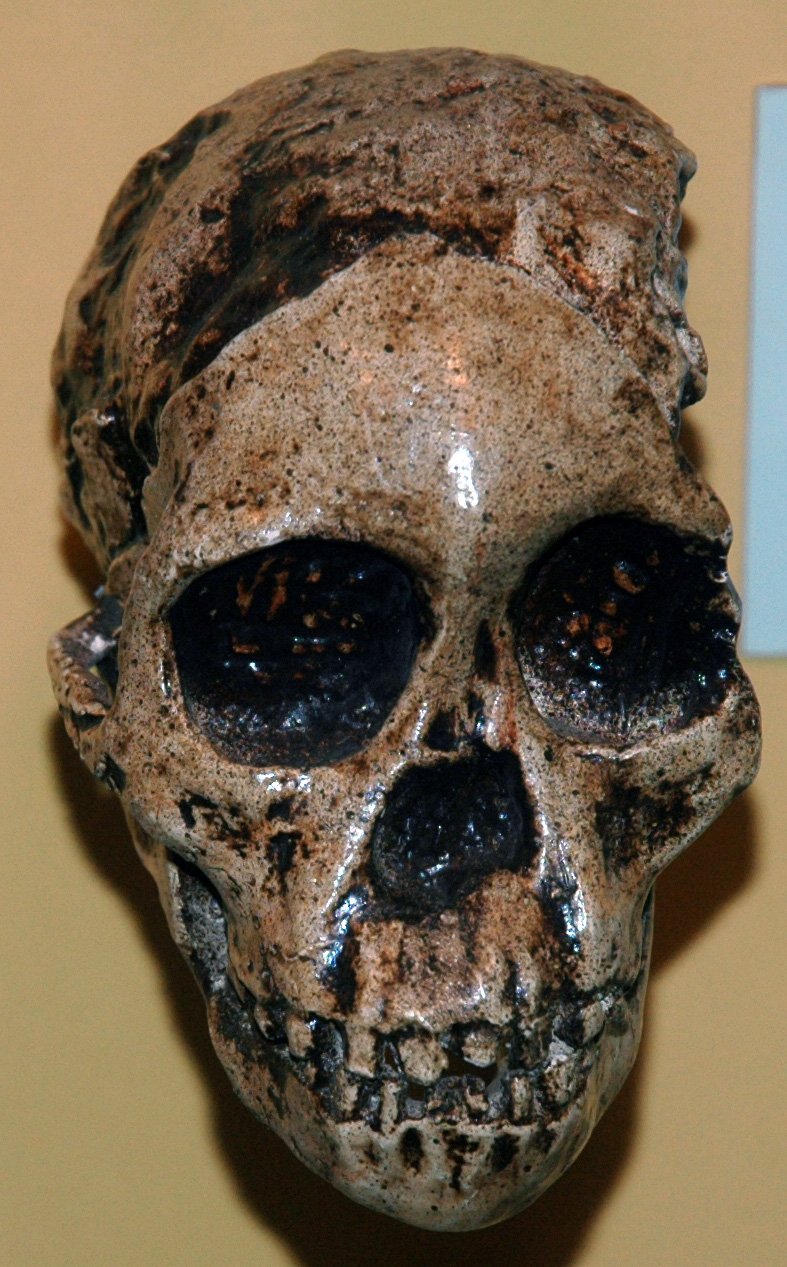
A century after it changed the course of human origins research, the Taung Child has done so again. A new study dates the famous fossil to between 2.96 and 3.03 million years old and concludes that the human family tree in southern Africa was far more tangled than scientists had assumed.
The Taung Child, discovered in a South African lime quarry in 1924, was the first fossil to prove that humanity’s roots lay in Africa. Anatomist Raymond Dart described it in 1925 as the type specimen of a new species, Australopithecus africanus. Yet because no clear criteria were ever set for classifying later finds, the Taung Child remains the only fossil that can be definitively assigned to that species.
The new research, led by Professor Gabriele Macho of the Vrije Universiteit Brussel and published in the journal npj Palaeoecosystems, re-examined the fossil’s age and growth. By dating a flowstone layer above the fossil-bearing deposit, the team pinned the child to the Pliocene epoch, between 2.96 and 3.03 million years ago.
The team then compared the Taung Child’s tooth structure and the way its brain and teeth developed as it grew with adult fossils traditionally grouped under the same species. Several of those adults did not match its developmental trajectory. The differences, most notably in brain development, suggest that more than one distinct hominin species lived alongside or in succession around Sterkfontein, the fossil-rich region near Johannesburg.
“For over 100 years, we assumed the Taung Child was just one of many similar fossils from the era,” Macho said. “Our findings turn that on its head. The human family tree wasn’t a neat, straight trunk — it was a chaotic, tangled bush driven by climate shifts.”
The researchers attribute that diversity to southern Africa’s shifting climate. Millions of years ago, wet and dry cycles repeatedly reshaped the landscape, isolating hominin populations and then bringing them back together. The region sits at a boundary between tropical and temperate ecosystems, a dynamic zone where species met, diverged and hybridised over millennia.
Fossilised pollen shows the Taung Child lived in a far wetter, more forested environment than modern South Africa — with tree species now found hundreds of kilometres to the north-east. The findings challenge linear models of human evolution, pointing instead to a branching network in which climate shifts continually separated and reunited populations.
The authors acknowledge that the picture is far from complete: the developmental findings are indicative rather than conclusive, and no fossils have been reassigned to new species. But a century after Dart’s description, the original specimen is back at the centre of the debate over how the diverse hominin populations of three million years ago eventually gave rise to our own genus, Homo.
Sources: Phys.org, “3-million-year-old Taung Child once again shakes up our human family tree” (https://phys.org/news/2026-11-million-year-taung-child-human.html); Gabriele A. Macho et al., “The Taung child and the biogeographic and palaeoclimatic drivers of southern African hominin diversity”, npj Palaeoecosystems (2026), DOI: 10.1038/s44513-026-00008-2 (https://doi.org/10.1038/s44513-026-00008-2).