






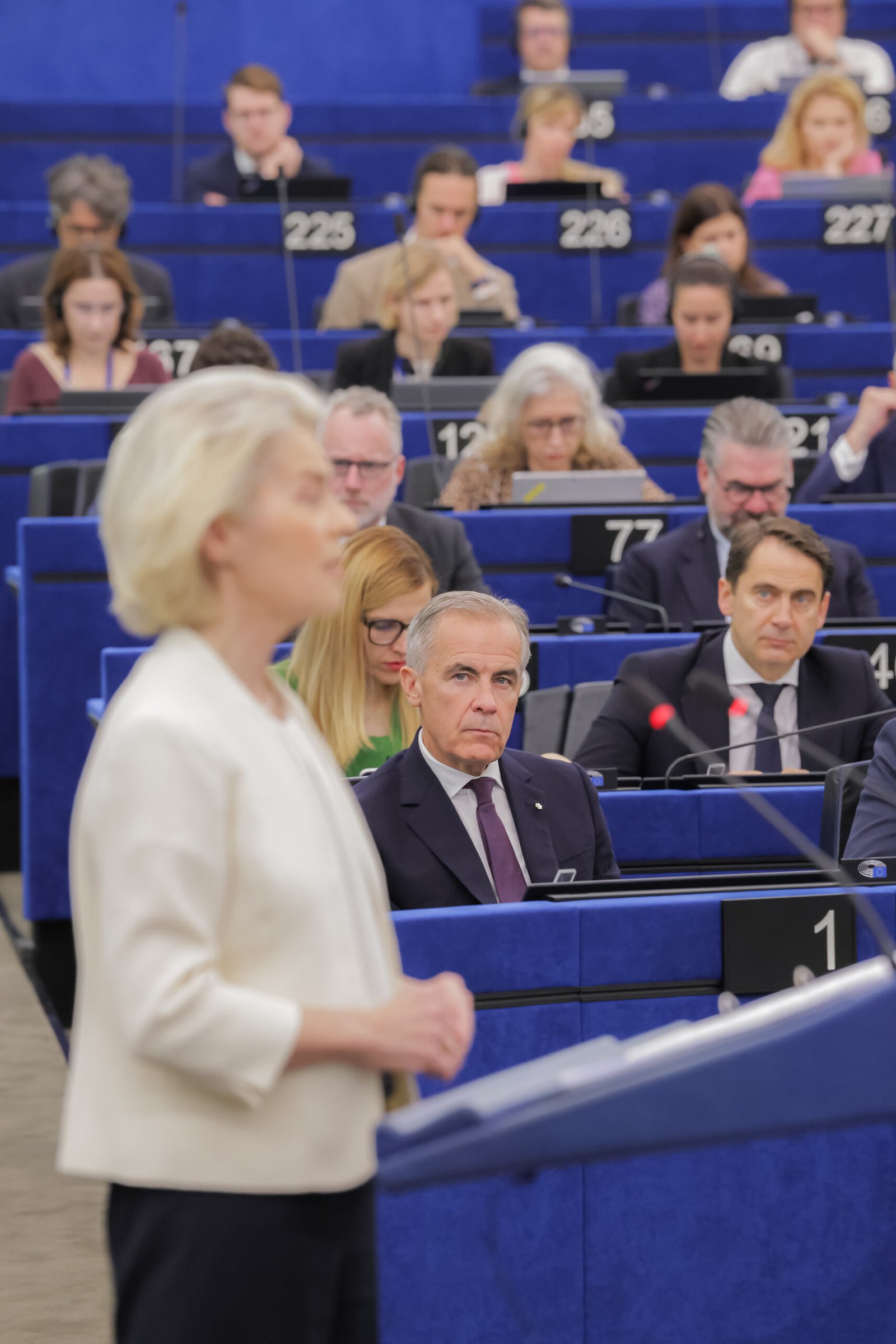
Canada has concluded negotiations on two free-trade agreements in Southeast Asia — one with the ten-nation ASEAN bloc and one with the Philippines — as Prime Minister Mark Carney uses a trip to Manila to reduce the country’s reliance on the United States, its dominant trading partner.
Carney announced the substantial conclusion of the ASEAN-Canada free trade agreement at the 49th ASEAN Summit in Manila on 14 November. The bloc has almost 700 million people and an economy of close to $6 trillion, and Ottawa says the deal, once in force, would add nearly $2 billion to Canada’s GDP and create nearly 14,000 jobs, mainly in agriculture and manufacturing. The remaining steps are to be completed as quickly as possible, with signing targeted for 2027.
The Philippines agreement was concluded just a year after the two countries said they would pursue one. The Philippines has an economy of $680 billion and a market of more than 110 million people, and Ottawa says Canadian exports there could triple by 2035 once the deal is in force, with agriculture and forest products among the main beneficiaries. Two-way merchandise trade between the two countries totalled $3.4 billion in 2025.
The deals fit a broader push to diversify. ASEAN was Canada’s fifth-largest merchandise trading partner in 2025, with two-way trade of $52.5 billion, up 22.7 per cent on the year before. Negotiations on the ASEAN agreement began in 2021. Carney said the two deals in a single year showed “the speed and ambition this moment demands”, adding that they would build “more choice, more customers, and greater sovereignty for Canadians”.
Alongside the trade announcements, Carney pledged $5 million in technical assistance to help ASEAN economies ratify the bloc-wide deal, and $26 million in investments with the Philippines covering nuclear security, climate-resilient agriculture and infrastructure in the G7-supported Luzon Economic Corridor. The two countries also deepened defence and security cooperation, including a new cyber security dialogue and an extension of Canada’s Dark Vessel Detection programme against illegal fishing until 2033.
All of the figures cited in this article — the GDP and jobs estimates for the ASEAN deal and the projection that exports to the Philippines could triple — come from the Canadian government’s own announcement, and had not been independently verified by other outlets at the time of publication.
Sources: Prime Minister of Canada, “Canada concludes negotiations for two new free trade agreements with the Philippines and ASEAN” (14 November 2026), https://www.pm.gc.ca/en/news/news-releases/2026/11/14/canada-concludes-negotiations-two-new-free-trade-agreements