







After eight years in space, the European-Japanese BepiColombo mission has arrived at Mercury, firing its thrusters for 37 minutes on Saturday evening to slip into orbit around the smallest planet in the Solar System. The European Space Agency confirmed the capture at 18:24 UTC on 21 November, after flight controllers in Darmstadt, Germany, received the signal that the burn had succeeded.
BepiColombo is only the second spacecraft ever to orbit Mercury, following NASA’s MESSENGER, which circled the planet from 2011 to 2015. It is the first mission to send two orbiters to Mercury at once: the European Space Agency’s Mercury Planetary Orbiter and the Japan Aerospace Exploration Agency’s Mio, which will study the planet’s magnetic field and its interaction with the solar wind.
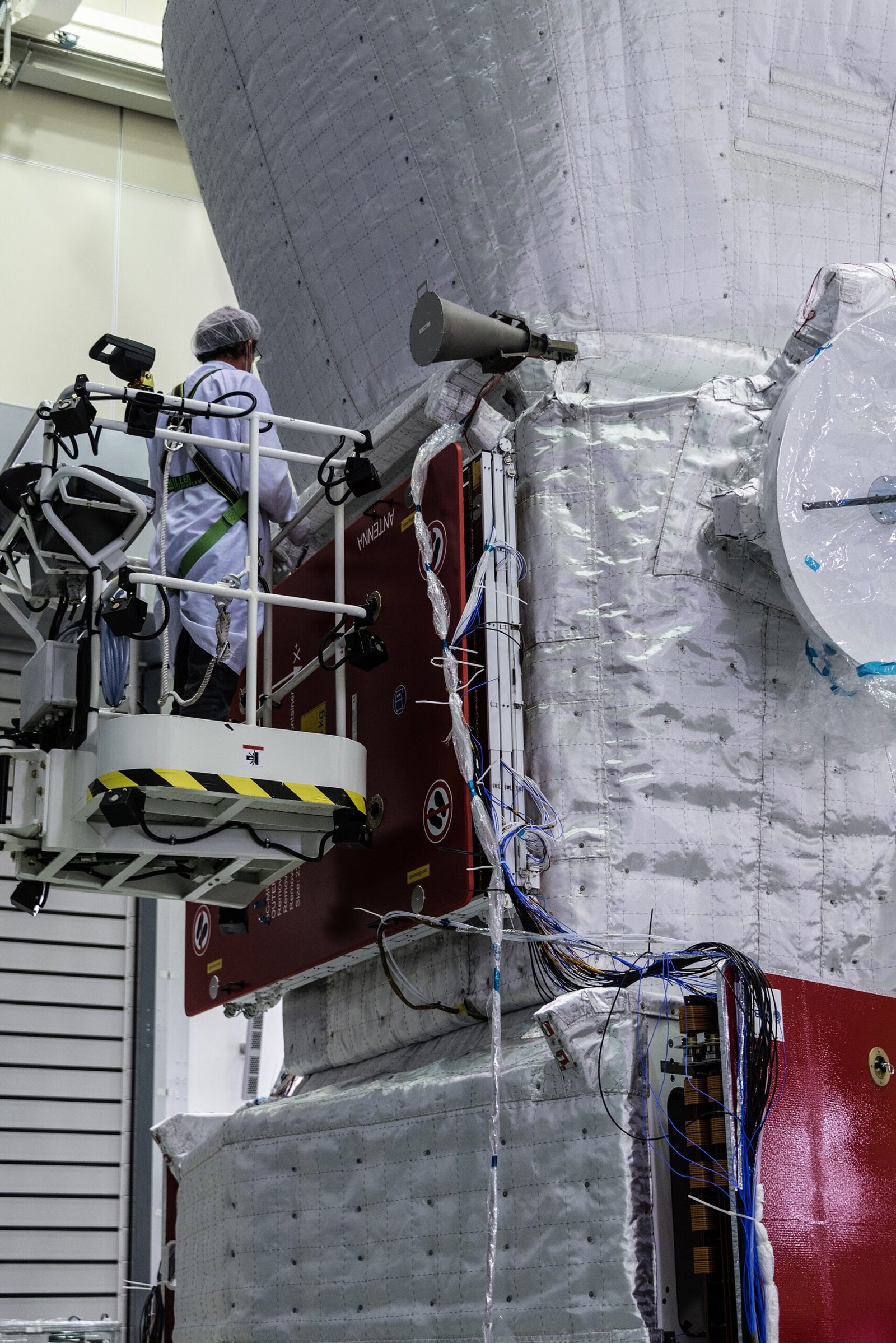
The journey has been long and far from smooth. Launched on 20 October 2018, BepiColombo flew past Earth once, Venus twice and Mercury six times, using the planets’ gravity to slow itself enough to be captured. A power problem with its solar-electric propulsion system in 2024 cut the thrust available and delayed its arrival by about a year. In September this year, the mission jettisoned its Mercury Transfer Module, the propulsion unit that had carried the two orbiters across the inner Solar System.
For now the two orbiters remain joined together in an elliptical orbit stretching from 590 to 11,640 kilometres above Mercury’s surface. They are due to separate on 9-10 December, after which the Mercury Planetary Orbiter will gradually descend to its final science orbit, between 400 and 1,500 kilometres up, by March 2027. Science operations are set to begin in April 2027.
Mercury is the least explored of the rocky planets, despite being the closest to the Sun. Its surface swings between about 430C in daylight and minus 180C at night, yet radar observations suggest water ice survives in permanently shadowed craters near its poles. The planet also has a magnetic field far stronger than its size would suggest, and an iron core that takes up about 85 per cent of its radius — proportions no other planet matches. BepiColombo’s two orbiters, observing from different altitudes at the same time, are designed to answer why.
The mission is expected to run for at least a year of science operations, with a possible one-year extension.
Sources: European Space Agency (https://www.esa.int/articles/about-us/directorates/science/bepicolombo/latest-updates-bepicolombo-s-arrival-at-mercury), Nature (https://www.nature.com/articles/d41586-026-03803-8), Sky & Telescope (https://skyandtelescope.org/astronomy-news/bepicolombo-arrives-at-mercury-after-8-year-odyssey/).