








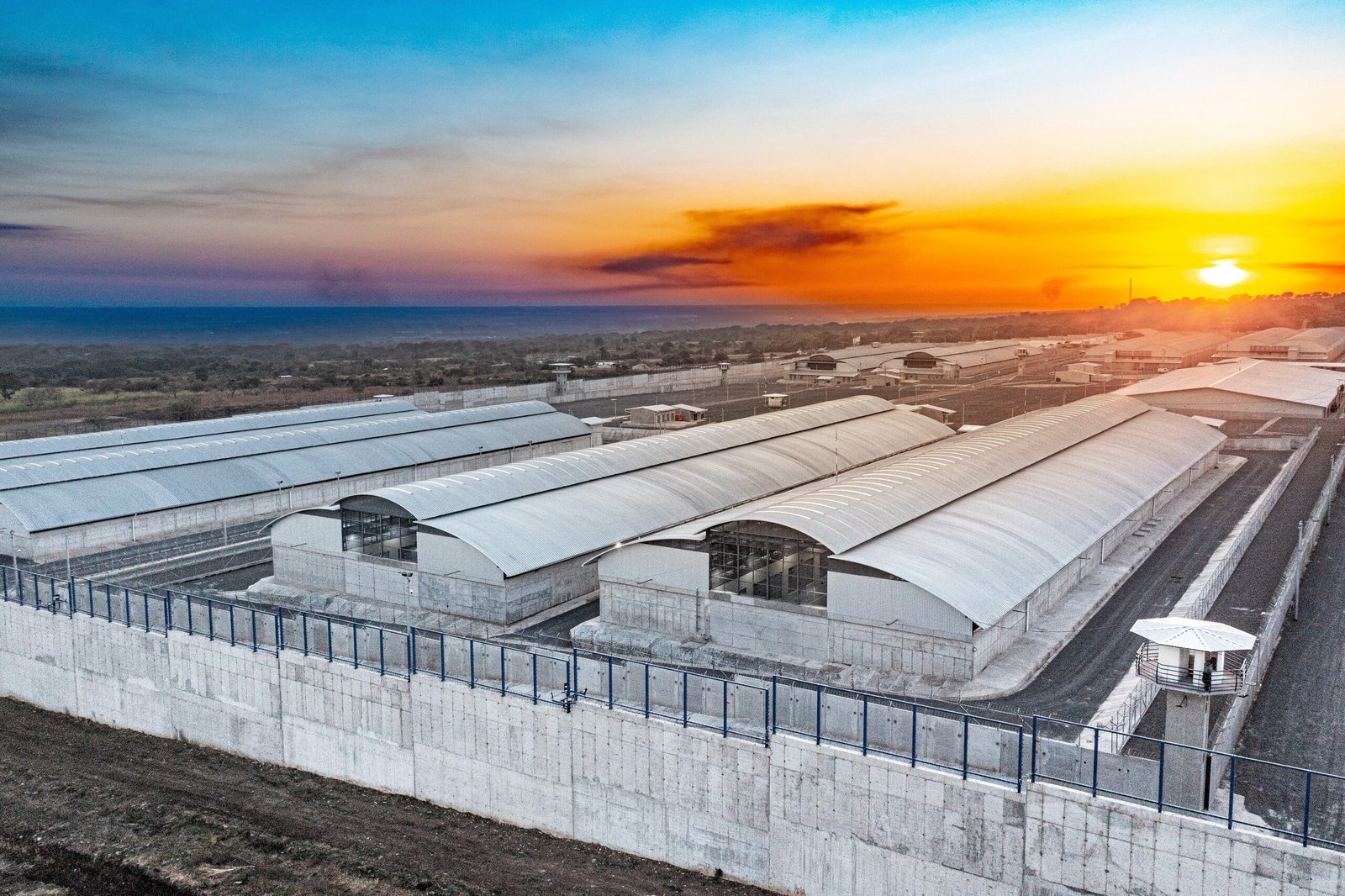
Haiti has agreed with El Salvador to build three new prisons, adopting the hardline security model that President Nayib Bukele used to crush gangs at home.
The deal was announced on Friday by Haiti’s Minister of Justice and Public Security, Patrick Pélissier, after an official visit to El Salvador. A Salvadoran company will work alongside a Haitian firm on the projects, with construction of the first facility expected to begin soon. Haiti’s prime minister, Alix Didier Fils-Aimé, has ordered the work to be speeded up.
During his visit, Pélissier toured El Salvador’s vast Terrorism Confinement Centre, known as CECOT, and praised it as a model for Haiti to follow. The minister did not say how much the three prisons would cost, whether El Salvador would help pay for them, or whether Salvadoran officials would have any role in running them.
Haiti’s prison system has been in ruins since armed gangs stormed the country’s two largest prisons in 2024 and freed thousands of inmates. The new facilities are meant to restore secure capacity to hold gang members, including leaders who currently run criminal networks from inside overcrowded jails.
The agreement deepens a partnership that has already put Salvadoran boots on Haitian soil. Bukele has sent about 2,500 troops to Haiti after four Salvadoran personnel serving with a United Nations-backed mission disappeared in October, when they came under fire from gangs in the Croix-des-Bouquets area north-east of Port-au-Prince.
That deployment has already cost lives. El Salvador’s armed forces said on Friday that two of its soldiers had been killed and two others injured in an explosion while handling explosives at a camp in Haiti. They are the first Salvadoran deaths since the troops arrived.
The Salvadoran force operates separately from the UN-authorised Gang Suppression Force, which was set up to help dismantle armed gangs, protect infrastructure and allow humanitarian access in cooperation with Haiti’s national police.
Bukele’s model has admirers across the region, but it also carries warnings. El Salvador has been under a state of exception since 2022, under which more than 90,000 people have been imprisoned, most with no access to family visits. Security experts have cautioned that exporting the approach risks the same abuses in a country with far weaker institutions — and where gangs, not the state, still control much of the capital.
Sources: Associated Press, “Haiti strikes deal with El Salvador to build new prisons after minister visit” (https://www.reflector.com/news/national/haiti-strikes-deal-with-el-salvador-to-build-new-prisons-after-minister-visit/article_32e58f34-d9be-5d06-b61d-d7abb6324849.html). This report is based on a single wire account; the casualty figures for the Salvadoran soldiers have not been independently confirmed.