








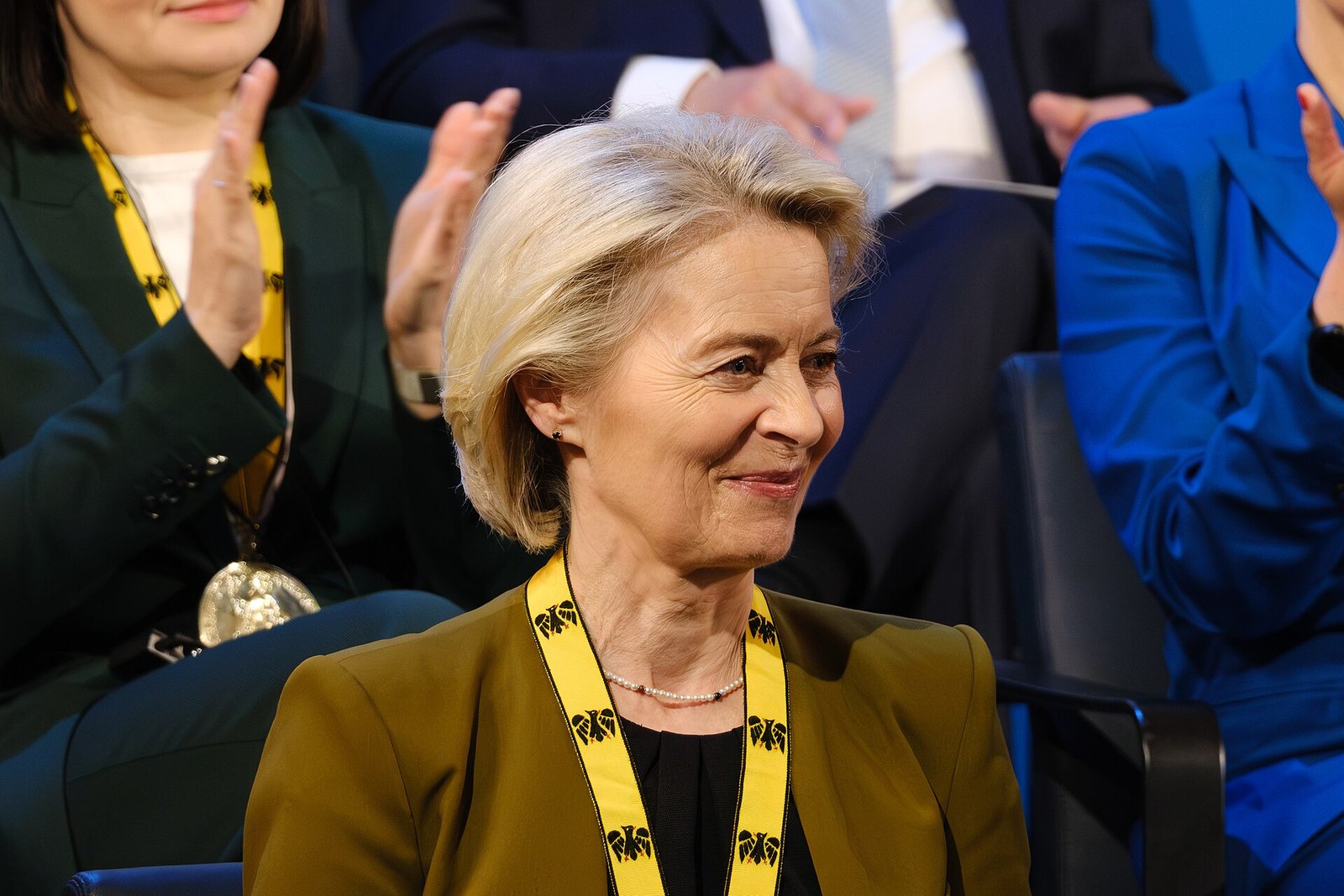
The European Commission has proposed its 22nd package of sanctions against Russia, stepping up pressure on Moscow’s ability to finance its war in Ukraine nearly five years after the full-scale invasion began. Commission President Ursula von der Leyen announced the measures on Monday, saying the bloc would keep proposing new sanctions until Russia shows genuine intent for a lasting peace in Ukraine.
The package extends the EU’s transaction ban to about 60 Russian banks, all of which would be removed from the SWIFT international payments messaging system. Von der Leyen said the Commission was also cracking down on the crypto and payment networks used to circumvent existing sanctions, with measures aimed at Russia and at third countries that help Moscow evade them. A Crypto Sanctions Task Force has been launched to coordinate the work with international partners.
Energy is another focus. The Commission wants to widen its ban on energy services so that no European company can help Russia build, operate or repair its energy infrastructure, including refineries, and the ban would cover electricity services for the first time. More than 70 additional vessels from Russia’s so-called shadow fleet would be blacklisted, and the EU proposes to ban tankers insured in Russia from its ports. The package would also target electricity companies for the first time and prohibit EU citizens from holding posts at companies in Russia.
The proposals also reach into sport and culture. Russian teams and athletes would be barred from competing under the Russian flag at events in the EU, the display of official Russian symbols would be banned, and financial flows from Russian sponsors to European-based sports and cultural associations would be restricted. Russians would also face restrictions on holding posts in the governing bodies of European sports federations. “Sports events cannot be a forum for propaganda activities,” von der Leyen said.
Visa rules would be tightened too, including a proposed ban on visas for Russian former combatants, a measure agreed in principle in the previous package subject to a feasibility check, with enhanced checks on people who have served in Russia’s armed forces or associated groups since February 2022 and taken direct part in combat operations.
The package is a proposal, not yet law: it must be endorsed by all 27 EU member states before it can take effect, a process that can take weeks and during which the measures are likely to be modified. It follows the Council’s adoption of further measures earlier this month, which sanctioned nearly 50 Russian banks and financial institutions.
Sources: European Commission — Statement by President von der Leyen on the 22nd package of sanctions against Russia (https://cyprus.representation.ec.europa.eu/news/statement-president-von-der-leyen-22nd-package-sanctions-against-russia-2026-11-23_en); Associated Press — EU proposes sweeping new Russia sanctions targeting banks, crypto and sports events (https://www.reflector.com/news/national/eu-proposes-sweeping-new-russia-sanctions-targeting-banks-crypto-and-sports-events/article_77a84182-2956-565f-9838-36125a96ed0c.html); Reuters — EU Commission proposes 22nd sanctions package on Russia (https://wtbx.com/2026/11/23/eu-commission-proposes-22nd-sanctions-package-on-russia/).