






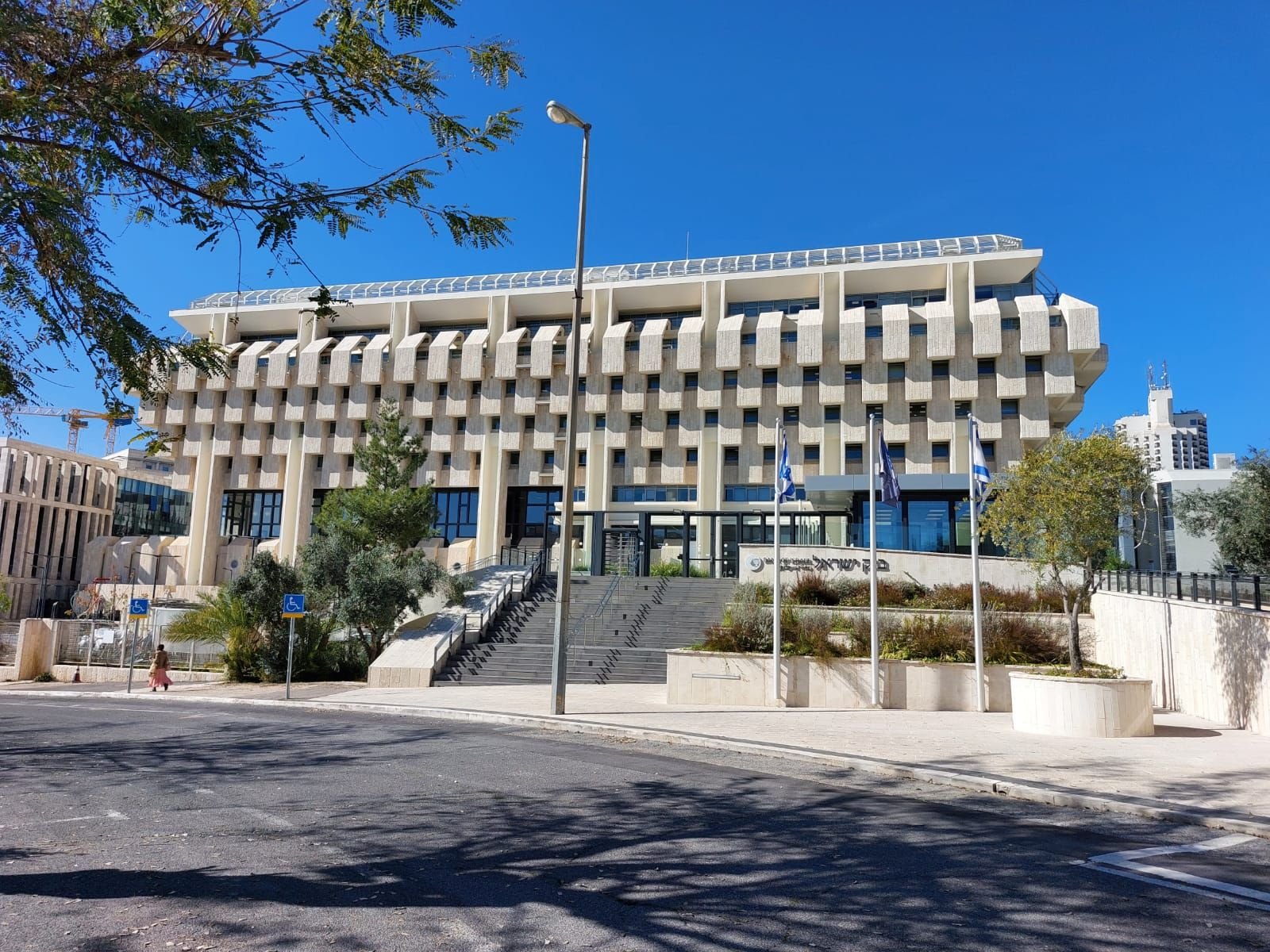
The Bank of Israel held its benchmark interest rate steady at 3.25% on Monday, its second consecutive pause and its final decision of 2026, as the country drifts through a political stalemate nearly a month after an inconclusive election.
The decision, widely expected by markets, comes as neither Prime Minister Benjamin Netanyahu’s bloc nor the opposition led by former military chief Gadi Eisenkot won enough seats in the 27 October election to form a governing coalition. Eisenkot has been given the first opportunity to try to assemble a government, but it remains unclear whether he — or Netanyahu, who would get the next attempt if Eisenkot fails — can put together a viable coalition in the coming weeks.
“Domestic and global uncertainty remains high in view of continued geopolitical tensions,” the central bank said, pointing to the risk of renewed conflict with Iran as well as the unsettled political environment at home.
The bank had cut rates last November and again in January, then paused as the conflict with Iran raised fears of supply-driven inflation. It resumed easing in May, July and September before holding rates in late October, a week before the election.
Economists say policymakers are also watching the shekel, which had weakened nearly 8% against the dollar since the previous decision on 21 October, reaching 3.35 per dollar. The currency rallied 1.8% to 3.29 after Monday’s announcement, though much of that move was driven by a surge in global stock prices after Nvidia reinstated Jensen Huang as chief executive.
Inflation, meanwhile, is no longer pressing the bank to act. The annual rate eased to 1.1% in October from 1.6% in September, comfortably inside the official 1% to 3% target range, although the bank expects it to move above 2% in the coming year. Officials have previously indicated the key rate could fall to 3% if inflation stays contained.
The economy is also growing strongly. Output expanded at an annual rate of 8% in the third quarter, or 4% once production by Israeli firms abroad is stripped out — a measure the bank described as a more relevant reflection of domestic activity.
Looking ahead, the bank noted that market pricing for the US Federal Reserve and the European Central Bank points to continued tightening of monetary policy, a backdrop that may limit its own room to cut. Twelve of the 14 economists polled by Reuters had expected no change on Monday.
Sources: Reuters, “Bank of Israel leaves rates unchanged amid political uncertainty” (https://www.reuters.com/markets/asia/bank-israel-leaves-rates-unchanged-amid-political-uncertainty-2026-11-23/)