





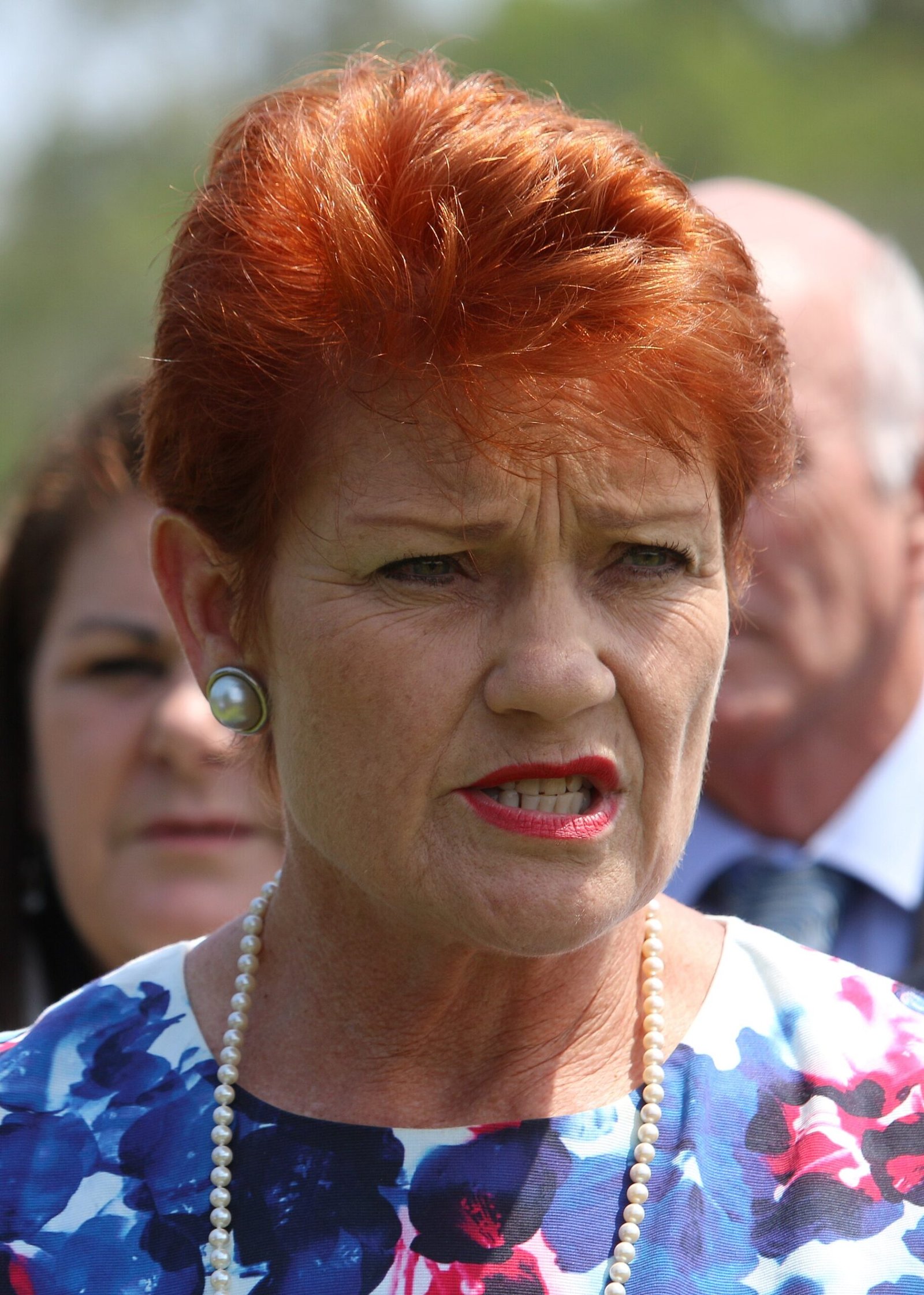
Voters in Victoria go to the polls on Saturday in an election that could end 12 years of Labor rule and hand Pauline Hanson’s One Nation its first real taste of legislative power.
The right-wing populist party, founded by Hanson in 1997, has never held power at state or federal level. But polls suggest it could win as many as 10 of the 88 seats in Victoria’s lower house on Saturday, up from the single seat it holds now — enough to decide what laws pass if the Liberal-National coalition, tipped to win, falls short of a majority.
A final poll by RedBridge Group and Accent Research, published in the Australian Financial Review on Monday, put the coalition on 33 per cent of the primary vote, One Nation on 23 per cent and Labor on just 22 per cent, a record low, with the Greens on 15 per cent. On a two-party-preferred basis the coalition leads Labor 58–42. A Roy Morgan poll conducted on 18–19 November told a similar story: coalition 31 per cent, Labor 22.5 per cent and One Nation 20 per cent.
One Nation’s Victorian leader, Warren Pickering, is tipped to win a Labor-held seat on Melbourne’s outskirts, and Roy Morgan projects the party to take three seats in eastern Victoria — Hastings, Morwell and Pakenham.
The surge has been driven less by immigration, the issue that has dominated headlines about the party, than by the cost of living. Polling by Accent Research found living costs ranked ahead of immigration among One Nation supporters, with wage stagnation, rising housing costs and land taxes fuelling the anger. “There’s this sort of bubbling underneath of anger that I’ve not seen before,” said Alysa Coleman, who runs a financial counselling service on Melbourne’s south-eastern fringe. “Generally if people are angry, they’re angry at the government.”
Labor is also paying for its pandemic record: state debt rose 60 per cent, and Melbourne endured the world’s longest lockdown. The party has defended its record as protecting frontline service jobs while pursuing targeted savings.
The result will be watched closely well beyond Victoria. One Nation won just 6 per cent of the vote at the federal election in May 2025, but now leads or nearly leads most national opinion polls, and Hanson was among the most-mentioned Australian politicians on News Corp’s News24 cable channel between May and October, despite the party holding at most two of the 150 seats in the federal lower house. Saturday’s ballot is the clearest test yet of how much of a threat the party poses to Labor Prime Minister Anthony Albanese at the 2028 national election.
Sources: Reuters (https://www.reuters.com/world/asia-pacific/australias-pauline-hanson-faces-biggest-test-debt-anger-align-state-vote-2026-11-23/), Roy Morgan (https://www.roymorgan.com/findings/10393-victorian-state-voting-intention-november-2026), The Poll Bludger (https://www.pollbludger.net/2026/11/22/redbridge-group-labor-22-coalition-33-one-nation-23-in-victoria/)