








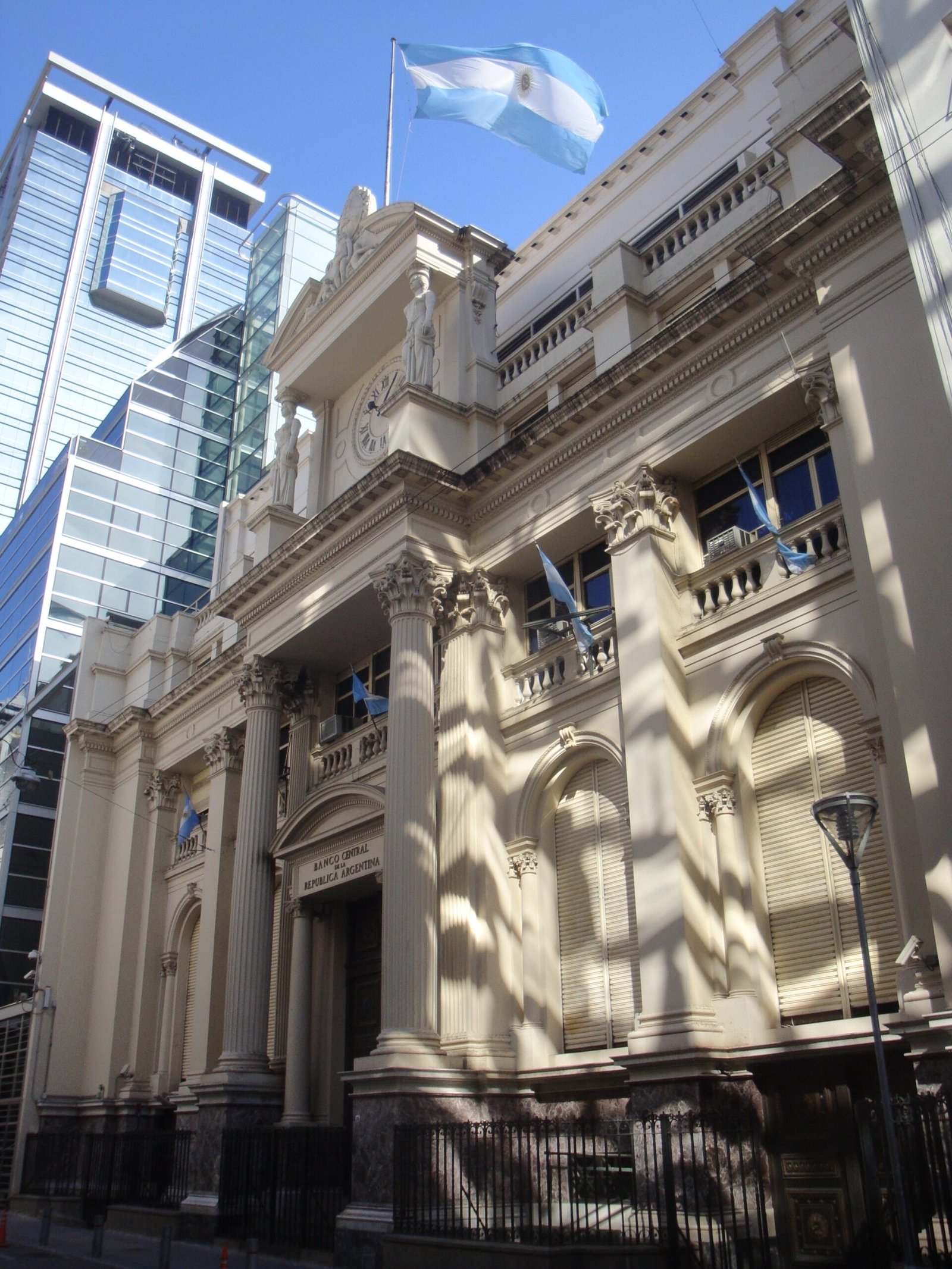
Argentina’s Congress has voted to bar the central bank from printing money to pay the government’s bills, writing into law the centrepiece of President Javier Milei’s campaign against the country’s notoriously high inflation.
The Chamber of Deputies approved the new central bank charter on Thursday by 141 votes to none, with 99 abstentions. Under the law, the bank’s “primary and fundamental mission” will be to preserve the value of the peso.
The charter forbids the bank from lending to the government at any level or otherwise financing the Treasury. It ends the temporary advances through which the Treasury drew on the bank, bars purchases of public debt on the primary market, stops the transfer of the bank’s accounting profits to the Treasury, and closes the mechanism of non-transferable letters through which the government took foreign currency from reserves against paper securities. It also strips out the employment, financial stability and development goals added to the charter in 2012 under former president Cristina Fernández de Kirchner, whose governments leaned heavily on the bank to fund spending.
For generations, Argentine governments that spent more than they collected in taxes turned to the central bank to print pesos to fill the gap, fuelling repeated currency crises and bouts of hyperinflation. Milei’s office said the law puts an end to “91 years of plunder, expropriation, impunity and institutional decay”.
The result marks a shift from Milei’s own 2023 campaign, when he promised to abolish the bank and replace the peso with the US dollar. Instead he has kept the institution and set out to remake it — though the law gives the bank less protection than he sought. His original bill would have required a two-thirds vote in both houses of Congress to remove the bank’s governor; the Senate watered that down, and the lower house lacked the votes on Thursday to restore it. A president can now replace the bank’s leadership with a simple Senate majority. The current governor, Santiago Bausili, a Milei appointee, holds a term running to September 2028.
Milei has slashed public spending in his three years in office, turning chronic fiscal deficits into a surplus and helping cut annual inflation from nearly 300% in early 2024 to 33% last month. But the economy has paid a price: it shrank an estimated 1.8% in the third quarter, after a 0.6% contraction in the second — two straight quarters of decline, the usual definition of a recession.
Investors are watching closely. The premium they demand to hold Argentina’s bonds, a gauge of perceived default risk, has more than doubled since early August, according to JPMorgan, and the country has defaulted on its debt nine times. Milei, who is expected to seek a second four-year term next year, is also pressing to overhaul the presidential race: the Senate on Thursday approved his bill to suspend the mandatory primaries, which the government says waste public money. The bill now goes to the lower house. Buenos Aires province governor Axel Kicillof, a potential Peronist challenger, accused Milei of seeking to “change the rules of democracy to improve his chances of reelection by cheating”.
Sources: Associated Press — “Argentina bans its central bank from printing money for the government”, 26 November 2026 (https://www.lapost.com/content/argentina-bans-its-central-bank-from-printing-money-for-the-government); QNC News — “Argentina Congress Enacts Central Bank Charter Reform Barring Money Printing for the Treasury”, 26 November 2026 (https://qncnews.com/2026/11/26/argentina-congress-enacts-central-bank-charter-reform-barring-money-printing-for-the-treasury/).