







German Chancellor Friedrich Merz has promised Ukraine more aid and help with energy supplies as it heads into winter, warning that Russian attacks in the Black Sea risk further escalation and a global food crisis.
Speaking in Berlin on Tuesday as he hosted Ukrainian President Volodymyr Zelenskiy, Merz said Russia was precipitating a food crisis “to the detriment of the poorest nations and countries in the world”. Zelenskiy had identified two priorities ahead of the meeting: protecting energy infrastructure and strengthening air defence. Berlin pledged further support in both areas.
The visit came as Ukraine faces another winter of strikes on its power network. Zelenskiy said Kyiv was entering the negotiation process “in a normal state on the battlefield”, but acknowledged serious challenges with air defence. He pointed to a Russian strike on a school being used as an aid distribution centre, which Ukrainian officials said had killed 33 people.
Merz also used the meeting to press Russia to engage seriously at talks scheduled for next week in Abu Dhabi. The meeting on 10 and 11 November, the first direct Ukraine-Russia talks since February, is expected to discuss security guarantees, an “energy ceasefire” and a truce in the Black Sea to guarantee food exports. Merz called the new round of talks between negotiators from Ukraine, the United States and Russia “the right step”, but said he had seen no sign so far that Moscow was ready for serious negotiations on a ceasefire and a subsequent peace agreement.
He stressed that Europe must be part of any lasting settlement. European countries have so far been largely shut out of efforts led by US President Donald Trump’s envoys Steve Witkoff and Jared Kushner, Merz noted, adding that it was “completely unacceptable for third countries to discuss Ukraine’s future without involving Ukraine itself”. Looking ahead to a December meeting of Group of 20 leaders in Miami, he said Zelenskiy should also be present if Trump invited Russian President Vladimir Putin.
Zelenskiy, for his part, dismissed the prospect of a telephone call with Putin as a delaying tactic, saying his expectations were low. “We understand this game; it’s a dead end,” he said, describing a call as a formal conversation in which he would once again hear a historical lecture rather than see concrete steps towards ending the war. He also said he would not accept an invitation to Moscow.
Merz has invited the “coalition of the willing” on Ukraine to meet in Berlin on 19 November, where Germany intends to work with Britain and France to coordinate further assistance and align diplomatic efforts in the event of a possible ceasefire. Germany is currently the largest contributor to support for Ukraine, Merz said, adding: “We are doing this in our own interests, in the interests of Europe, and in the interests of a stable political order in Europe.”
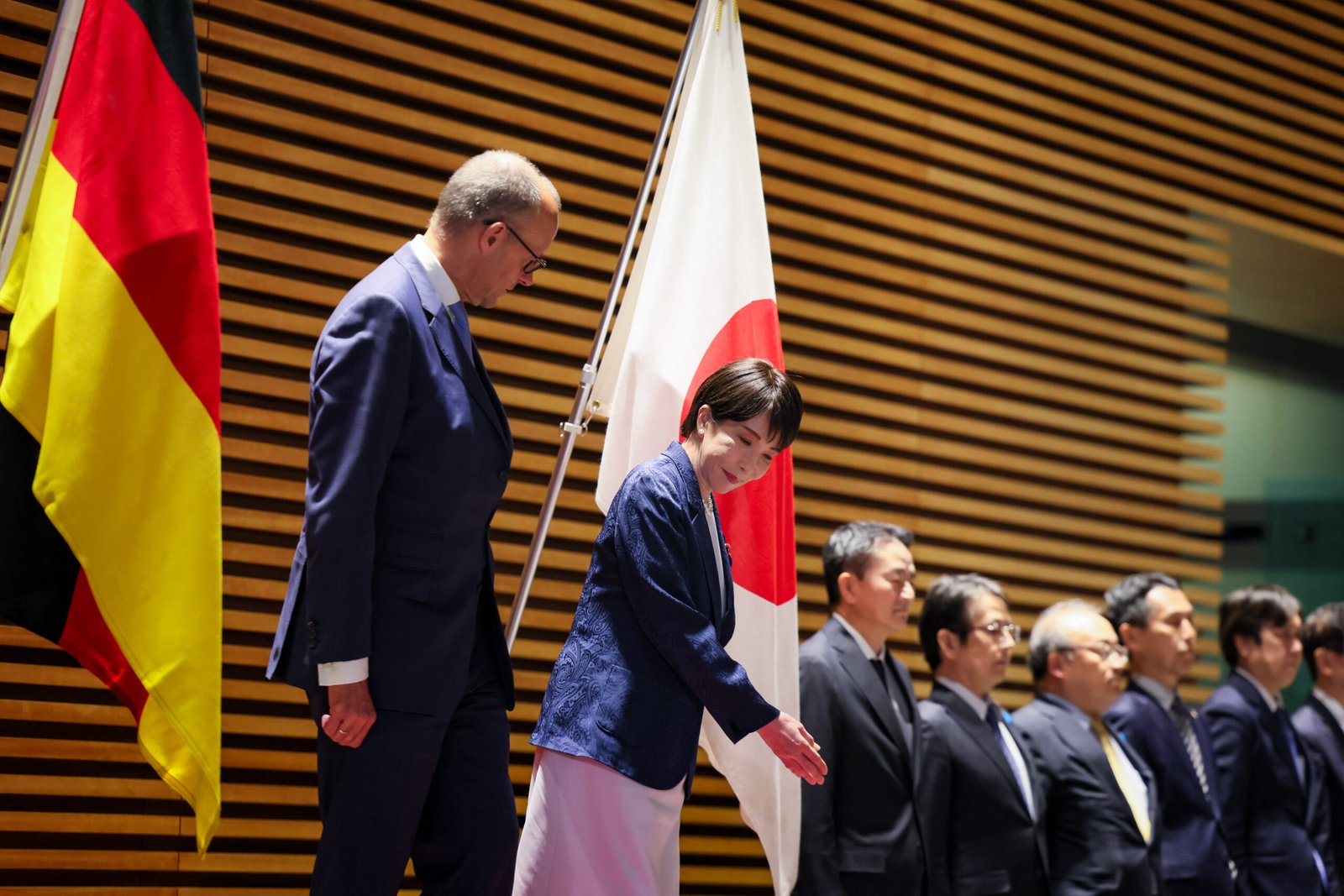
Note: the featured image is a file photo of Friedrich Merz in Tokyo on 28 October 2026, not a photograph of the Berlin meeting.
Sources: Reuters, “Merz promises more support for Ukraine, warns Russia over Black Sea attacks”, 3 November 2026, https://www.reuters.com/world/europe/merz-promises-more-support-ukraine-warns-russia-over-black-sea-attacks-2026-11-03/ ; Rapporteur, “Merz to host European allies as Ukraine talks loom”, 3 November 2026, https://www.rapporteur.com/news/merz-to-host-european-allies-as-ukraine-talks-loom/