







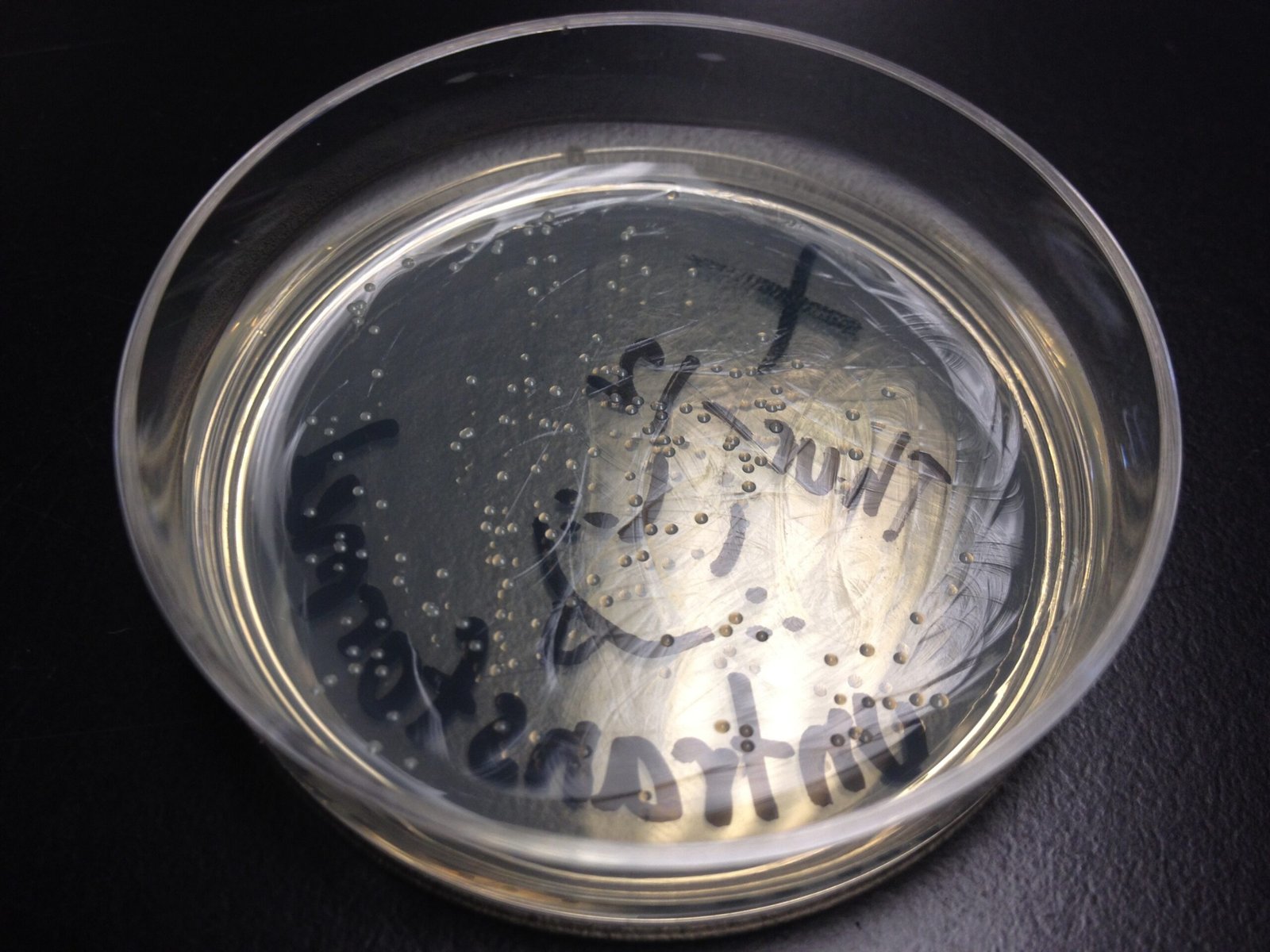
A team led by McGill University has built a computer that runs on living bacteria, turning cell division itself into a source of computing power. The researchers say the system can explore many possible solutions simultaneously, using a small fraction of the memory and resources demanded by standard machines.
Conventional computers generally test possible solutions one after another, a process that can take years or even centuries for the hardest combinatorial problems. Bacteria, by contrast, can fan out through many routes at once — and as they divide, they create more biological processors to join the search.
The project is the result of a 20-year collaboration involving researchers in Canada, Europe, the United Kingdom and Australia. To build the biocomputer, the team translated a classic mathematical problem into a graph of possible choices, then recreated that graph as a network of tiny, interconnected channels. Each route through the network represented a different possible solution, while junctions in the network acted as decision points, or logic gates.
As rapidly dividing bacteria moved through the channels, they collectively tested large numbers of solutions in parallel. The researchers controlled bacterial growth by adjusting the temperature, preventing the channels from becoming overcrowded, and used automated image analysis to trace the successful routes and identify combinations that satisfied the problem’s constraints.
“Modern electronic computers make millions of operations per second using one chip,” said Dan Nicolau, senior author and professor of bioengineering at McGill. “With bacterial division, we have one million chips working at the same time. More chips mean you can resolve the problem faster, even if for each processor, the number of operations per second is slower.”
The researchers are clear about the limits of the work. The biocomputer is not meant to replace classical or quantum computers, but to complement them as a resource-efficient, cost-effective tool for problems that electronic machines are not well designed to solve. Among the possible applications they name are encryption, molecular biology and artificial intelligence.
One example Nicolau highlights is mapping the structure of proteins. He argues that artificial intelligence can only scan available data in such cases, whereas the bacterial approach aims to solve problems rather than estimate answers from past information. That claim remains a research vision rather than a demonstrated general-purpose capability, and the system should be judged as an early proof of concept.
The underlying paper, “Amplification of computational power by the multiplication of bacteria exploring microfluidic networks encoding mathematical problems”, was published on 11 August 2026 in Microsystems & Nanoengineering, a Nature Portfolio journal. The work was funded by the US Defense Advanced Research Projects Agency, the Natural Sciences and Engineering Research Council of Canada, the Social Sciences and Humanities Research Council of Canada, an Australian Future Fellowship and the European Union.
Sources: McGill-led research report, “A biocomputer that runs on bacteria”, published 3 November 2026 (https://www.brightsurf.com/news/1WRD9DWL/a-biocomputer-that-runs-on-bacteria.html); research paper in Microsystems & Nanoengineering (https://doi.org/10.1038/s41378-026-01341-x).