








Rumours that the world’s leading artificial intelligence laboratories have made secret breakthroughs capable of breaking internet encryption have stunned computer scientists — and, for now, nobody outside the labs can say whether they are true.
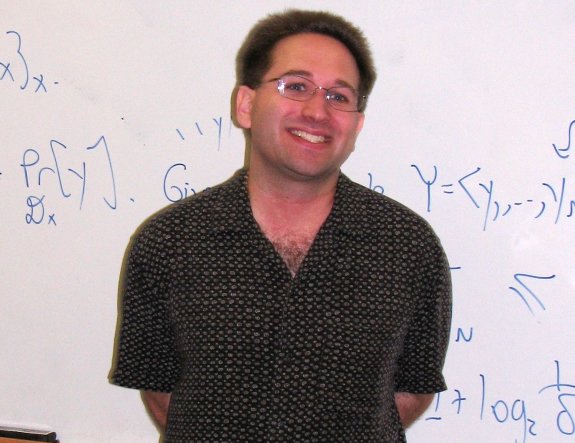
Scott Aaronson, a theoretical computer scientist at the University of Texas at Austin, wrote on his blog on 25 November that he was “virtually certain, from multiple reliable sources, that the AI labs are now sitting on one or more bombshells” in cryptography. He added in the same breath that he did not know the details and was “much, much less confident about the specific nature of those bombshells” until he saw evidence or heard directly from someone at a lab.
The rumours, reported by Nature on 26 November, suggest that labs including OpenAI and Anthropic have discovered algorithms that could break public-key cryptography in polynomial time — that is, fast enough to matter. Public-key cryptography secures almost everything online, from banking apps to web browsers, and it works because the maths problems behind it are considered practically impossible for computers to solve in a reasonable time.
The algorithms are said to target RSA, which relies on the difficulty of factoring large numbers into their primes, as well as elliptic-curve cryptography and Ring-LWE, the lattice problem that underpins most post-quantum encryption schemes. An algorithm that cracked any of them efficiently would undermine the security on which the internet relies.
The speculation comes in a week of extraordinary claims from the AI labs. On 23 November, Anthropic and OpenAI each posted claimed proofs that VP is not equal to VNP — a major open question in theoretical computer science — with Lean code accompanying Anthropic’s version. Ryan Williams, a computer scientist at the Massachusetts Institute of Technology, told Nature he was “definitely blown away by the latest developments”.
But the cryptography claims remain unverified, and Aaronson himself moved to temper them. On 27 November he clarified that the specific information he holds concerns a result in theoretical cryptanalysis that does not pose an imminent danger to production systems, and that further, more alarming rumours circulating have no verifiable evidence. The Guardian, the Financial Times and the Independent have all covered the story, and the Governor of the Bank of England was asked this week whether AI could break encryption.
Even a theoretical result would matter, researchers say. Proving that a problem can be solved in polynomial time has usually been followed by improvements that eventually produce efficient solutions. As Aaronson put it: “The issue is that the idea that [the problem] was hard — because of needing exponential time — is dead.”
The central claim in this story — that AI labs hold unpublished cryptography breakthroughs — is unverified and rests on second-hand accounts. Neither OpenAI nor Anthropic has published or demonstrated anything an outside researcher can check.
Sources: Nature, “Has AI just cracked Internet encryption? Rumoured ‘bombshell’ stuns scientists” (https://www.nature.com/articles/d41586-026-03875-6)