





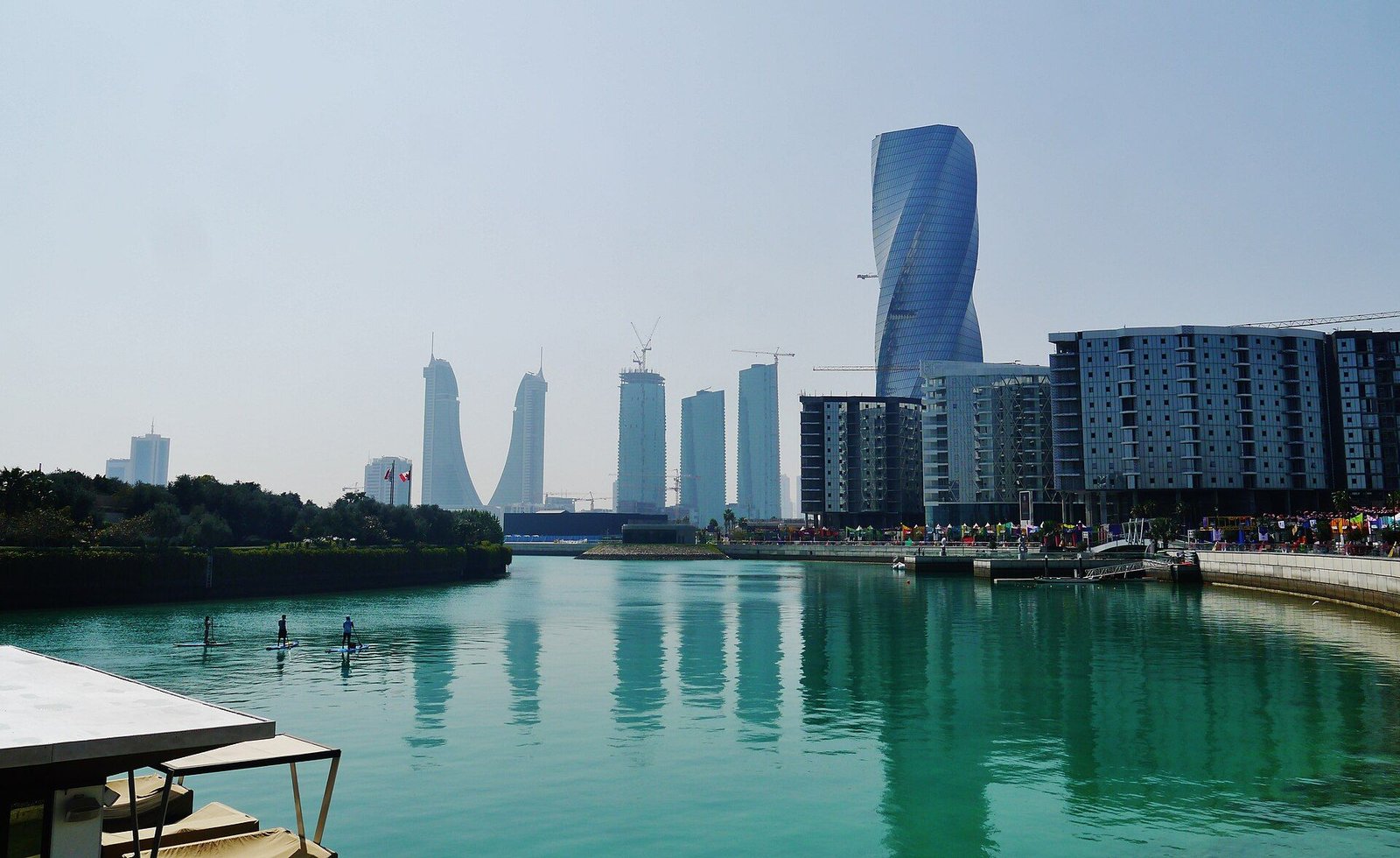
Bahrain’s defence force said on Wednesday it had intercepted Iranian aerial attacks on the Gulf kingdom, which hosts the US Navy’s Fifth Fleet, in the latest escalation of a conflict that saw the United States and Iran trade strikes a day earlier.
On Tuesday, Iran’s Revolutionary Guard said its drones had targeted a US radar system at Sheikh Isa Air Base in southern Bahrain. Bahrain said its air defences intercepted the attack, and US Central Command said the drones were stopped without damage to American equipment or injury to US personnel. It was the third Iranian attack on American military targets in Bahrain in five days, after strikes on Friday against an early-warning radar and on Sunday against a radar system at a US helicopter base.
Hours later, a US fighter jet struck a Revolutionary Guard missile launch site on Qeshm Island in the Strait of Hormuz, using precision munitions, a US official said. A local official said the strike caused no damage to residential or commercial areas or infrastructure. The American retaliation has so far been reported only through an unnamed US official: neither Central Command nor the Pentagon had confirmed the Qeshm strike on the record by Tuesday evening, and the extent of any damage there is not known.
The exchanges came as shipping through the strait remained under threat. On Monday, a liquefied petroleum gas tanker was hit by a projectile while sailing through the Strait of Hormuz off the coast of Oman, and its crew had to evacuate the ship. On Tuesday, Yemen’s Iran-aligned Houthis said they had launched five drones towards two pumping stations along Saudi Arabia’s East-West pipeline, which carries oil to the Red Sea port of Yanbu, bypassing the strait.
Egypt, Qatar, Saudi Arabia and the United Arab Emirates each condemned Iran’s attack on Bahrain. Qatar warned that continued attacks undermine diplomatic efforts, and said any escalation posed an “extremely grave danger” to the prospects of an agreement. Talks to end the war, now in its eighth month, continue through Omani and Qatari mediators, but negotiations have stagnated despite intensified mediation from Doha.
Analysts say the attacks may signal a shift in Tehran’s strategy. Iran has been suffering under a US naval blockade enforced for months around the Strait of Hormuz, and one analyst at the International Crisis Group wrote that Tehran may now be weighing whether breaking the blockade through escalation is less costly than accepting its continuation.
Oil prices eased on Wednesday as data showed US crude stocks rising, though the conflict limited losses. US West Texas Intermediate futures fell 0.65% to $85.45 a barrel, while Brent crude was down 0.17% at $92.98 a barrel as of 0149 GMT. US crude stocks rose by 5.28 million barrels in the week ended 13 November, according to American Petroleum Institute data cited by market sources.
Sources: Reuters (https://www.reuters.com/business/energy/oil-prices-fall-higher-us-crude-stocks-temper-supply-risks-2026-11-18/) and Associated Press via NPR (https://www.wcmu.org/national-world-news/2026-11-17/iran-launches-a-third-round-of-strikes-on-bahrain-host-of-u-s-navys-5th-fleet).