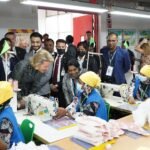







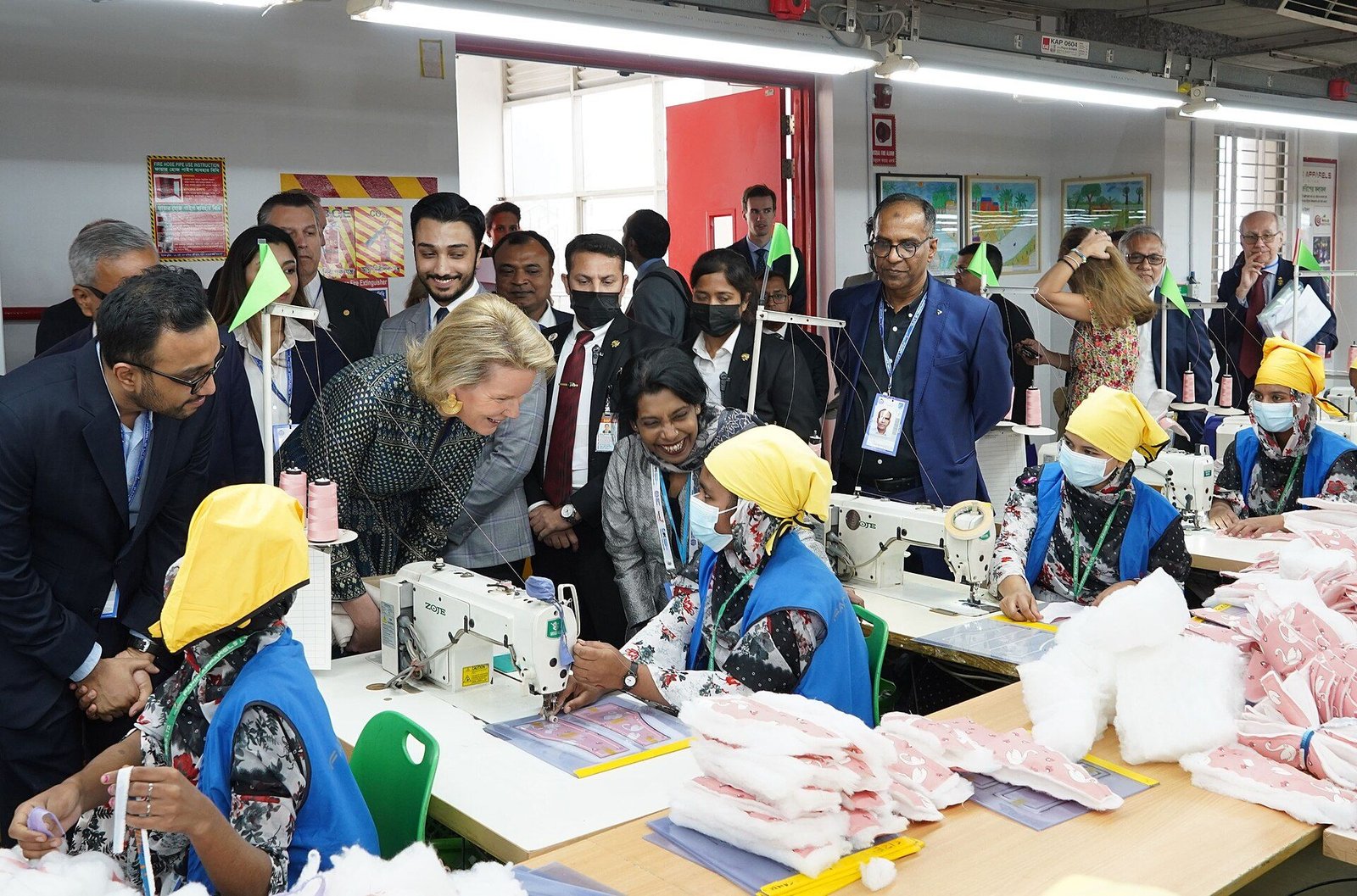
Bangladesh’s garment industry ground to a halt across much of its industrial belt on Wednesday, as police clashed with thousands of workers demanding a sharp rise in the minimum wage and arrested two labour leaders. Production was disrupted at about 535 factories in Gazipur, Ashulia, Savar and districts of Dhaka, according to industry sources cited by The Business Standard, in the worst day of unrest since the protests began last month.
Workers blocked the Dhaka–Mymensingh highway in Gazipur in the morning, halting traffic in both directions, and set fire to a vehicle belonging to Gazipur Metropolitan Police. Police responded with tear gas shells and sound grenades. Clashes also broke out in Mirpur and Kafrul in the capital, where workers threw bricks and stones at police, and a factory, MK Apparels in Ashulia, was vandalised. Traffic on the highway returned to normal after 2pm.
Police arrested Mosammat Sultana Begum, central president of the Green Bangla Garments Workers Federation, and its general secretary, Md Ilyas, late on Tuesday night in the Pallabi area of Dhaka. Police said the pair were accused of threatening factory owners and labour leaders who had kept production running and of instigating workers to continue the protests. A third man, Humayun Kabir, was detained in Savar after local residents accused him of inciting workers.
The workers are demanding a minimum monthly wage of 30,000 taka, about $240 — more than double the current 12,500 taka, set in 2023 — to keep pace with rising food, housing and transport costs. Their representatives have formally proposed 32,000 taka to the wage board. About 130 of the affected factories have been shut indefinitely under the “no work, no pay” provision of the Labour Act, while the rest declared holidays.
The immediate trigger was the postponement of a wage board meeting scheduled for Monday, which was put off at the last minute and rescheduled for 23 November. The government set up the six-member board on 1 November after protests first shut factories, promising a new wage structure from December, with workers paid at the new rates from January. But with no figure yet announced, frustration has grown, and foreign buyers have reportedly put new orders on hold.
The stakes are high: the industry is Bangladesh’s biggest export earner, generating about $38 billion a year and employing more than four million people, most of them women. Factory owners as well as labour leaders are now pressing for a swift decision. Mahmud Hasan Khan Babu, president of the manufacturers’ association BGMEA, said employers would submit their proposal at the 23 November meeting, and called for consecutive meetings to finalise the wage quickly.
At least one worker has died during the unrest, according to Human Rights Watch, which said a garment worker, Toufiq Hossain, died on 3 November. The rights group said police had used batons and tear gas against protesters and that violence by thugs allegedly linked to factory owners and political parties, arson and factory vandalism had also been reported.
Sources: The Business Standard (https://www.tbsnews.net/economy/rmg/2-labour-leaders-among-3-held-unrest-leads-closure-132-rmg-factories-ashulia-1606536) and Human Rights Watch (https://www.hrw.org/news/2026/11/05/bangladesh-labor-protests-turn-violent). The 535-factory figure comes from industry sources cited by The Business Standard and has not been independently verified by The Hourly News.