








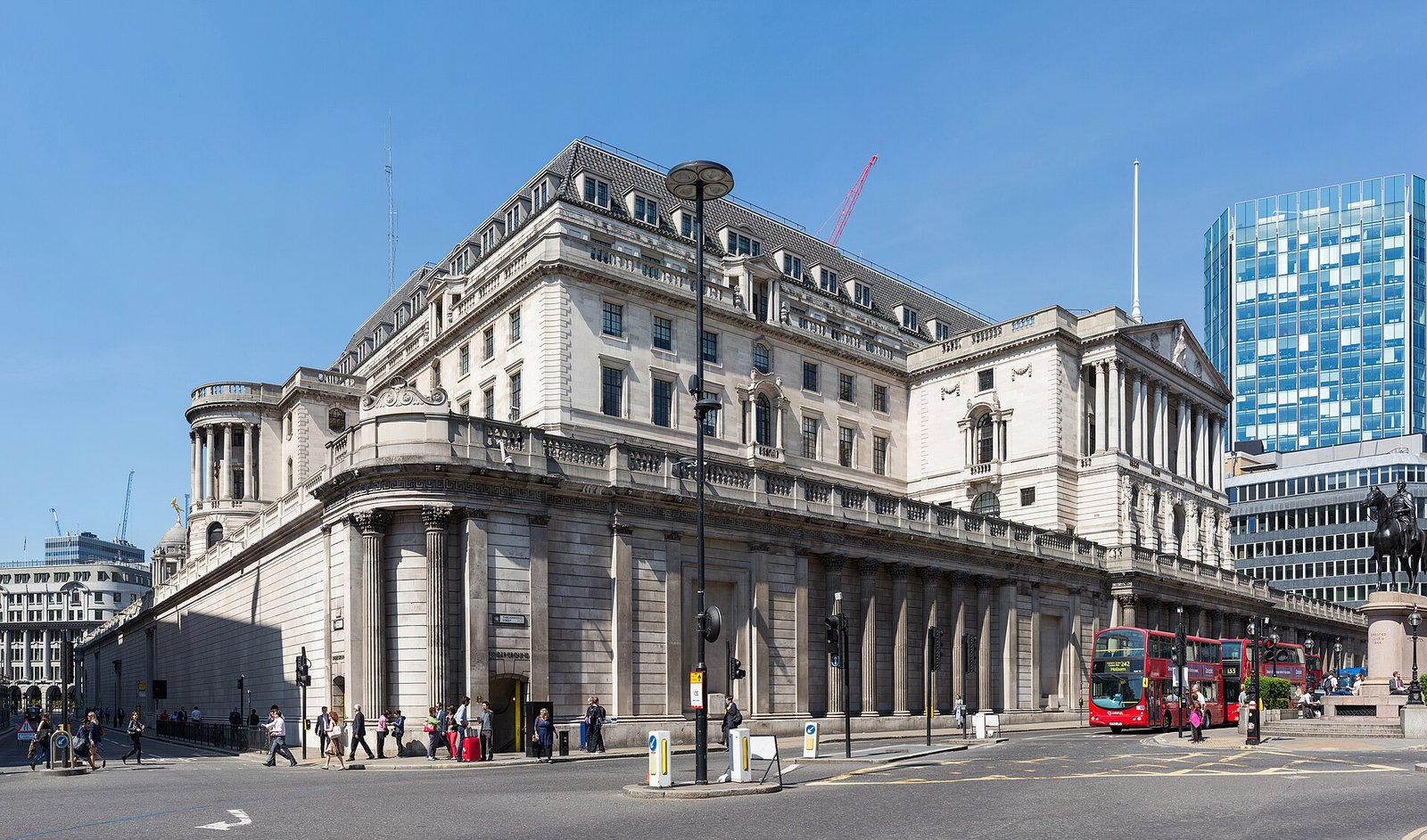
The Bank of England warned on Thursday that the enormous borrowing behind the artificial intelligence boom is making the global financial system more vulnerable to a setback, with the debts and off-balance-sheet commitments of the biggest technology firms now exceeding $4 trillion.
In its half-yearly Financial Stability Report, the Bank said risks to the global financial system had intensified in recent months, as the conflict in the Middle East dragged on, pushing up inflation and interest rates, while AI companies and governments borrowed heavily.
The large technology firms known as hyperscalers — the companies building the data centres that power AI — are on course to issue more than $305 billion of bonds this year, roughly 8% of all investment-grade corporate bond issuance worldwide. Counting semiconductor makers and data-centre operators, the wider AI ecosystem is borrowing more in a year than the governments of most large advanced economies, including Britain.
The Bank warned that this financing is becoming “increasingly complex, circular and opaque”, deepening the links between different parts of the financial system and making it more likely that stress in one corner spreads to another. It said the scale of the borrowing could also be pushing up global real interest rates, raising borrowing costs for governments, households and other businesses.
Share valuations remain stretched despite recent falls, the Bank said, with leveraged funds and retail investors heavily exposed to AI stocks. Its deputy governor, Katharine Braddick, said ensuring the financial system stays resilient if investor sentiment towards AI sours is a top priority.
The report also flagged cyber and operational threats from frontier AI models and, in the longer term, quantum computers capable of breaking widely used encryption. The Bank said the immediate priority was “an orderly transition to quantum-resistant cryptography”.
The Bank framed its findings as rising risks rather than a forecast of collapse, and it also used Thursday’s report to set out plans to cut capital requirements for more domestically focused British lenders. The Bank raised interest rates for the first time in more than three years last month, and markets price in an 80% chance of another rise next month.
Sources: Reuters, “Bank of England sees growing financial risks as AI borrowing surges”, https://www.reuters.com/business/finance/bank-england-sees-growing-financial-risks-ai-borrowing-surges-2026-11-26/ ; Bank of England, “Financial Stability Report – November 2026”, https://www.bankofengland.co.uk/financial-stability-report/2026/november-2026