








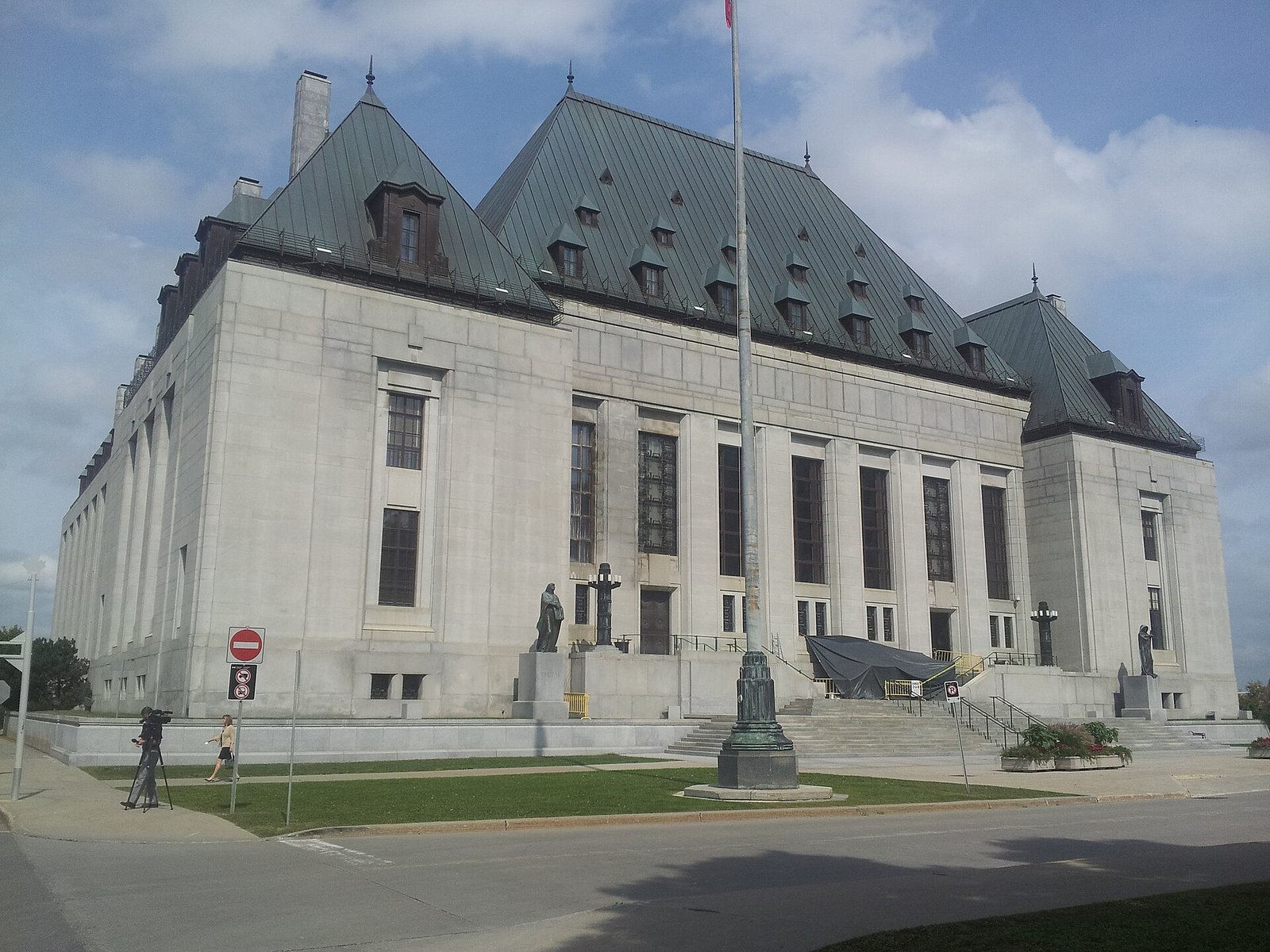
Canada’s Supreme Court on Friday largely upheld Quebec’s law barring public-sector workers from wearing religious symbols on the job, ending a seven-year legal battle over one of the most contested statutes in the country’s history.
In a 520-page decision in English Montreal School Board v. Quebec (Attorney General), 2026 SCC 41, the court ruled that Quebec had validly invoked the notwithstanding clause of the Canadian Charter of Rights and Freedoms when it passed the law, shielding it from most constitutional challenges. The appeals, brought by school boards, civil-liberties groups and dozens of interveners after four days of hearings in March, were dismissed.
Bill 21, the Act respecting the laicity of the State, was passed by Quebec’s National Assembly in June 2019. It prohibits public-sector workers in positions of authority — including public school teachers and principals, police officers, judges, prosecutors and government lawyers — from wearing hijabs, turbans, yarmulkes, crucifixes and Sikh kirpans while on duty. Quebec invoked section 33 of the Charter, the notwithstanding clause, and the equivalent override in Quebec’s own Charter of human rights and freedoms, to protect the law from challenges based on freedom of religion, freedom of expression and equality rights.
Chief Justice Richard Wagner, writing the lead reasons joined by Justices Suzanne Côté and Malcolm Rowe, held that there are no limits on how legislatures may use the override beyond those set out in the clause’s own text. “In short, Bill 21 is rooted in Quebec’s legitimate and historical commitment to ensuring the laicity of the state in a free and democratic society,” Wagner wrote.
The court acknowledged that the “stigmatizing and deleterious effects” of the law on those most affected — whom it identified as Muslim women — should not be underestimated. But by a 4–3 margin it held that section 28 of the Charter, which guarantees equality of rights to male and female persons, is an interpretive provision that creates no standalone right capable of invalidating a law shielded by the notwithstanding clause. The three dissenting justices — Andromache Karakatsanis, Sheilah Martin and Michelle O’Bonsawin — would have struck the bans down, finding they disproportionately restrict women’s freedom of religion and expression.
All seven justices agreed on one exception. Section 8 of the law, which requires members of the National Assembly to exercise their functions with their faces uncovered, violates the democratic rights in section 3 of the Charter, which the notwithstanding clause cannot override, and so cannot apply to elected members. The requirement stands, however, for the justice minister and the assembly’s president and vice-president. The court also confirmed that judges may issue declarations on whether a law aligns with the Charter even when the notwithstanding clause has been invoked, but declined to issue one in this case. It rejected arguments that the law infringes minority-language education rights or violates pre-Confederation statutes and the Constitution’s structural principles.
The ruling drew immediate criticism from civil-liberties and human-rights groups. The Women’s Legal Education and Action Fund said the decision gives governments a green light to use the notwithstanding clause to pass discriminatory laws, while Muslim community leaders called it a low point for Canadian democracy and vowed the fight over Charter rights would continue.
Sources: The Wall Street Journal (https://www.wsj.com/world/americas/canadas-supreme-court-upholds-quebecs-religious-symbols-ban-c1d8371a); Canadian Lawyer (https://www.canadianlawyermag.com/news/general/scc-rules-quebecs-bill-21-is-valid-legislatures-face-few-limits-in-use-of-notwithstanding-clause/394979); Canadian HR Reporter (https://www.hrreporter.com/focus-areas/diversity/supreme-court-of-canada-upholds-quebecs-secularism-law/395217).