








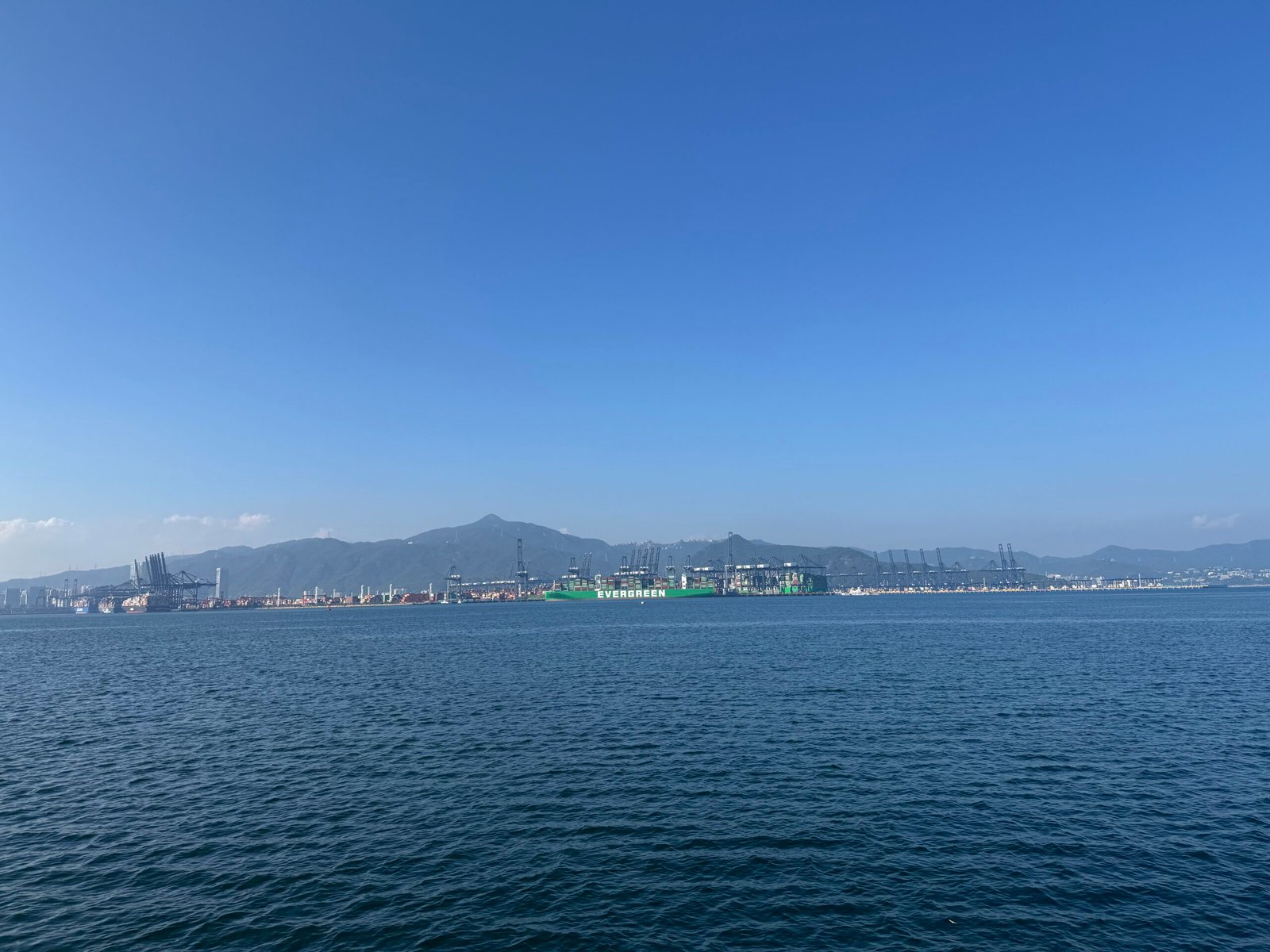
When world leaders arrive in Shenzhen next week for the Asia-Pacific Economic Cooperation summit, they will be greeted by a vision of the future of global trade: driverless trucks, remote-controlled cranes and artificial intelligence running one of the busiest container terminals on earth.
The Mawan Terminal in Shenzhen is one of dozens of automated port operations across China that Beijing hopes will give it an edge in an industry that moves more than 80 per cent of goods traded worldwide by volume. China says it already has 60 automated terminals, more than any other country, and aims to have 90 by 2030.
The jewel in the crown is the New Qianwan Container Terminal in the eastern city of Qingdao, which Beijing describes as the world’s first fully automated terminal. Its operators say each crane can handle 61 containers an hour, more than double the rate at conventional docks, speeding Chinese goods to markets around the world.
Western officials and analysts are watching the push with unease. China already holds stakes in ports around the globe, and there are fears its drive to export smart-port technology could give Beijing new leverage, from monopolistic positions in emerging technologies that could be used for economic coercion to back doors that might be exploited to spy on rivals or cripple trade networks in a crisis.
“It is a very uncomfortable dependence, and it is one that could have major strategic downsides,” Isaac Kardon, an expert on China’s maritime strategy at the Institute for Defense Analyses, a US government-funded think tank, told Reuters.
China’s advance has not been smooth. Reuters revealed last month the quiet collapse of LOGINK, a China-backed shipping data platform that some in Washington feared could become a trade superpower. Persuading countries to adopt Chinese software has proved harder than selling them hardware, and China has struggled to break into terminal operating systems, a market long dominated by US firms.
But there are signs Beijing is making progress. A filing last year by state-backed China Merchants Port highlighted a project to replace foreign systems at international ports, which it said it had completed by installing its homegrown terminal operating system at Brazil’s Paranagua port. The company has also rolled out its system at terminals in Sri Lanka, Greece, Italy and Turkey.
Chinese firms are already packaging the technology for overseas markets. Self-driving truck maker Westwell’s driverless vehicles now run at Felixstowe, Britain’s busiest container port, and telecoms giant Huawei is selling smart-port systems abroad. Beijing is also drawing on the Belt and Road model that helped it acquire stakes in ports worldwide, courting developing countries with technology it says can boost efficiency and trade.
According to a March report by AidData, a research lab at William & Mary university in the United States, China has provided some $4.8 billion in financing for port equipment since 2000 at 69 ports in 47 countries, on top of the $15.5 billion Beijing has spent building or acquiring stakes in foreign ports.
China’s transport ministry has framed the race in stark terms. “Whoever completes the digital transformation first will gain the upper hand in the next round of global port and shipping competition,” it said in a May editorial. Ahead of the APEC summit in Shenzhen on 18-19 November, Beijing has proposed leading working groups on electronic bills of lading and on customs databases powered by AI and big data.
Crucially, analysts say, China is willing to play a long game. “They make an investment there, they run a pilot project here, but they have such firepower that these dots become a mesh, and the mesh becomes the network, and the network becomes the Chinese orbit of control — and I speak of supply chain control,” said Wolfgang Lehmacher, a consultant and former head of supply chain and transport industries at the World Economic Forum.
Sources: Reuters, “China seeks high-tech upper hand in industry carrying 80% of global trade”, 10 November 2026 (https://www.reuters.com/world/china/china-seeks-high-tech-upper-hand-industry-carrying-80-global-trade-2026-11-10/)