









Inflation across the eurozone rose to 4.0% in October, its highest level in three years, as expensive energy continued to push up the cost of living for households and businesses in the 21 countries sharing the euro.
The flash estimate from Eurostat, the European Union’s statistics office, showed consumer prices 4.0% higher than a year earlier, up from 3.8% in September. The figure matched economists’ expectations in a Reuters poll, but it leaves inflation at double the European Central Bank’s 2% target and marks a fourth consecutive monthly increase from a low of 1.9% in February.
Energy was again the main driver. Energy prices were 20.8% higher than a year earlier, accelerating from 18.9% in September, and rose 1.4% on the month. The surge reflects the jump in oil and natural gas costs since the United States and Israel launched strikes on Iran in February, and the continuing uncertainty over the war in the Middle East. As a net importer of energy, the eurozone feels such increases quickly, through fuel bills, transport costs and the prices of goods that depend on energy to produce and move.
Beneath the headline, the picture was more mixed. Core inflation, which strips out volatile food and energy prices and is watched closely by policymakers, held steady at 2.5%, in line with expectations. Services inflation, the largest component of the consumer basket, edged up to 3.3% from 3.2%, while non-energy industrial goods rose 1.2%, up from 1.1%.
Food, alcohol and tobacco prices rose 1.6% on the year, up from 1.3% in September. Within that, unprocessed food prices were 4.6% higher than a year earlier, according to Reuters, a reminder that the energy shock is still feeding through to everyday shopping, even if analysts said the data so far showed limited evidence of broader second-round effects, in which higher energy costs trigger a wider wage-price spiral.
For the ECB, the figures sharpen a difficult decision. The bank held interest rates steady last week, but the October reading is likely to firm up market bets on another rate rise in December. Reuters reported that the ECB now expects inflation to hold above 4% for much of the first half of 2027 before falling quickly towards the “low twos” as high year-earlier figures drop out of the annual comparison.
That outlook offers some comfort, but not much in the near term. Expensive energy, especially diesel and natural gas, seeps into the price of other goods and services quickly, and analysts cautioned that those indirect effects are bound to linger even if the headline rate eventually falls.
The October figures are a flash estimate and are subject to revision. Eurostat is scheduled to publish the full October data, including figures for individual member states, on 18 November.
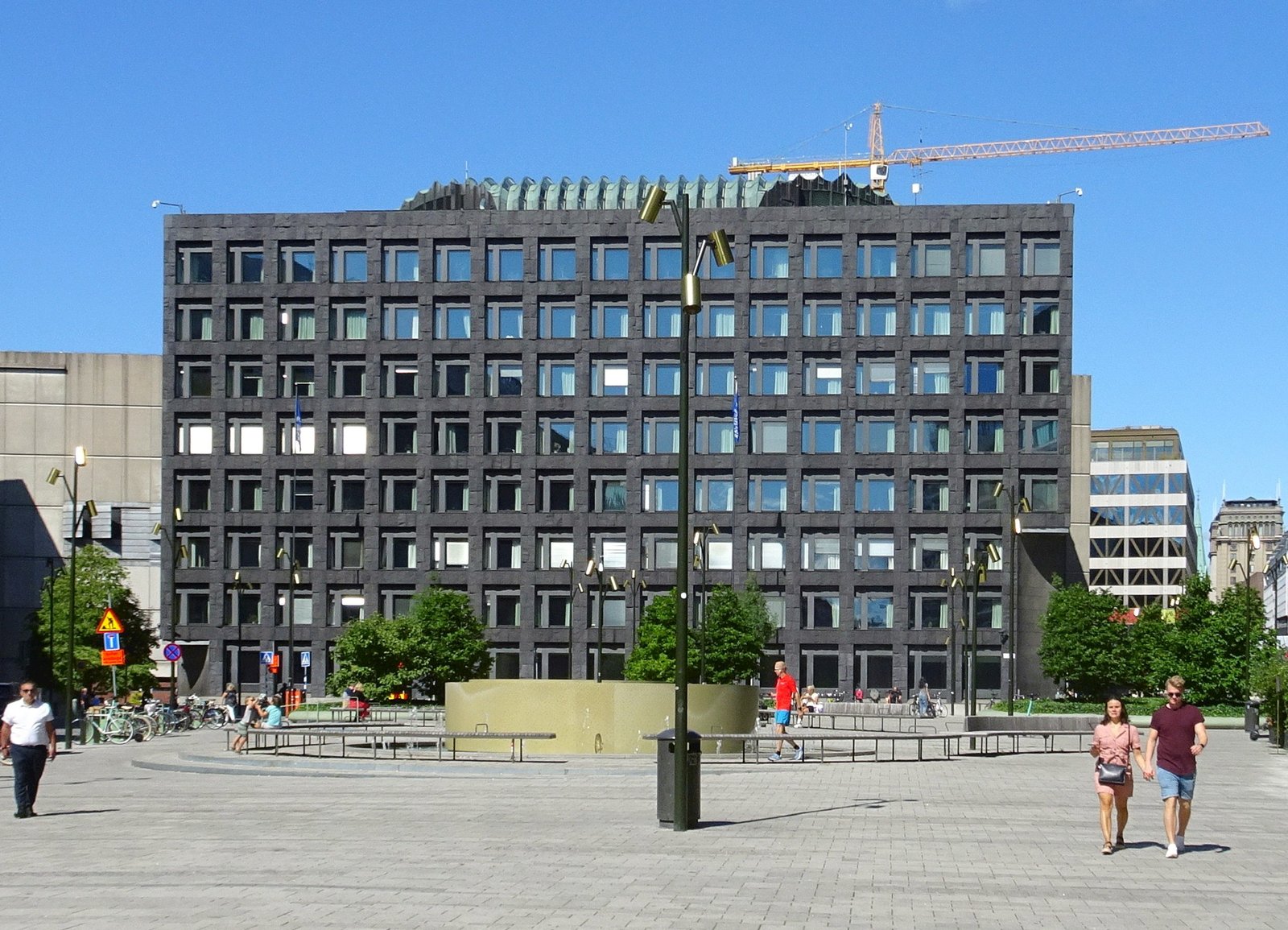
Note: the featured image is a file photo of the European Central Bank building in Frankfurt, taken in July 2019, not a photograph from October 2026.
Sources: Eurostat, “Euro area annual inflation up to 4.0%”, 4 November 2026, https://ec.europa.eu/eurostat/web/products-euro-indicators/w/2-04112026-ap ; Reuters, “Euro zone inflation rises to three-year high”, 4 November 2026, https://www.reuters.com/business/euro-zone-inflation-rises-three-year-high-2026-11-04/