








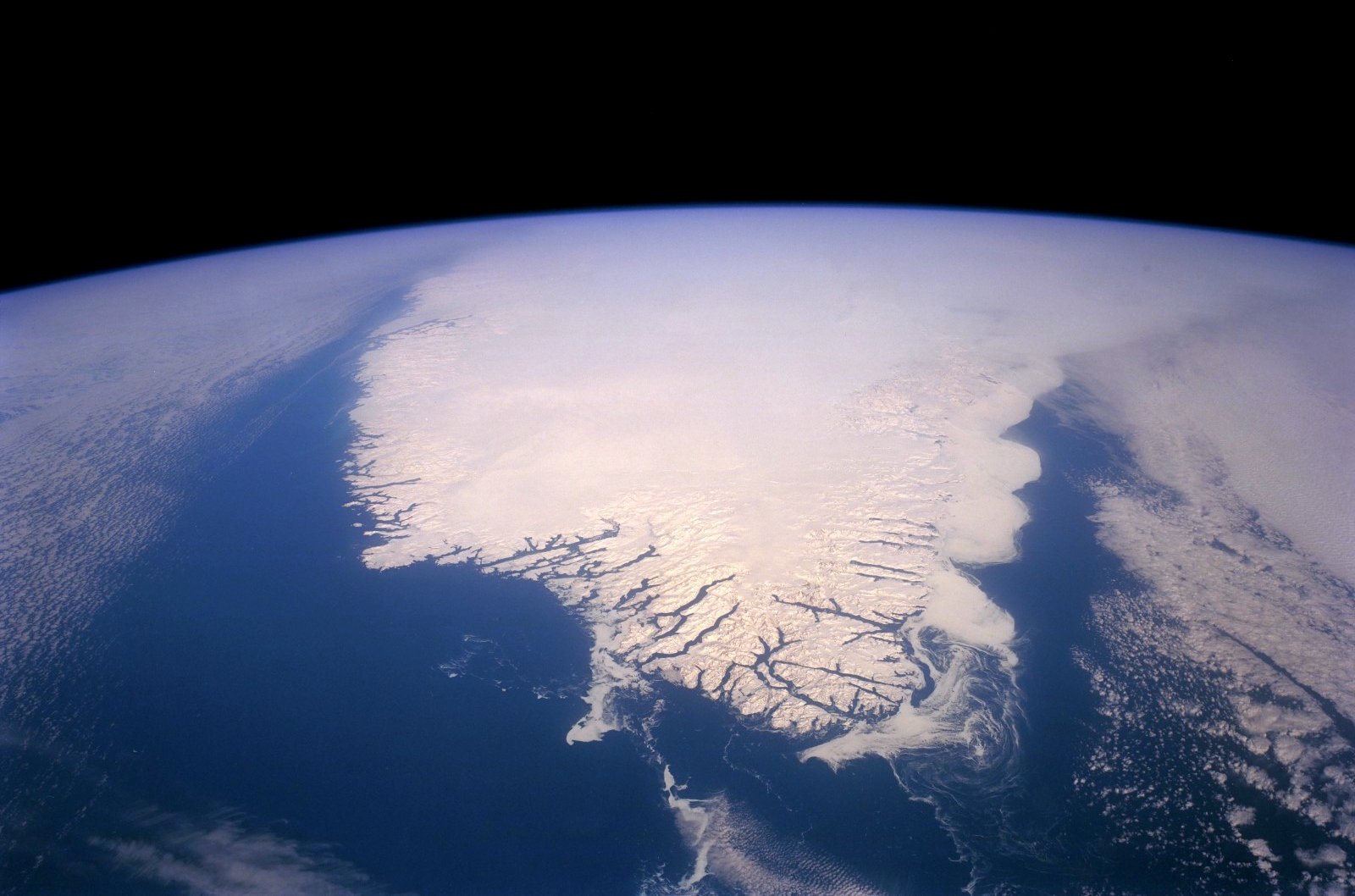
About 416,000 years ago, the ground beneath Camp Century in north-west Greenland lay open to the sky. Summers there were 4.7°C warmer than today, and the edge of the Greenland ice sheet sat more than 60 miles (97 kilometres) behind its present position, according to a new University at Buffalo-led study.
The findings come from sediment drilled from nearly a mile beneath the ice in the 1960s at Camp Century, a secret US Army base built to hide nuclear missiles under the ice as part of the failed Project Iceworm. Earlier work had already shown the sediment last saw sunlight around 416,000 years ago. The new study goes further: it is the first to put a number on how warm the summers were when the ice disappeared.
The team, led by postdoctoral fellow John Michael Aguilar, reconstructed the temperatures from fatty molecules left behind by bacteria and preserved in the sediment, comparing them with similar molecules found in modern Arctic lakes. “It’s striking that a period of moderately warmer temperatures coincided with such a substantial retreat of the ice sheet,” Aguilar said.
The warm spell, known to scientists as Marine Isotope Stage 11, may have lasted tens of thousands of years — and that duration, the researchers argue, is the key to understanding why the ice retreated so far. Camp Century remained covered by ice during similarly warm summers 5,000 to 10,000 years ago, after the last Ice Age. Sustained warmth over a very long period, rather than peak temperature alone, appears to have given the ice sheet the time it needed to melt back.
That distinction matters for Greenland’s future. Depending on emissions, average annual Arctic temperatures could rise by 3.3 to 10 degrees Celsius by the end of this century, according to the Intergovernmental Panel on Climate Change. Corresponding author Elizabeth Thomas, an associate professor of earth sciences at the University at Buffalo, cautioned against assuming Greenland’s ice will respond slowly. “Today’s human-caused warming is more intense than the warm period 400,000 years ago,” she said. “And climate projections suggest that this warmth could persist for hundreds or thousands of years. Both the magnitude and duration of warming are important to understanding how the ice sheet will respond.”
The sediment at the heart of the study has its own remarkable history. Chester Langway, who led the Camp Century drilling, brought the samples to the University at Buffalo in 1975. They then spent more than two decades largely forgotten at the University of Copenhagen before a chance freezer cleanout in 2018 brought them back to researchers’ attention. The study was funded by the US National Science Foundation and published in the journal Climate of the Past on 28 September 2026.
Sources: SciTechDaily, “Scientists Discover Greenland’s Ice Sheet Once Retreated 60 Miles” (9 November 2026), https://scitechdaily.com/scientists-discover-greenlands-ice-sheet-once-retreated-60-miles/ ; Aguilar, J. M. N. et al., “Holocene-like summer climate during Marine Isotope Stage 11 in northwestern Greenland”, Climate of the Past, 28 September 2026, https://doi.org/10.5194/cp-22-1757-2026