








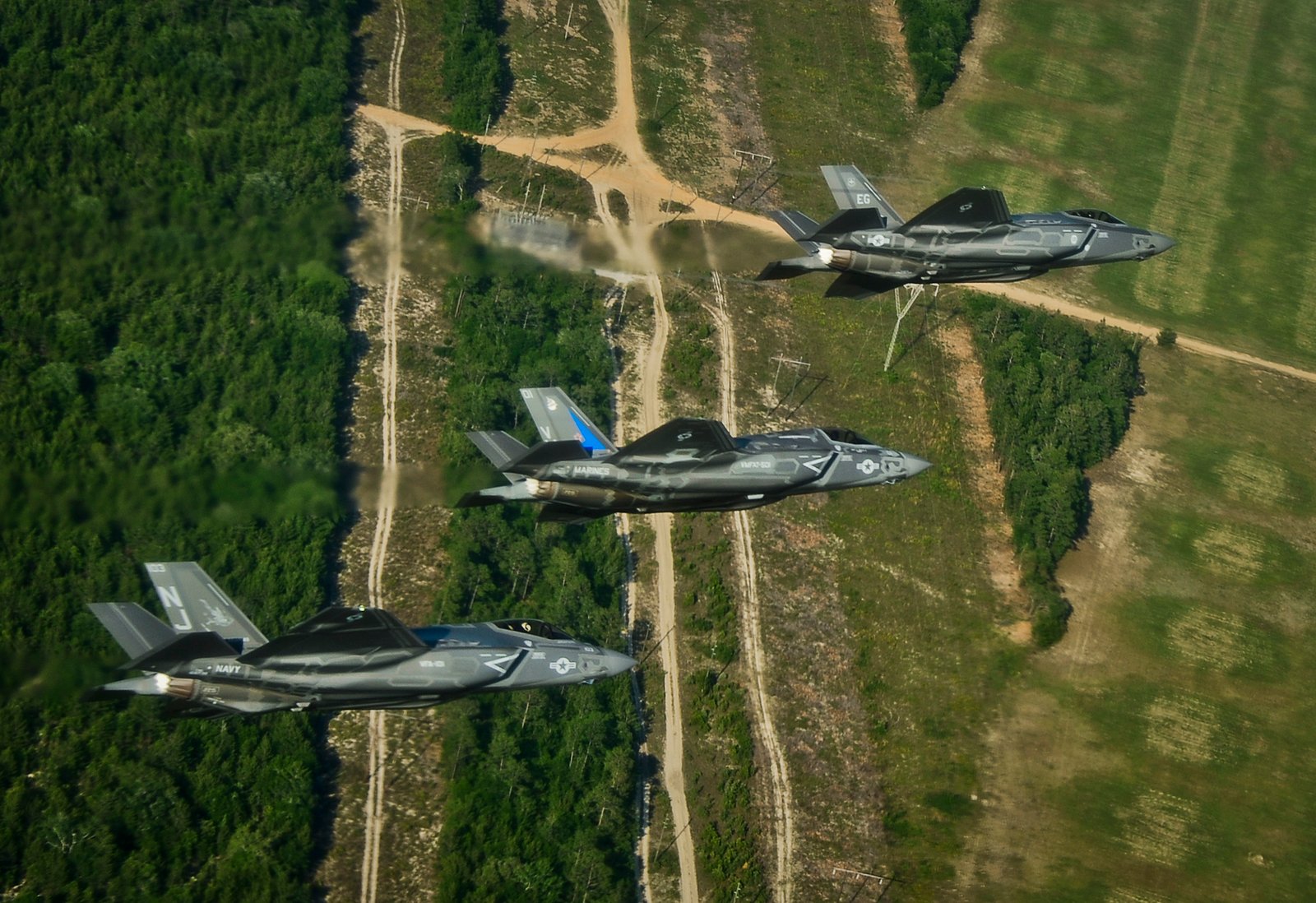
The Pentagon still cannot properly account for the spare parts keeping the world’s most expensive fighter jet flying, the US Government Accountability Office has found. In a report published on 9 November, the watchdog said the Department of Defense does not keep complete records of the roughly 26 million F-35 spare parts it owns, a pool worth an estimated $31 billion spread across more than 700 contractor- and government-managed facilities worldwide.
As of March 2026, more than 17,000 parts undergoing maintenance or repair, worth at least $1.3 billion, had never been entered into the programme’s official tracking system. The GAO also found that more than one million parts worth over $85 million, first reported missing in 2023, remain unaccounted for.
The problem lies in reconciliation. The F-35 Joint Program Office tracks government-owned parts in a system called the Enterprise Logistics Management System, but that system does not connect directly to the property systems run by the programme’s two prime contractors, Lockheed Martin and Pratt & Whitney. Instead, the office relies on data submitted by the contractors, generally every three months. In one submission in December 2025, only 29 per cent of records included a serial number, only 43 per cent carried a National Stock Number, and almost 6 per cent listed an acquisition cost of one US cent or less.
Some parts are held at sub-subcontractor facilities whose locations the prime contractors do not even know, while others sit in transit or under repair without being tracked in either government or contractor systems. Physical stocktakes have not closed the gap: since the 2020 fiscal year the programme office has spent at least $17 million on inventories at contractor- and government-managed sites, but the GAO found they did not adequately verify either that listed parts existed or that every part physically present was recorded. One prime contractor’s property management system had received a disapproved rating from the Defense Contract Management Agency, partly for failing to document movements and maintain records.
The findings carry a security dimension. In September, a shipment of F-35 components sent from Australia to the United States for repair, including a cockpit canopy and a weapons-bay door, was diverted to Hong Kong instead. The diversion raised concerns that China could gain access to technology linked to the aircraft’s low-observable characteristics, although no evidence has established that Chinese authorities obtained classified technology, and the GAO did not link the incident to the inventory failures in its report.
The Pentagon has accepted all four of the GAO’s recommendations, which call for stronger procedures to monitor reported losses, programme-specific guidance and training for accountable property officers, and clearer staffing for the programme office’s property accountability organisation. The F-35 Joint Program Office said it was developing the procedures and training and modernising its property systems with direct, real-time data links to the contractors. The Defense Contract Audit Agency is now working with the programme office to establish an auditable baseline of parts, with the first full inventory targeted for completion in March 2027.
Sources: US Government Accountability Office, “F-35 Program: DOD Needs to Strengthen Oversight of Tens of Billions of Dollars in Parts” (GAO-27-108713), 9 November 2026; The Aviationist, “Pentagon Still Cannot Account for Billions of Dollars in F-35 Spare Parts, GAO Finds”, 10 November 2026 (https://theaviationist.com/2026/11/10/pentagon-cannot-account-f-35-spare-parts/).