

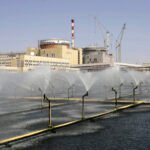



Russia has agreed to work with Ghana on developing a 2,000-megawatt nuclear power plant, following talks at the Russia-Africa Summit, Ghana’s foreign minister said on Saturday.
Samuel Okudzeto Ablakwa said the project was aimed at strengthening Ghana’s energy security and industrialisation, in a statement on X reported by Reuters. The announcement gives Ghana, which has long debated adding nuclear power to its energy mix, a major new partner for a plant on a scale that would transform its electricity supply.
The deal came a day after Russia’s state nuclear corporation, Rosatom, said it was in talks with four African countries, including Ghana, on large nuclear power projects. Rosatom is already one of the world’s biggest builders of nuclear plants abroad, and the Russia-Africa Summit, first held in 2019, has become a central vehicle for Moscow’s push to deepen economic ties across the continent through energy cooperation.
The two countries also agreed to deepen defence ties through a new pact covering assets for Ghana’s military. In a striking aside, Ablakwa said Russian President Vladimir Putin had barred the participation of Ghanaians in Russia’s war in Ukraine, including through irregular recruitment or voluntary enlistment — an issue that has drawn concern in several African countries since the full-scale invasion began.
Other commitments announced alongside the plant included support for Ghana’s agriculture sector and increased scholarships for Ghanaian students in Russia.
The announcement rests on the foreign minister’s statement, as reported by Reuters; no timetable, financing terms, reactor type or site for the plant were disclosed. Those details will determine whether the 2,000-megawatt project becomes a working power station or remains, for now, a statement of intent.
For Ghana, the prize is clear: reliable, large-scale power to support industry and cut dependence on erratic supply. For Russia, the deal is another foothold in Africa’s energy future — and a reminder that, even as Western governments seek to isolate Moscow over Ukraine, it continues to find partners willing to sign up for its nuclear, military and education offers.
Sources: Reuters, “Ghana says Russia to back 2,000 MW nuclear plant, deepen ties” (31 October 2026), https://www.reuters.com/world/africa/ghana-says-russia-back-2000-mw-nuclear-plant-deepen-ties-2026-10-31/