






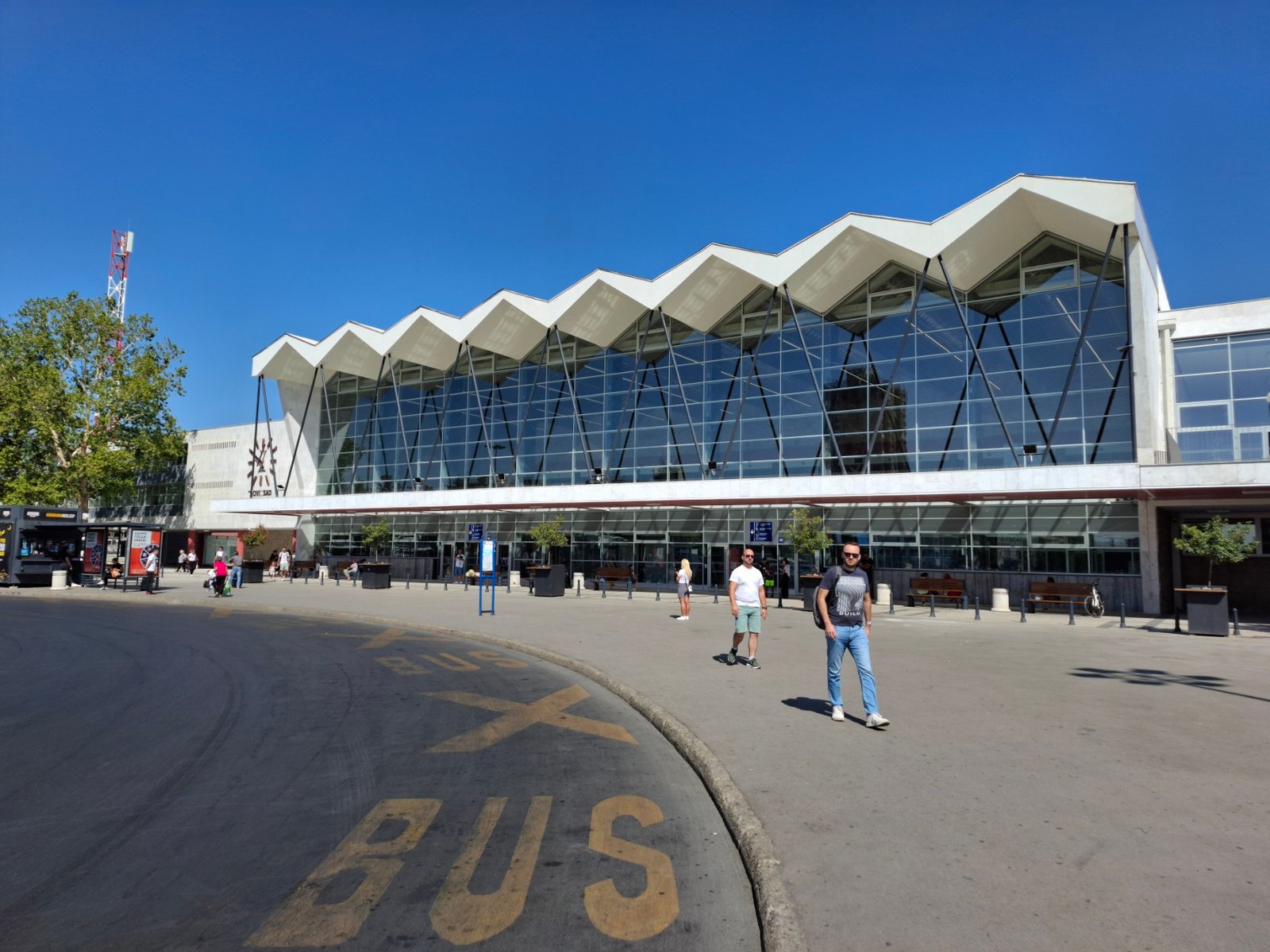
Tens of thousands of people gathered at Novi Sad’s main railway station on Sunday to mark the second anniversary of the disaster that reshaped Serbian politics.
Crowds converged from across the city on the station where a concrete canopy crashed down shortly before noon on 1 November 2024, killing 16 people. Mourners observed 16 minutes of silence — one for each victim — before laying wreaths, flowers and candles near the site.
For many of those present, the anniversary was as much about healing as about remembrance. “On a personal, emotional, and social level, I hope for a collective healing,” said Zorana Sijan Oborina, a student supporter.
The collapse struck a station renovated under a China-backed high-speed rail project, and protesters quickly treated it as a symptom of a wider problem: corruption and impunity under the long rule of Aleksandar Vucic. What began as grief and anger grew into Serbia’s largest nationwide anti-corruption movement in years, forcing resignations — including that of the construction minister — a government reshuffle and eventually snap elections.
That movement reached its political conclusion a week ago. On 25 October, the Student List — a bloc drawn from student assemblies that also includes academics, professionals, farmers, actors and activists — won 141 seats in the 250-member parliament, according to a preliminary tally. Final results are still due but are not expected to change the outcome.
Vucic, who stood as his SNS party’s candidate for prime minister at the end of his presidential term, acknowledged defeat and left office. A presidential election is expected before the end of the year.
Yet the legal reckoning for the disaster itself remains unfinished. Prosecutors indicted 13 people over the collapse, but pretrial proceedings have stalled, and the defendants deny any wrongdoing. For survivors and relatives, that unresolved accountability hung over Sunday’s commemoration.
“I hope we have finally realised that we shouldn’t wait … years to change what is bad, especially when it costs human lives,” said Jelena Trajkovic, 32, an academic from Novi Sad.
Two years on, the station has become both a memorial and a measure of how far Serbia has travelled — from a single afternoon of tragedy to a change of government, with the question of justice for the 16 victims still open.
Sources: Reuters, “Serbians mark railway disaster that led to rise of victorious student movement” (https://www.reuters.com/world/serbians-mark-railway-disaster-that-led-rise-victorious-student-movement-2026-11-01/)