







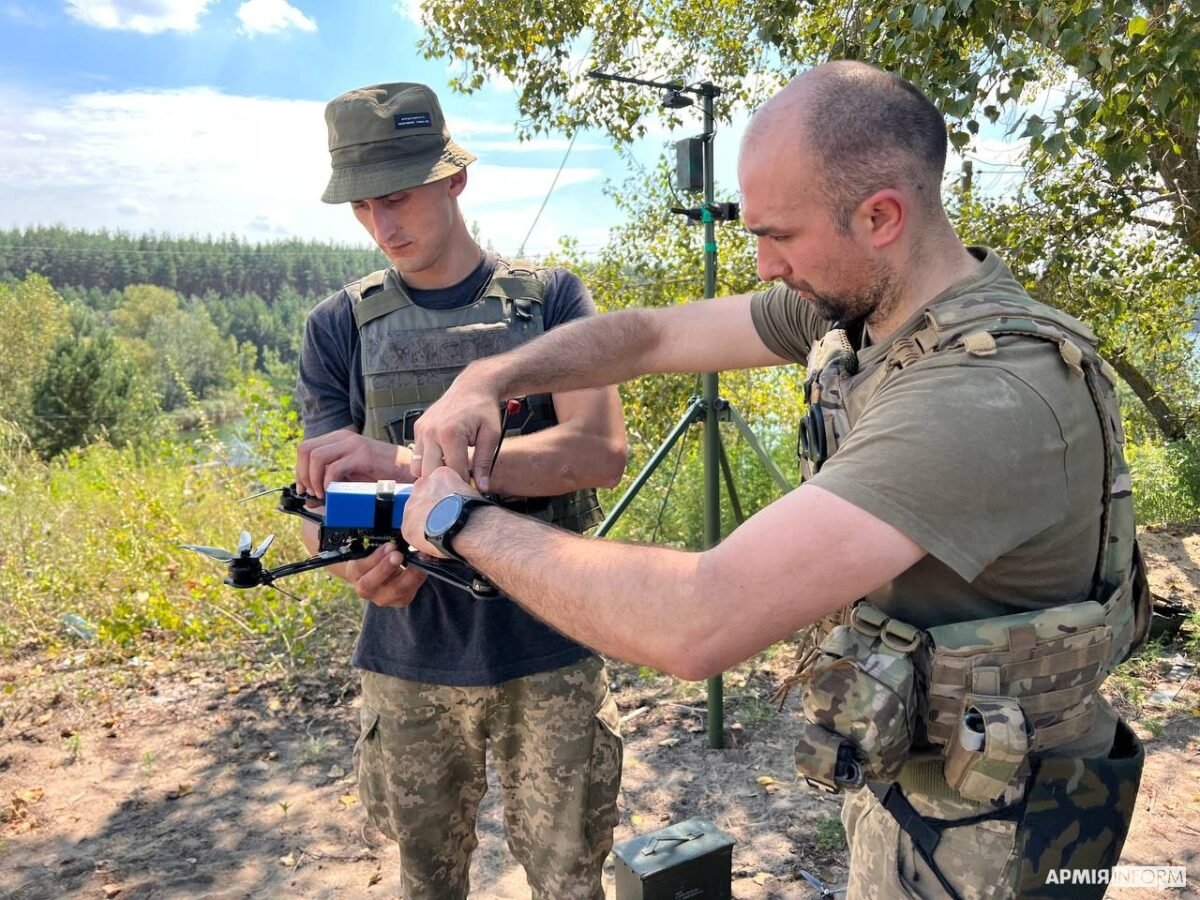
Ground robots mounted with machine guns led the way. Behind them, small teams of elite Ukrainian troops edged forward under a swarm of drones, while electronic jamming overhead scrambled enemy signals. It was the shape of a new kind of battle — and, according to a Reuters investigation published on Wednesday, it delivered Kyiv a rare success on a front that has offered few of them.
The operation, codenamed Vivaldi after the composer’s “Four Seasons”, ran through the spring and summer in eastern Ukraine and ended last month. Its aim was to break a Russian attempt to outflank the so-called “fortress belt”, the chain of eastern cities whose capture Moscow regards as essential to its war aims. The counteroffensive freed just 277 sq km (107 sq miles) of the 177,000 sq km of Ukrainian territory Russia occupies, but it reclaimed a key salient north of Sloviansk and halted the encirclement attempt, according to the Ukrainian military.
At the heart of the operation was the Third Army Corps, one of Ukraine’s premier formations. Its troops deployed remotely controlled ground vehicles armed with heavy machine guns, grenade launchers or explosives to strike Russian positions, while others cleared minefields. In at least one instance, combat robots were dropped behind enemy lines by repurposed quadcopter bomber drones — which the Ukrainian military said was a first for the war.
Aerial drones swept down on dugouts deemed too risky for soldiers to enter first, and mid-range strike drones hit Russian supply routes and command posts dozens of miles behind the front. Above it all, a “protective dome” of electronic warfare knocked out enemy drones, commanders said. The operation also relied on Starshield, the military version of Elon Musk’s Starlink satellite service, for some battlefield communications.
Commanders said the approach showed that smart integration of drones and robots could offset Kyiv’s troop deficit against a much larger Russian army. “Now, a thousand assets can be in the sky and on the ground in the same area at the same time,” said Brig. Gen. Andrii Biletskyi. His troops, he said, now train to fight in formation with robotic systems rather than alongside armoured vehicles alone.
The victory was limited, analysts cautioned. Christopher Tuck, an expert in strategic studies at King’s College London, called it “a limited victory” that inflicted “an operationally significant defeat” on one Russian outflanking attempt, but “still an offensive operation that was local in its impact”. Rob Lee of the U.S.-based Foreign Policy Research Institute noted the fighting took place in an area less saturated with drones than other parts of the front, and said punching through the drone-infested “kill zone” remains a serious challenge for Ukraine’s undermanned military.
Note on sourcing: Reuters said it could not independently verify Ukrainian battlefield accounts or the claim by Biletskyi that Ukraine lost around seven times fewer troops than Russia during the operation, though the territorial gains have been recorded by open-source analysts mapping the front line. Russia’s defence ministry did not respond to Reuters’ questions about the operation, and Moscow says its troops continue to advance along the 1,200 km front.
Sources: Reuters — “Operation Vivaldi: Ukraine melds man and machine to repel Russians” (https://www.reuters.com/business/aerospace-defense/operation-vivaldi-ukraine-melds-man-machine-repel-russians-2026-11-18/)