








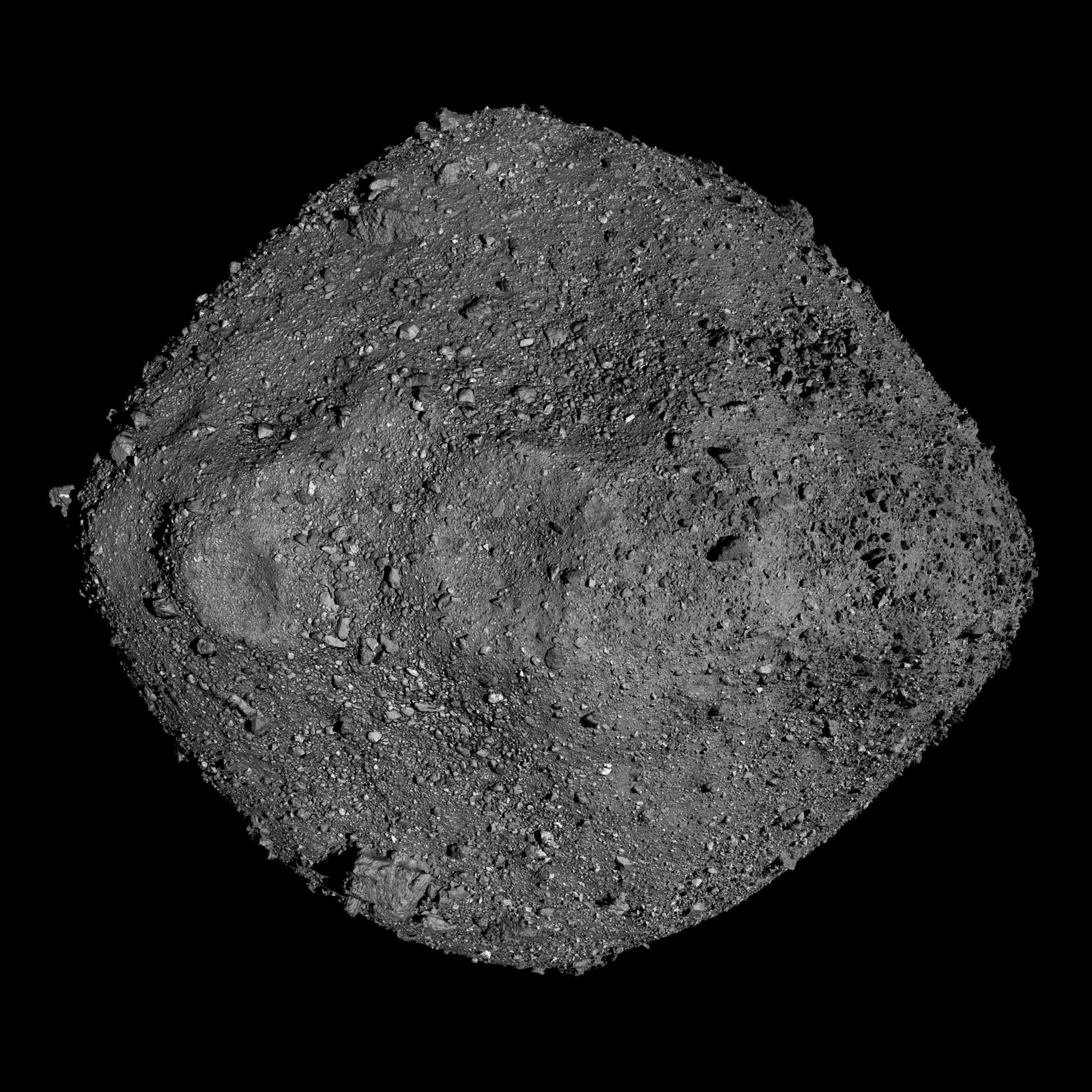
Amino acids collected from the asteroid Bennu may have formed in different parts of the solar system from those found in a meteorite that fell to Earth, even though the two sets of molecules were made by the same chemical process, scientists reported on Wednesday.
The finding comes from a Penn State-led team that analysed samples of the asteroid returned to Earth in 2023 by NASA’s OSIRIS-REx mission, alongside a sample of the Murchison meteorite, which fell in Australia in 1969. Both contain amino acids, the molecules that build proteins and are essential to life as we know it.
The researchers used a new technique that measures the isotopes — versions of atoms with slightly different masses — at individual positions inside a molecule, rather than averaging across the whole molecule. That gave them a much more detailed fingerprint of where each atom came from. The work used two instruments, including the pico-CSIA, which exists only at Penn State, and a modified gas chromatography-Orbitrap mass spectrometer.
They focused on beta-alanine, one of the most abundant amino acids in asteroid and meteorite samples. Beta-alanine is not one of the 20 amino acids that build proteins, but the body produces it naturally and it can combine with other amino acids to form peptides that act as molecular enzymes.
On average, the carbon isotope values in the Bennu and Murchison beta-alanine looked almost identical. But inside the molecule, they were completely different: of the three carbon atoms, one was heavily enriched in neutrons while the other two were depleted, and the pattern differed sharply between the two samples. The enriched carbon in the Bennu sample was the highest isotope anomaly ever recorded in an organic molecule from space.
“I was genuinely astonished by the enormous isotope difference between two neighbouring atom positions within the same molecule,” said Katherine Freeman, a professor of geosciences at Penn State and the project’s principal investigator. She said the preservation of such differences indicated the molecules were primordial, formed “at the very dawn of the solar system, possibly even before the formation of Earth.”
The team had previously studied glycine, the simplest amino acid, in Bennu material and found it may have formed in a harsh, cold environment — challenging the long-held idea that life’s building blocks formed under warm, wet conditions. The new results extend that picture: the same chemistry can produce these molecules in very different places.
Lead author Ophélie Mcintosh, a former Penn State postdoctoral researcher, said the discovery “broadens our understanding of the type of environments where you can form those very important molecules for prebiotic chemistry.” The team now plans to study how exposure to space environments, including water, alters the isotope patterns inside molecules.
The Bennu sample is especially valuable because it came directly from space, untouched by Earth’s environment, whereas meteorites are exposed to terrestrial contamination after they land. The OSIRIS-REx mission has ended, but analysis of its samples continues.
Sources: Phys.org, “Bennu asteroid analysis suggests unexpected origins for organics in space”, 11 November 2026 — https://phys.org/news/2026-11-bennu-asteroid-analysis-unexpected-space.html ; Ophélie M. Mcintosh et al., “Nitrogen and intramolecular carbon isotopic measurements of β-alanine in samples from asteroid Bennu and the Murchison meteorite”, Communications Earth & Environment (2026), DOI: 10.1038/s43247-026-04084-9 — https://doi.org/10.1038/s43247-026-04084-9