







The frozen parts of the planet — ice sheets, mountain glaciers, sea ice, snow and permafrost, collectively known as the cryosphere — have moved beyond the “safe operating space” that sustained human civilisation, according to a landmark study published in Science on Thursday. The research, carried out by more than 30 scientists from 11 countries and presented at the COP31 climate summit in Antalya, is the first to define precautionary boundaries for the cryosphere within the planetary boundaries framework.
The team, led by researchers at the Stockholm Resilience Centre, assessed four indicators of cryosphere health — sea ice area, snow cover area, permafrost temperature and land ice volume — against conditions over the past 11,700 years, the Holocene period of relative climatic stability in which human civilisations developed and thrived. Three of the four — sea ice in both the Arctic and Antarctic, snow cover, and the extent of permafrost — have already passed their safe thresholds. Land ice, almost 90 per cent of which sits in Antarctica, is still inside its boundary but is on its way out.
The authors describe an “accelerating and partly irreversible loss of cryospheric integrity”. The frozen landscapes regulate the planet’s energy, water, carbon and methane cycles and store vast amounts of carbon. Their breakdown accelerates warming, drives sea level rise, degrades ecosystems and raises the likelihood of catastrophic flooding and drought. The study attributes the decline predominantly to human-induced climate change, with black carbon emissions and industrial and infrastructure expansion in cold regions adding to the pressure.
“Compared to other spheres of the Earth system, our systematic understanding of the cryosphere arrived late,” said lead author Dr Bo Su of the Stockholm Resilience Centre and Beijing Normal University. “Only in recent decades have we come to recognise its critical role in maintaining planetary stability, resilience, and habitability, and to grasp the severity of its ongoing degradation.” Professor Johan Rockström, director of the Potsdam Institute for Climate Impact Research, said the findings were a reminder to leaders at COP31 of “the significance of cryosphere governance”.
The consequences are already reaching far beyond the polar regions. Professor Petra Heil of the British Antarctic Survey warned that melting permafrost and glaciers endanger nearby and downstream regions, while accelerating sea level rise threatens coastal communities. Professor Andrew Mackintosh of Monash University noted that ice “remembers”: even if temperatures stabilise, parts of the world’s land ice can be locked into processes that keep it changing for centuries. Antarctica’s ice sheet alone could drive multi-metre sea level rise. The authors urge policymakers to use the safe operating space as a scientific basis for precautionary targets — cutting greenhouse gas and black carbon emissions and reducing local disturbance in cold regions.
Sources: Su, B. et al., “The Cryosphere Beyond a Planetary Safe Operating Space”, Science (12 November 2026), https://www.science.org/doi/10.1126/science.aef5636; Monash University / Australian Science Media Centre, “Cryosphere Decline Beyond Safe Planetary Limits”, https://www.scimex.org/newsfeed/cryosphere-decline-beyond-safe-planetary-limits-putting-conditions-for-human-society-at-risk
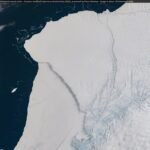
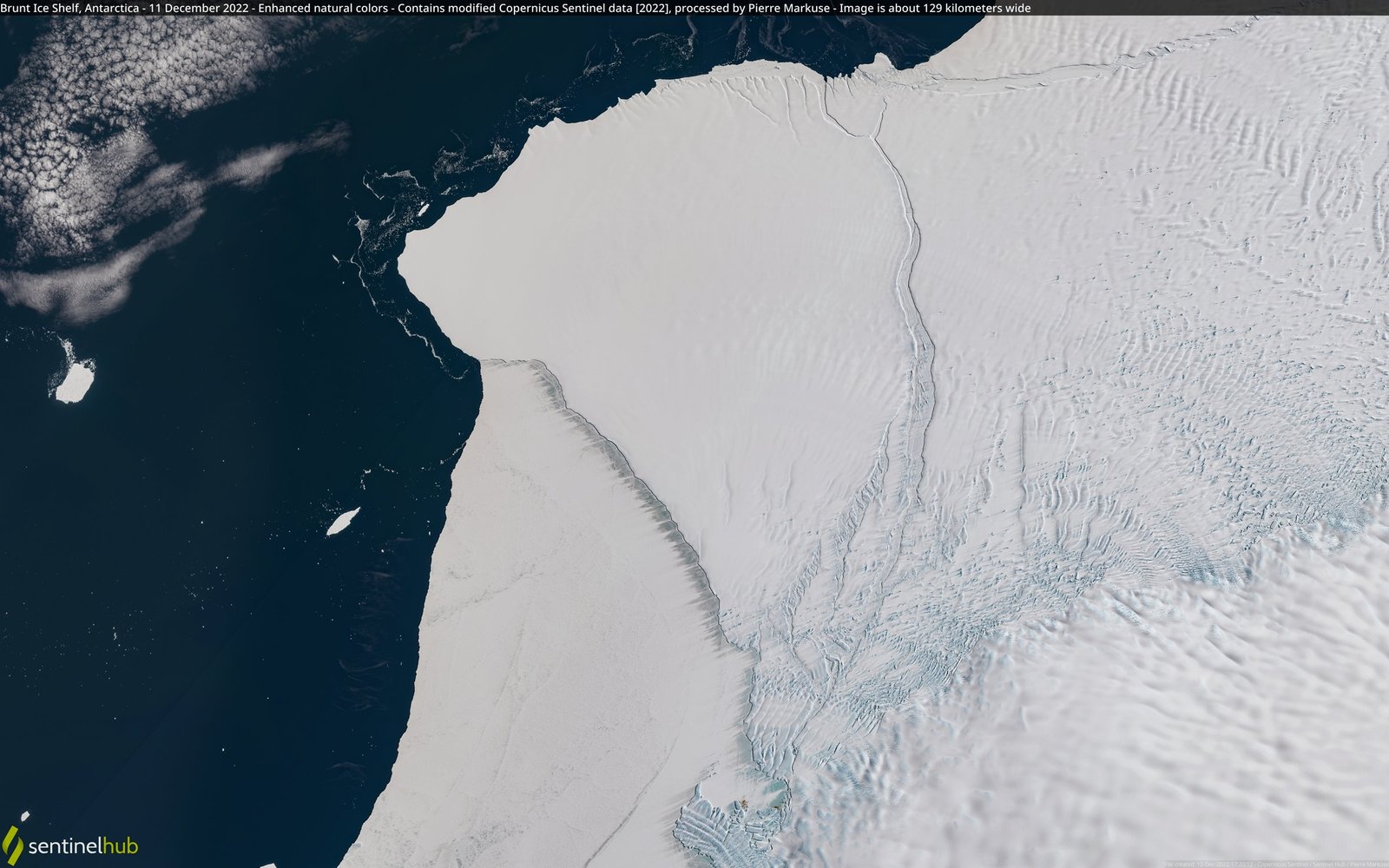
File photo: the Brunt Ice Shelf, Antarctica, December 2022. This image is not from the study itself.