









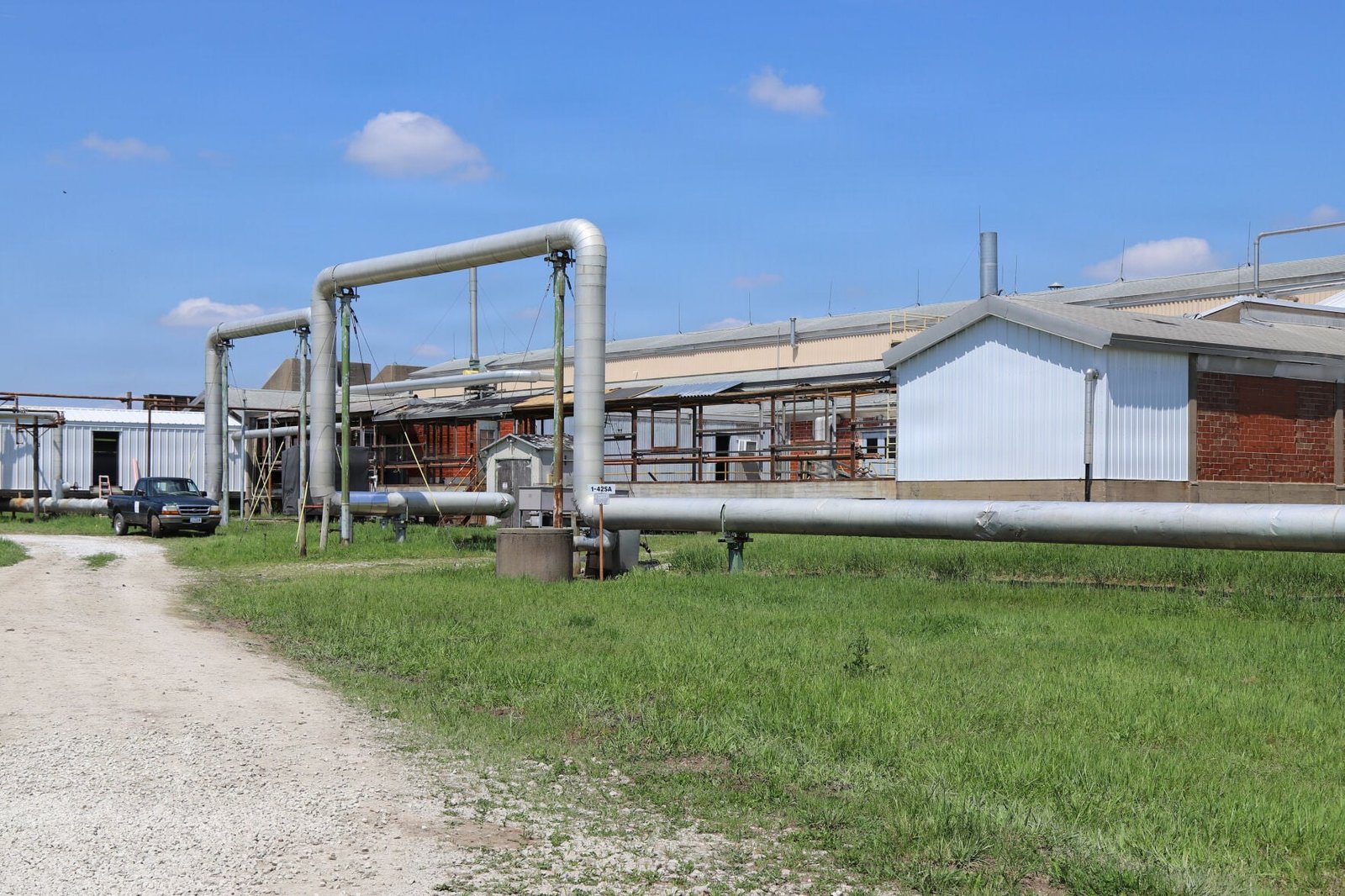
A federal judge has ordered the US Army to pause its plan to detonate five tons of a degraded explosive at an ammunition plant in south-eastern Iowa, after environmental groups sued over fears the blast would scatter lead dust across nearby communities.
The Army had planned to destroy 68 drums of lead azide — about 9,700 pounds of the material — at the Iowa Army Ammunition Plant near Middletown, in a controlled detonation that was first scheduled for Friday and then pushed to Monday after an outpouring of public concern. The judge’s order, issued on Friday, gives no date for further court action, but the Environmental Protection Agency said it planned to file a response by 22 November.
Lead azide is a primary explosive used to detonate munitions. It can explode from shock, heat, flame or friction when dry, according to a federal hazardous materials database, and the stockpile at Middletown had become dangerously unstable after sitting for more than 20 years in earthen-covered bunkers, stored in a bath of ethanol and water to keep it stable. The Army discovered the degradation in March.
The Army says moving the material would be more dangerous than detonating it where it sits. Packing and transporting it poses what the Army calls an unacceptable risk of accidental detonation, a danger that grows in cold weather. Officials had said Monday was the latest possible moment before a forecast temperature drop risked destabilising the material further. The EPA issued an emergency permit on 13 November allowing the detonation to take place at any point up to 11 February 2027.
But the Army’s own advisory acknowledges that the blast would produce an air plume carrying lead particles that would disperse and settle on the ground, and that lead levels in the air could be elevated. Residents of a neighbourhood in Middletown, a town of fewer than 400 people about 160 miles south-east of Des Moines, were asked to leave their homes for several hours, and schools across the region closed. The Army also warned that noise and ground vibrations could cause localised window damage.
How much lead the blast would release is not clear. Lead is toxic to the brain, and no amount of exposure is considered safe. Patrick O’Shaughnessy, a University of Iowa professor and environmental health expert, told CNN that larger particles would probably land within 20 miles of the plant, while much smaller ones could stay aloft and drift downwind towards Iowa City. He said he and colleagues planned to test the air and ground to measure any fallout.
Residents say they were given too little warning and too little information. “There’s just so many details that I feel like haven’t been addressed with the public,” said Lucy Giehl, who lives about four miles north of the plant. Sue Dyer, who farms 1,200 acres of corn and beans about 18 miles west of the facility, said she only learned of the plan a few days ago. “If this stuff deposits lead all over everything, what the heck are we supposed to do? We’re just going to be poisoned every day,” she said.
Iowa already has the second-highest cancer rate of any US state, and is one of only three states where the rate is rising. Michael Schmidt, general counsel at the Iowa Environmental Council, said the Army had known about the unstable material for months yet gave residents only five days’ notice. “Iowans deserve a transparent, coordinated, and effective response to this unprecedented event,” he said.
Governor Kim Reynolds has activated the State Emergency Operations Center to coordinate state agencies with the Army and the EPA. Across the Mississippi River, Illinois Governor JB Pritzker said he had spoken to Acting Army Secretary Adam Telle to urge more transparency, after modelling showed parts of western Illinois could also be exposed to lead dust. Illinois health officials advised residents to stay indoors and keep windows closed for 24 to 48 hours after any detonation.
Earthjustice, the environmental law group representing the plaintiffs, said the cleanup requirements in the emergency permit were inadequate and that there was insufficient understanding of how far the plume would spread or which land and waterways, including the Mississippi River, would be blanketed with lead dust. For now, the detonation is on hold — and the Army’s plan to dispose of its most dangerous stockpile is back in court.
Sources: CNN — “Judge halts Army’s plan to detonate 5 tons of bomb-making material as Iowa residents worry about lead exposure” (https://www.cnn.com/2026/11/20/us/iowa-lead-azide-army-detonation); Associated Press — “Iowa residents brace for a lead dust cloud as Army plans to detonate 5 tons of bomb-making chemicals” (https://www.greensborotimes.com/stories/iowa-residents-brace-for-a-lead-dust-cloud-as-army-plans-to-detonate-5-tons-of-bomb-making,2268461)