








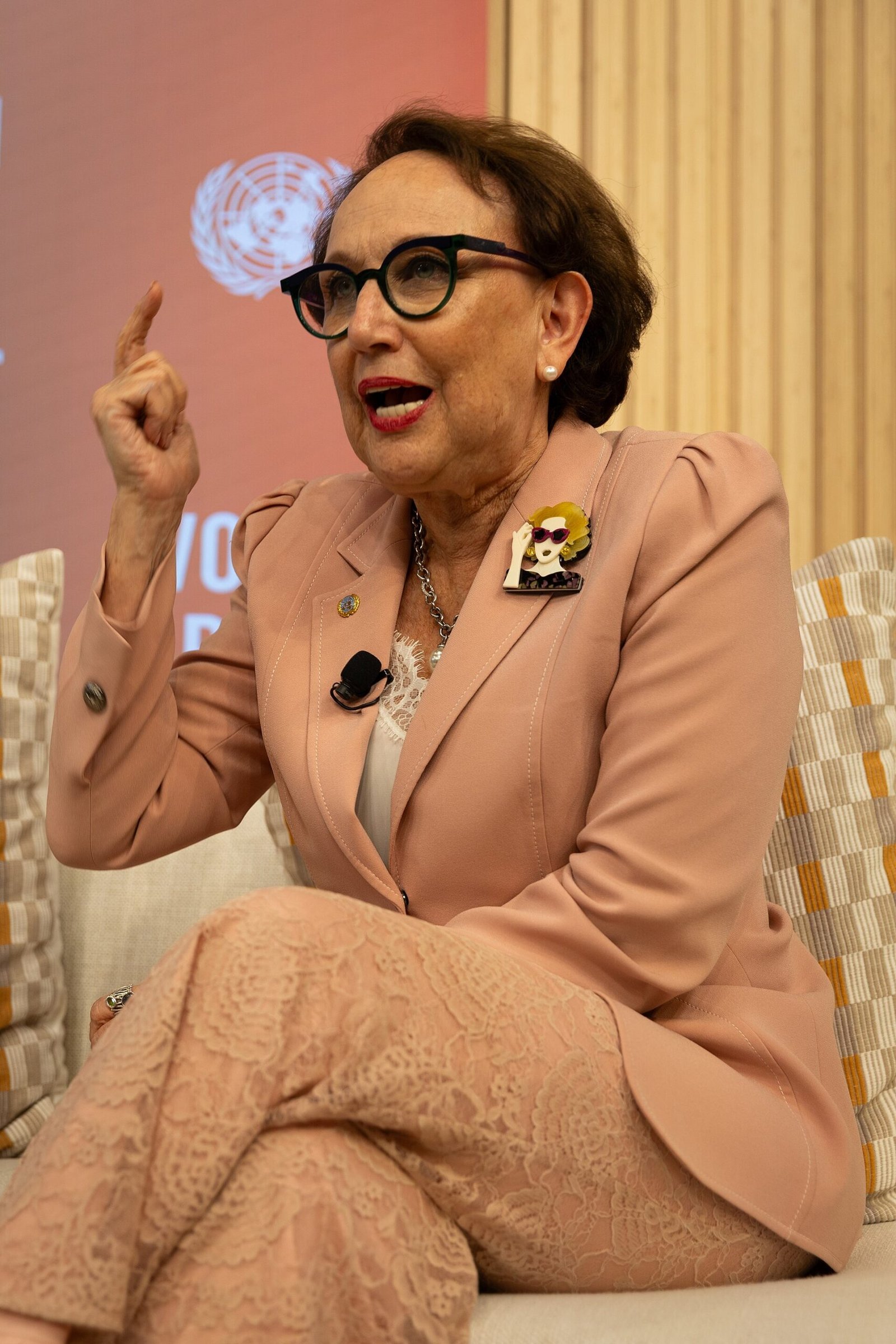
Costa Rica’s Rebeca Grynspan remains the frontrunner to become the next secretary-general of the United Nations, but her path to the top job is blocked after two veto-wielding powers voted against her in the Security Council’s ninth informal straw poll on Friday.
Grynspan, who heads the UN Conference on Trade and Development (UNCTAD), won 10 “encourage” votes and four “discourage” votes in the ballot, three diplomatic sources told Reuters. Two of the votes against her came from permanent members of the 15-nation council — the five powers whose opposition can veto any candidate outright.
The result means she was the only candidate to clear the nine votes needed for a council recommendation, yet still cannot be appointed while permanent members oppose her. A candidate must win nine “encourage” votes and no “discourage” votes from any of the five permanent members — the United States, Britain, France, Russia and China.
Grynspan has now led seven of the nine polls held so far, and her position looked stronger than ever after the council’s eighth ballot on 5 November, when she won 12 encouragements against three discouragements. Friday’s result reversed that momentum, cutting her support and exposing the veto problem that has dogged the race from the start.
Argentina’s Rafael Grossi, director general of the International Atomic Energy Agency, placed second on Friday with eight “encourage” votes and six “discourage” votes, including three from permanent members. The United Arab Emirates’ Lana Nusseibeh was third with seven encouragements and six discouragements, three of them from permanent members. Guyana’s Carolyn Rodrigues-Birkett also drew two votes against from permanent members, Reuters reported.
The ballot was secret, so it is not officially known which permanent members voted against whom. The Guardian reported, citing multiple sources, that Britain and France effectively vetoed Nusseibeh over the UAE’s alleged links to atrocities in Sudan, while the two votes against Grynspan are believed to have come from the United States and Russia — claims that have not been officially confirmed.
The deadlock leaves the contest unresolved with Guterres’s second term ending on 31 December. The search for his successor has now run for more than 100 days, the longest in the UN’s history, and another straw poll is scheduled for next week. If no candidate can win the permanent members’ unanimous backing, the council may have to turn to a compromise figure — or leave the post in the hands of an acting chief when the new year begins.
Grynspan, a former vice-president of Costa Rica, would be the first woman to lead the United Nations if she prevails. Her candidacy has drawn broad support among the council’s elected members, but that counts for little while the veto stands in her way.
Sources: Reuters, “Two veto-wielding powers reject Costa Rica’s Grynspan as UN chief in informal poll, sources say” (https://www.reuters.com/world/americas/two-veto-wielding-powers-reject-costa-ricas-grynspan-un-chief-informal-poll-2026-11-20/); The Guardian, as reported via SRN News (https://srnnews.com/two-veto-wielding-powers-reject-costa-ricas-grynspan-as-un-chief-in-informal-poll-sources-say/).