







First soil and water samples collected after the US Army detonated an ageing stockpile of lead-based explosives in Iowa have found negligible levels of contamination linked to the blast, the US government reported on Saturday.
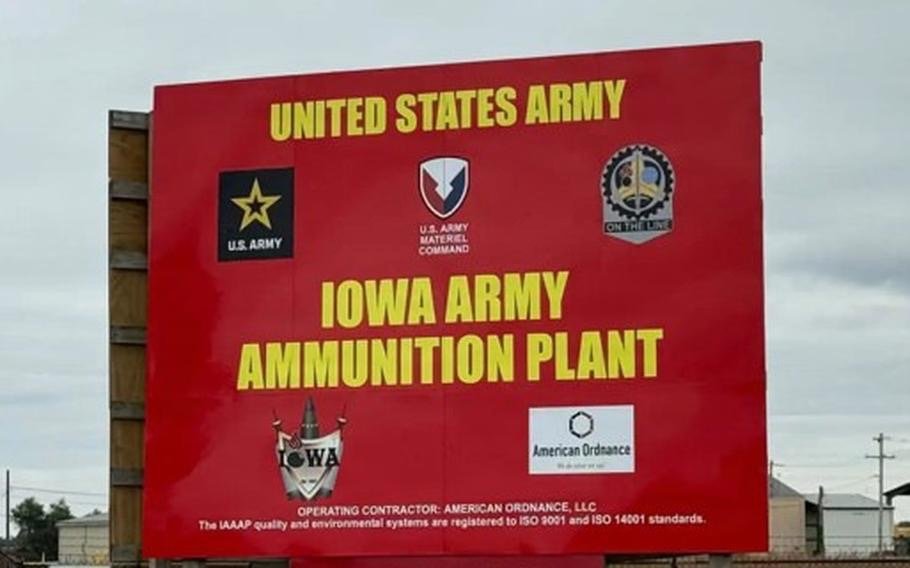
The Environmental Protection Agency posted its readings online three days after the Army blew up nearly five tons (4,500 kg) of highly volatile lead azide stored in 68 degrading plastic drums at a munitions depot in Middletown, a farming town about 150 miles south-west of Des Moines.
According to initial laboratory results from 88 per cent of the post-detonation samples taken by the EPA, measurable concentrations of lead in soil, water and drinking supplies were no higher after the blast than in samples taken beforehand.
In a statement posted on X on Saturday, the EPA said the first lab results indicated the Army’s “controlled detonation … did not result in an elevation of lead in the water bodies that act as drinking water sources” and that there was “no detection of lead in drinking water sources taken after the detonation”.
The agency said its teams had collected more than 1,600 air, water, soil and dust samples after the detonation, roughly the same number taken before the blast, and that 187 homes and other structures had been assessed, including schools, playgrounds, churches and daycare centres.
Residents living closest to the Iowa Army Ammunition Plant were evacuated in advance of Wednesday’s detonation as a precaution, while others sheltered in place inside their homes to avoid exposure to any lead dust from the blast.
Immediately after the detonation, the Army and the EPA said emission monitors had detected zero levels of airborne lead in the surrounding region, and an all-clear notice later in the day advised residents they were free to resume normal activities. The EPA said on Saturday that its air monitoring recorded “0.0 µg/m3 readings” of airborne lead for 30 consecutive hours after the blast.
Army officials attributed the favourable air testing to containment measures designed to muffle the blast and prevent toxic dust from being spewed over homes, crops and livestock beyond the detonation site.
Independent experts welcomed Wednesday’s initial air quality readings but cautioned that atmospheric sampling was of limited value, and that the real measure of lead fallout would come from sampling of water, soil and structural surfaces — analysis that takes longer.
Lead exposure can cause a range of health problems, particularly in children, in whom it can interfere with cognitive development. Once it settles in the environment, it does not break down.
The “controlled, mitigated detonation” was carried out after days of public rancour and legal wrangling over the disposal plan, which US officials said was far safer than waiting for the chemicals to eventually blow up on their own. The Army said that by the time an inspection of the stockpiled barrels in March found them on the verge of spontaneous explosion, it was too late to safely move the containers or chemically neutralise them.
Environmental groups filed suit challenging an emergency permit the EPA granted the Army to carry out the detonation, and President Donald Trump intervened on Monday to order the Army to hold off until the courts approved it. Later that day, the 8th US Circuit Court of Appeals upheld the EPA’s permit and lifted an earlier injunction, clearing the way for the Army to proceed two days later.
Following the blast, residents expressed a mix of relief that toxic exposure appeared to have been minimised, and scepticism about the government’s level of transparency. Army projections before the blast had shown that lead dust could settle on surfaces as far as 40 miles south-west of the detonation site, extending through south-eastern Iowa into northern Missouri. US and Iowa agriculture officials also estimated that 350 farms might be affected by lead fallout.
Note for readers: these are initial results covering 88 per cent of post-detonation samples; the EPA has not yet released the full set of results, and the findings have not been independently verified.
Sources: Reuters — “First soil, water tests after Iowa lead-azide blast show negligible contamination, EPA says”, 28 November 2026: https://www.reuters.com/business/environment/first-soil-water-tests-after-iowa-lead-azide-blast-show-negligible-contamination-2026-11-28/