







The world is not ready to adapt to climate change, even to the conditions it already faces, the United Nations Environment Programme warned on Wednesday, as it published a stark assessment of the gap between what developing countries need and what they are receiving.
UNEP’s 2026 Adaptation Gap Report, titled “Ready? Not”, finds that international public adaptation finance from developed to developing countries reached only $28.2–31.7 billion in 2024, an increase of just $1 billion on the previous year. Growth in those flows is flattening, the report says, even as heatwaves, droughts, wildfires and floods become more frequent and severe.
Against that, the report puts the central estimate of developing countries’ adaptation needs at about $305 billion a year by 2035. That figure, drawn from countries’ nationally determined contributions and national adaptation plans alongside model-based estimates, ranges from $255 billion to $328 billion. It largely excludes the private sector’s own adaptation needs, which UNEP says could nearly double the total.
Even the most ambitious finance goal on the table would leave most of the gap unfilled. At COP30, countries called for efforts to at least triple international public adaptation finance by 2035. Depending on the baseline used, that would raise flows to $85–120 billion a year — but, once inflation is taken into account, it would still cover only 20–29 per cent of projected needs. On a higher assessment that accounts for inflation, needs could reach $420 billion a year by 2035.
“The world is not ready to adapt to current climatic conditions, never mind what overshoot of 1.5 C will bring,” said Inger Andersen, UNEP’s executive director. With global temperatures projected to exceed the 1.5C threshold within a few years, she said, countries need to accelerate adaptation by restoring ecosystems and strengthening infrastructure.
There are some brighter signals elsewhere in the system. Finance channelled through multilateral development banks and between developing countries more than doubled, to $9.6 billion in 2024 from $3.8 billion in 2019, and UNEP says flows from development banks are likely to have risen significantly in 2025. The report also notes that the goal set under the 2021 Glasgow Climate Pact — to double adaptation finance from 2019 levels to about $40 billion by 2025 — could still be met.
The report lands days before COP31, which opens in Antalya, Türkiye, on 9 November and runs to 20 November. Negotiators there will examine why countries remain off track to meet the COP29 pledge made in Baku to deliver $300 billion a year in climate finance to developing countries — a figure close to UNEP’s $305 billion adaptation estimate, though the two cover different things. For developing countries, the test of the summit will be whether finance pledges turn into money that reaches the communities facing rising seas, failing harvests and fiercer storms.
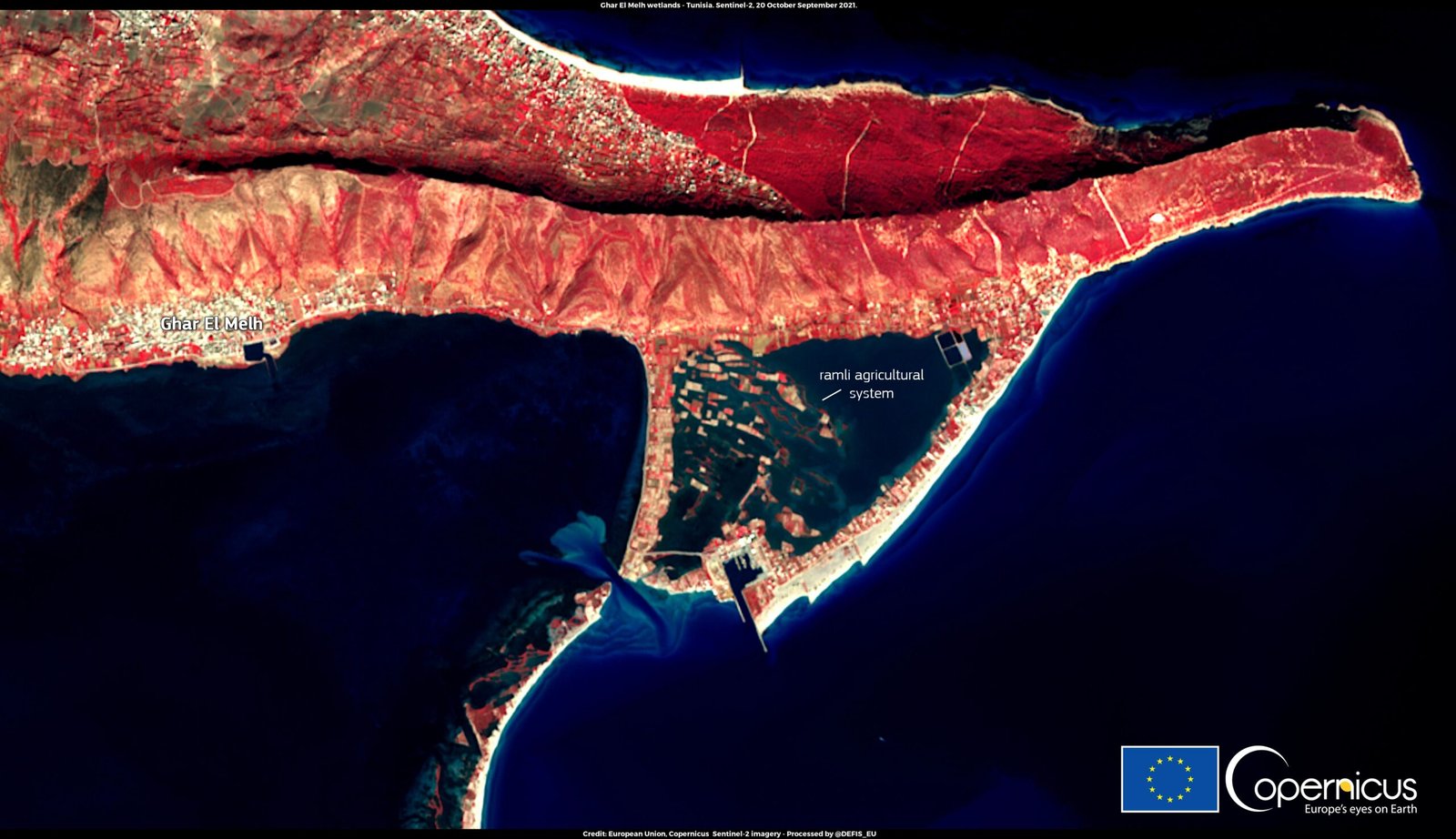
Note: the featured image is a file photo — a satellite image of the coastal wetlands of Ghar El Melh in Tunisia, taken on 20 October 2021 — not a photograph of COP31 or of the report’s launch.
Sources: Reuters, “Rich countries fall far short on climate adaptation funding, UN says”, 4 November 2026 (https://www.reuters.com/sustainability/cop/rich-countries-fall-far-short-climate-adaptation-funding-un-says-2026-11-04/); UNEP, “As world heads for overshoot of 1.5°C, adaptation is too slow”, 4 November 2026 (https://www.unep.org/en/news-and-stories/press-release/world-heads-overshoot-15degc-adaptation-too-slow)