
A co-founder of Palestine Action challenged Britain’s decision to ban the campaign group as a terrorist organisation at the UK Supreme Court on Wednesday, arguing that the move was disproportionate and undermined counter-terrorism laws.
Lawyers for Huda Ammori, who co-founded the group, told the court that the proscription should be overturned. Her lawyer, Raza Husain, compared Palestine Action with historical campaign groups, arguing that the suffragettes and other groups “used tactics similar or more extreme than Palestine Action”, citing the suffragettes’ early 20th-century bombing campaign.
The British government proscribed Palestine Action last year after a series of high-profile incidents mostly targeting defence firms, culminating in a break-in at the Royal Air Force base at Brize Norton in which two planes were damaged. The Home Office argues that the group’s escalating actions, causing serious property damage, amounted to terrorism and justified the ban.
At the heart of the government’s case is a 2024 raid targeting Israeli defence firm Elbit Systems, which the Home Office says caused an estimated £1 million of damage. The Home Office says that attack involved violence and weapons against security staff and police officers, one of whom suffered a spinal injury when she was hit with a sledgehammer. Those are the Home Office’s arguments in the case, as reported by Reuters.
Ammori’s lawyers counter that, at the time the group was proscribed, government officials had assessed that just three of 385 actions carried out over five years had met the definition of terrorism. London’s High Court initially ruled that the ban was unlawful, but the Court of Appeal overturned that decision in June, rejecting comparisons with historical groups such as the suffragettes who campaigned for women’s right to vote.
The case has become one of the most contested tests of Britain’s terrorism laws. According to Home Office statistics reported by Reuters, more than 3,600 arrests linked to support for Palestine Action were made between proscription in July 2025 and this June, representing more than one-third of all terrorism arrests in Britain since 9/11. With more than 300 people arrested last weekend outside the US embassy in London, plus around two dozen outside the Supreme Court on Wednesday, the figure is now more than 4,000 — though any resulting charges could be dropped if the ban is overturned.
The ban has drawn criticism from civil liberties groups and prominent supporters, including Irish novelist Sally Rooney, whose books can no longer be sold in Britain over her plans to provide royalties to the group. The United States also designated Palestine Action as a terrorist group in August, and President Donald Trump has described activists who targeted his Turnberry golf resort in Scotland last year as “terrorists”.
Founded in 2020, Palestine Action carried out hundreds of “actions”, many involving obstructing or occupying premises, or spraying graffiti and breaking windows of businesses they said were linked to providing arms to Israel. After Israel began bombarding Gaza in response to a deadly attack by Hamas-led fighters in October 2023, the group’s campaign escalated, the Home Office says.
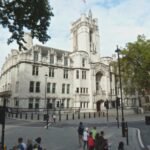
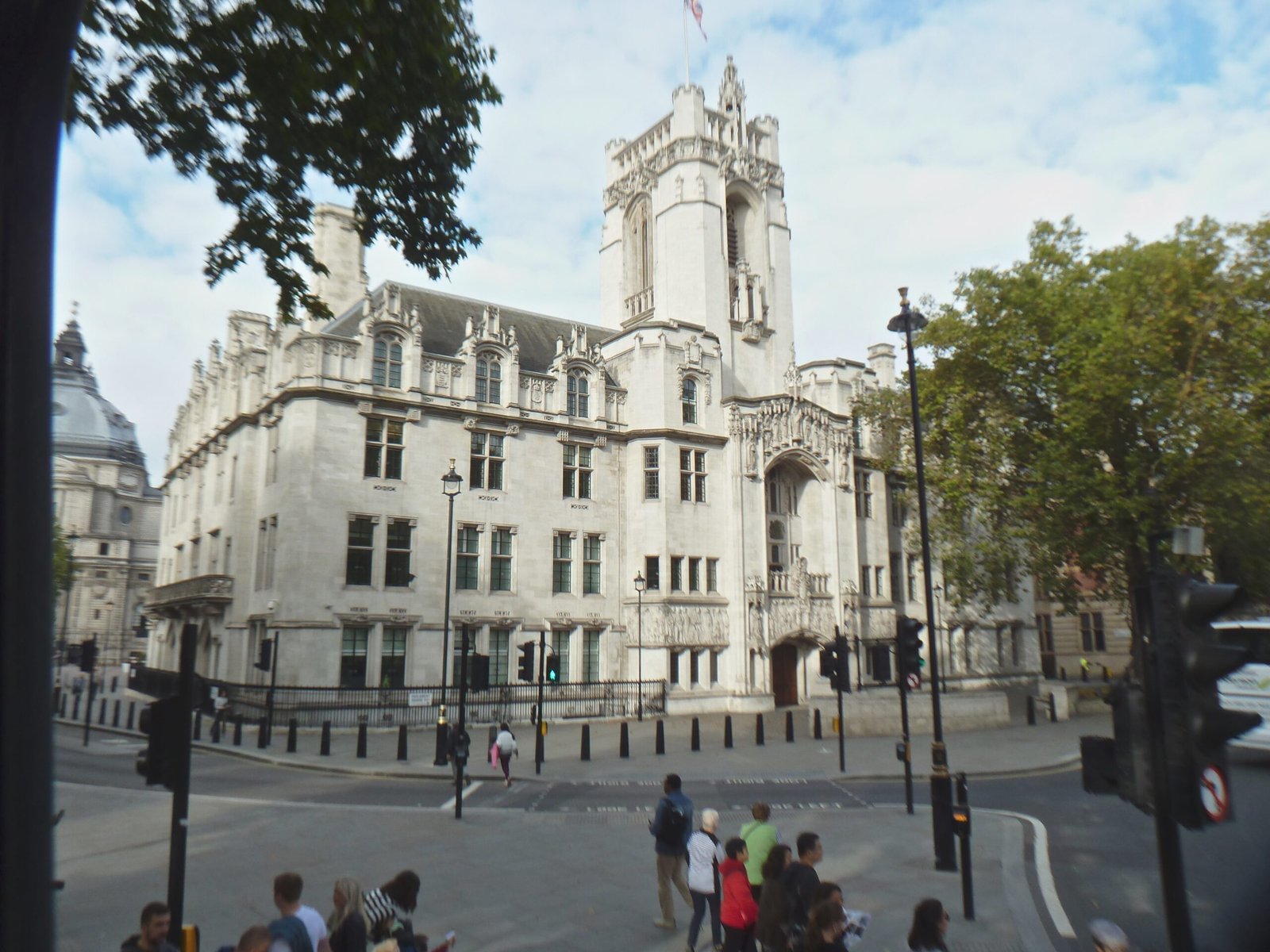
Note: the featured image is a file photo of the UK Supreme Court building on Parliament Square, taken in October 2017, not a photograph of Wednesday’s hearing.
Sources: Reuters, “UK ban on Palestine Action is challenged at top court, some protesters arrested”, 4 November 2026 (https://www.reuters.com/world/uk/uk-ban-palestine-action-is-challenged-top-court-some-protesters-arrested-2026-11-04/)