







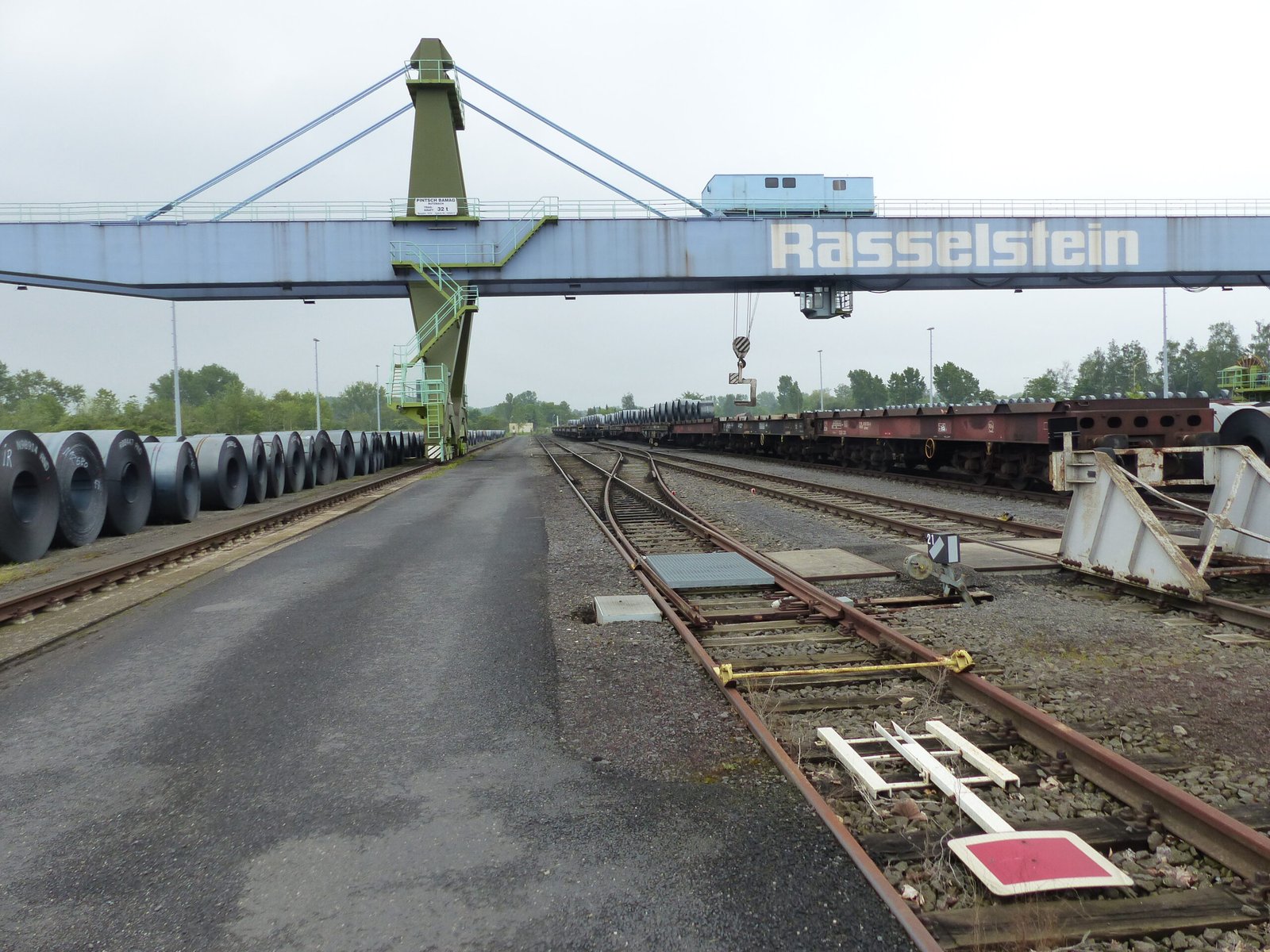
Workers in Germany’s engineering industry downed tools on Sunday as a pay dispute covering 3.7 million employees escalated into the first warning strikes of the bargaining round.
The first walkout began at midnight at Thyssenkrupp’s Rasselstein tinplate plant in Andernach, where around 300 employees joined the stoppage alongside workers from surrounding companies, according to the IG Metall union. Further walkouts followed at other sites, including a mobile communications supplier in Munich, an aluminium casting firm in Hildesheim and a recycling and rolling mill in Hamburg.
The strikes began the moment the sector’s no-strike period expired on Saturday night. They are temporary warning strikes, a standard pressure tactic in German collective bargaining, designed to demonstrate the union’s strength before any move towards a full strike.
At the heart of the dispute is a wide gap between the two sides. IG Metall is demanding a 5% pay rise over 12 months, along with guarantees for jobs and production sites. Employers, in a second round of negotiations, offered a one-off payment worth 1% of annual gross pay in the summer of 2027 and a further 1.3% increase from July 2028. The union rejected the offer, describing it as a “minus offer” amounting to a real-terms pay cut.
“The midnight warning strike at thyssenkrupp Rasselstein is merely the start of a massive phase of warning strikes,” said Jörg Köhlinger, head of IG Metall’s central district. The union said further strikes would follow in the coming days across the bargaining region covering Hesse, Rhineland-Palatinate and Saarland, as well as in Thuringia.
The metal and electrical industries form Germany’s largest industrial sector, spanning car manufacturing, mechanical engineering, electronics and metal production. The talks are taking place against a deepening crisis in the automotive sector, with employers pointing to heavy cost burdens and a sluggish economy to justify their restrained offer, while the union argues workers should not pay for that crisis with falling real wages.
How long the warning strikes last, and whether they harden into a longer confrontation, will depend on the next round of negotiations. For now, both sides have set out positions far apart, and IG Metall has signalled it intends to widen the action across Germany this week.
Sources: Reuters, “German engineering industry workers begin wage strikes”, 1 November 2026, via https://www.reuters.com/business/world-at-work/german-engineering-industry-workers-begin-wage-strikes-2026-11-01/ ; dpa-AFX, “Metalworkers’ warning strikes gain momentum”, 1 November 2026, via https://www.europesays.com/germany/120259/