









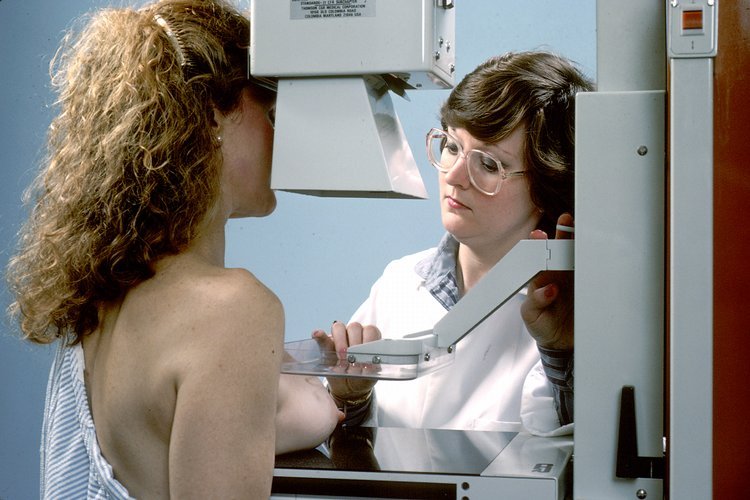
Weight loss from GLP-1 drugs appears to make breasts look denser on mammograms, a change that could send more women back for follow-up tests they may not need, according to a new study.
Researchers at Brigham and Women’s Hospital in Boston followed 107 women, aged 34 to 79, who had taken GLP-1 medicines for weight loss for at least a year. Over that time they lost an average of 40 pounds (18 kilograms). When the team compared mammograms taken before and after the weight loss, breast density had increased in every single case — and the more weight a woman had lost, the bigger the rise.
The practical effect was striking. The share of screening mammograms that led to a call-back for further testing was 22.4 per cent, more than double the roughly 10 per cent average across the United States. Four women went on to have biopsies, and all four results were benign.
The researchers think the explanation is mechanical rather than medical. Losing a large amount of breast fat can make the remaining glandular tissue stand out more on an image, so the breast looks denser without any increase in the absolute amount of dense tissue. Higher mammographic density is generally linked to a greater risk of breast cancer, but the team said the change seen after GLP-1 weight loss may reflect a different process.
“To our knowledge, this is among the first studies to directly evaluate longitudinal changes in mammographic breast density using paired mammograms before and after GLP-1-associated weight loss,” said study leader Dr Eva Gombos of Brigham and Women’s Hospital in Boston.
The message for patients is reassuring rather than alarming. “The findings do not suggest that patients should be concerned about taking GLP-1 medications,” Gombos said. Women on the drugs should keep attending routine breast screening as recommended, and should tell their imaging team that they are taking a GLP-1 and have recently lost a significant amount of weight. Breast imaging technologists can record that information at the time of screening, giving radiologists useful context when they compare a new mammogram with earlier ones.
The findings are due to be presented at the upcoming Radiological Society of North America meeting in Chicago. Note: this story is single-sourced — it is based on Reuters’ report of the study ahead of that presentation, and the study itself has not yet been peer-reviewed as far as reported.
Sources: Reuters — “Breast density changes with GLP-1 weight loss may prompt mammogram call-backs” (https://www.reuters.com/business/healthcare-pharmaceuticals/breast-density-changes-with-glp-1-weight-loss-may-prompt-mammogram-call-backs-2026-11-25/)