









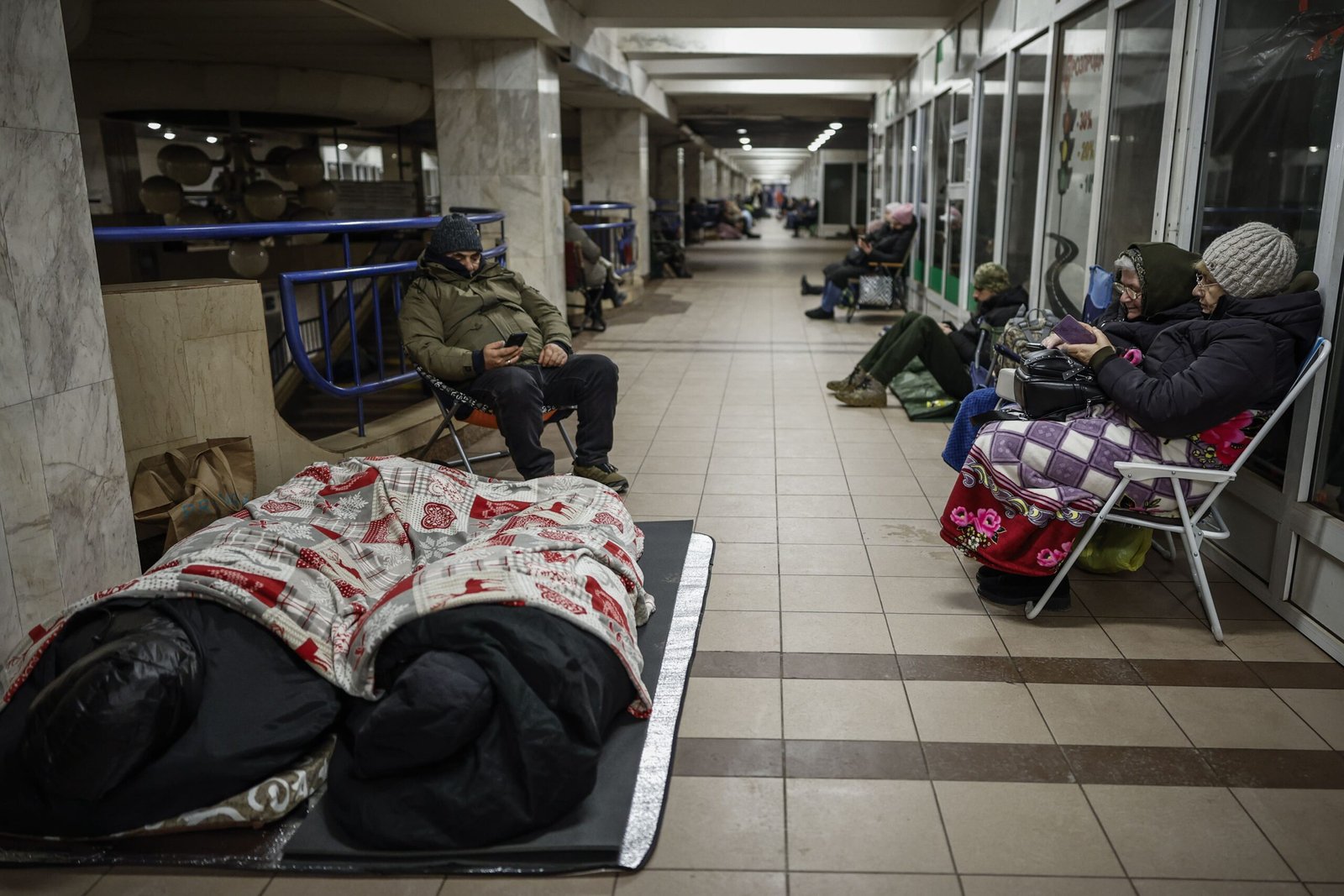
Millions of people in Russia and Ukraine received false warnings of nuclear strikes on their phones overnight from Sunday into Monday, after hackers hijacked the emergency alert apps used by both countries within hours of each other.
In Ukraine, the official Air Alert app began pushing fabricated notifications late on Sunday evening, warning of a nuclear threat, radiation and chemical attacks, street fighting and the deployment of Russia’s Oreshnik hypersonic missile. The country’s air force said on Telegram that the app had “probably been subjected to hostile interference” and told residents plainly: “There is no radiation threat.”
Air force spokesman Yuriy Ignat confirmed to Agence France-Presse that the app had been hacked. The app’s operators disabled push notifications and temporarily suspended the service, saying no personal data was stored in it and therefore no user data was at risk. By Monday the app was gradually being restored, with threat levels returning to its map.
Ukraine’s Centre for Strategic Communications blamed Russia for the attack, and a hacking group calling itself Hitcore claimed responsibility. Neither claim has been independently verified, and no evidence has emerged linking the Ukrainian incident to what happened hours later in Russia.
In the early hours of Monday, Russia’s Emergencies Ministry said its own mobile app had been hit by a “massive cyberattack” that allowed attackers to send false information to the public. At about 2:45 a.m. Moscow time, users in 33 regions received a message claiming that nuclear warheads had been launched across all regions of Russia, accompanied by an expletive-laden warning to take shelter and stock up on supplies.
The ministry stressed that the app was only a supplementary service and that the country’s main warning system was unaffected: sirens, loudspeakers, text messages and television and radio broadcasts all continued to work normally. It said its specialists had identified the vulnerability exploited by the attacker and that the app’s full functionality would be restored by the end of Monday.
Kremlin spokesman Dmitry Peskov said all Russian government agencies were under constant threat of cyberattack and must improve the cybersecurity of their digital resources.
The twin hacks came hours after the longest truce of the war ended in the Kherson region, and they point to a new vulnerability in wartime: the civilian alert channels that millions of people rely on to know when to take shelter. In both countries, officials were forced to use social media to tell the public to ignore the very systems designed to keep them safe — and to trust only official channels instead.
Whether the two incidents were coordinated, coincidental, or the work of copycats remains unknown. What is clear is that the warnings themselves were false, the wider siren networks held, and no real attack took place.
Sources: CNN, “Fake warnings of nuclear attack posted on hacked Russian and Ukrainian emergency apps” (https://www.cnn.com/2026/11/02/europe/hacked-russian-ukrainian-emergency-apps-intl?cid=external-feeds_iluminar_meta); Associated Press and Agence France-Presse reporting via Bytes Europe (https://www.byteseu.com/2491962/).