









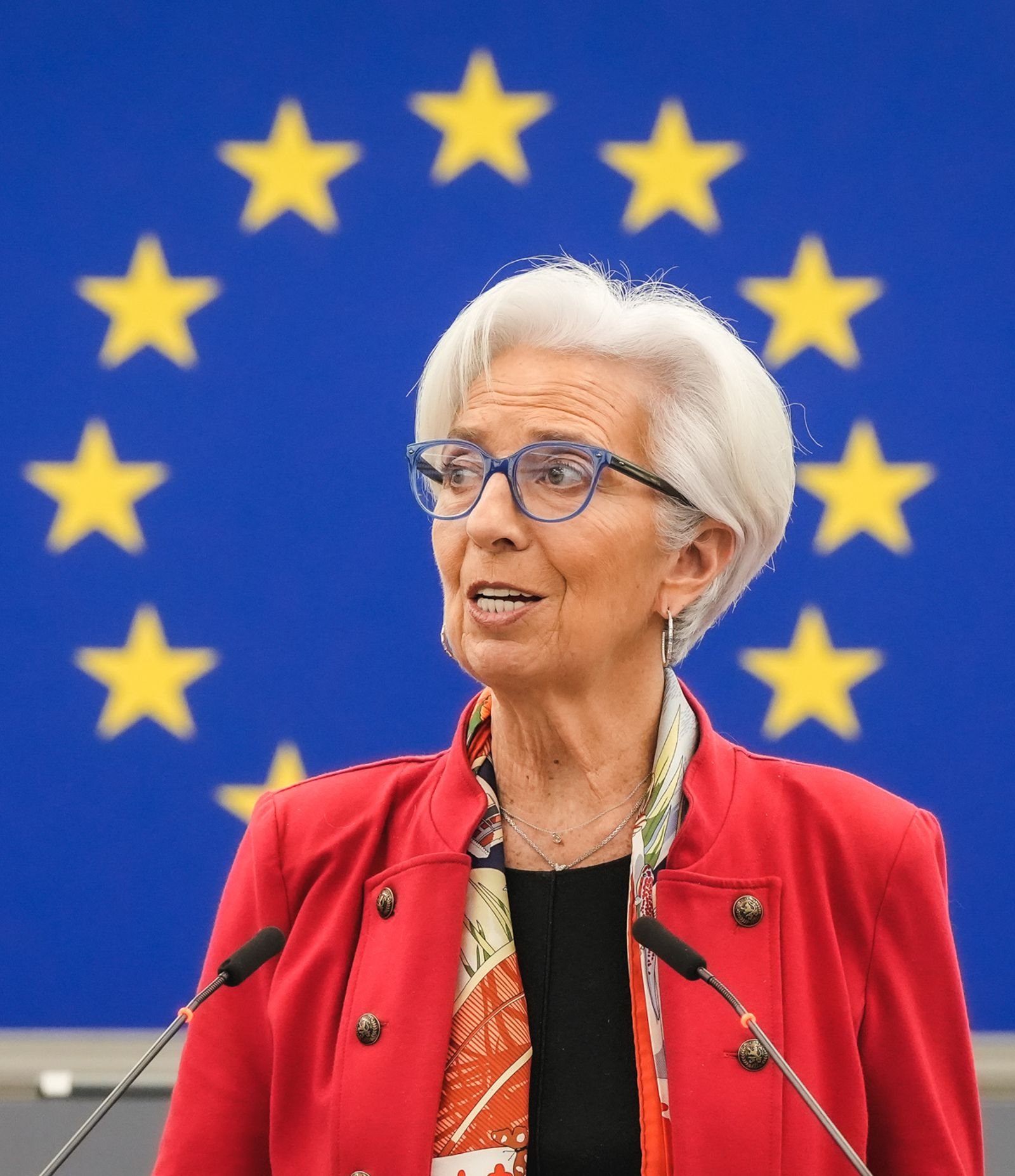
European Central Bank President Christine Lagarde has warned that Europe risks losing control of the fast-growing market for tokenised financial assets unless lawmakers agree common rules before competing systems become impossible to connect.
Speaking at the Frankfurt European Banking Congress on Friday, in what she described as her last appearance at the event as ECB president, Lagarde said Europe had limited time to establish shared foundations for tokenised assets. The technology allows versions of stocks, bonds and other financial assets to be issued and traded on blockchain networks, and the ECB has already begun building the infrastructure to support it.
In September the central bank launched Pontes, a platform that lets tokenised securities transactions settle in central bank money on Eurosystem infrastructure. Earlier this month the European Stability Mechanism, the eurozone’s rescue fund, used Pontes to settle a €1 billion digitally native bond. The ECB’s longer-term Appia initiative is working with market participants on common standards, but Lagarde said legislators would also need to establish common rules.
Lagarde used the same speech to criticise EU governments’ proposal for strengthening supervision of capital markets. She welcomed the Council of the European Union’s agreement on a negotiating position but said it weakened the European supervisor’s ability to take effective decisions and included too many carve-outs. Europe had spent more than a decade agreeing on the need for a capital markets union without overcoming the resistance of vested interests, she said, while European savings continued to flow abroad and growing companies sought financing elsewhere.
The ECB president also set out how the central bank was strengthening the infrastructure behind the euro’s international use. More than 30 central banks have expressed interest in its EUREP repo facility since the ECB made it permanent and opened it to central banks worldwide in February, and the bank is adapting its swap lines to a more fragmented world. “They will be more accessible, too,” she said. “The primary objective of these lines is to protect the transmission of our monetary policy in a crisis, by limiting spillovers from abroad into our own markets.”
On retail payments, Lagarde argued that declining cash use and geopolitical developments had strengthened the case for a digital euro. International card schemes handle more than 60 per cent of euro area card payments, while 14 of the currency bloc’s 21 countries lack a domestic scheme. If legislation is adopted by the end of this year, the ECB aims to be ready for an initial digital euro issuance in 2029, she said, adding that its legal-tender status would overcome the acceptance barriers that hindered private European payment initiatives.
Lagarde also named a different danger as her most pressing worry. “The one (worry) that keeps me awake, and many of you awake as well … is AI applied together with cyber threat,” she told the congress, adding that policymakers had not paid enough attention to the threat. Attackers are often anonymous and difficult to track, she said, and rely on dubious funding often from “toxic states” with a vested interest in disrupting the world.
She closed by reflecting on the institution she hopes to leave behind when she steps down in February. “But I hope I leave an institution that has helped give Europe more integration and more sovereignty than it had when I arrived.”
Sources: Reuters and Econostream