








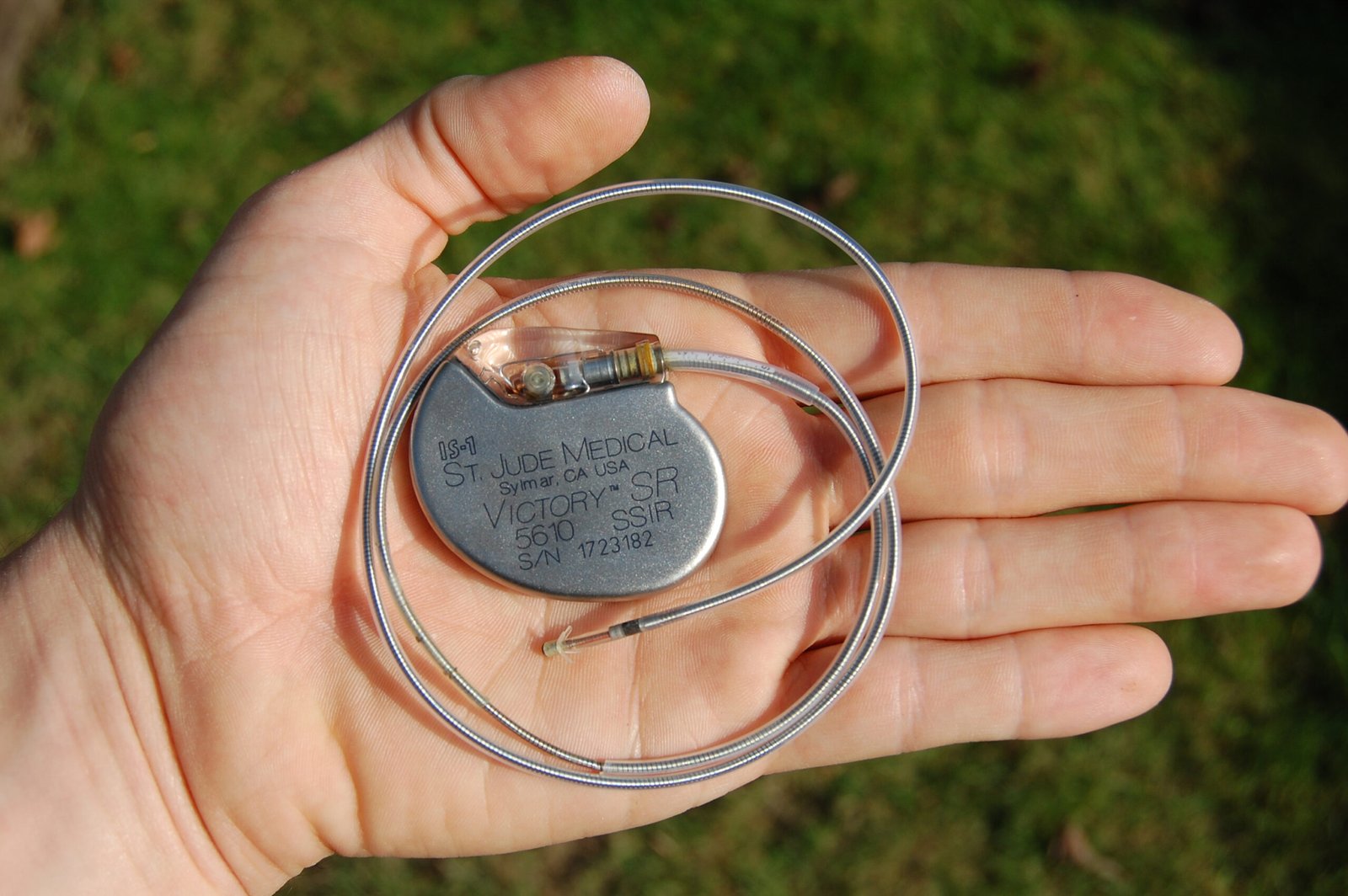
A newer way of pacing the heart cut the risk of death, heart failure hospitalisation and pacing-related heart damage by 59 per cent compared with the standard technique used for decades, according to results presented on Sunday at the American Heart Association’s Scientific Sessions 2026 in Chicago.
The international OptimPacing trial followed 685 adults with heart block, a condition in which electrical signals between the heart’s upper and lower chambers are delayed or interrupted, causing a dangerously slow heartbeat, fatigue, dizziness and fainting. Half were randomly assigned to left bundle branch pacing, which sends the pacemaker’s signal into part of the heart’s own electrical pathway, and half received right ventricular pacing, the standard approach.
After a median follow-up of three years, 8.5 per cent of patients given left bundle branch pacing had died, been hospitalised for heart failure or developed pacing-induced cardiomyopathy, compared with 19.2 per cent of those given the standard treatment. No patient in the left bundle branch group developed pacing-induced cardiomyopathy, against 11.7 per cent in the right ventricular group. Heart failure hospitalisation occurred in 1.5 per cent of the left bundle branch group versus 2.9 per cent of the standard group.
The difference was large enough that an independent data monitoring committee recommended ending the trial early at a planned interim analysis, because the new technique had met the study’s pre-set threshold for superiority.
“Not all pacing options are the same, and people who need a pacemaker to keep their heart beating properly should talk with their healthcare team about which pacing approach is appropriate for their condition,” said lead author Jiangang Zou, professor of cardiology at the First Affiliated Hospital of Nanjing Medical University in China. “Our findings show that left bundle branch pacing helped the heart beat in a more natural way and was linked to fewer serious heart-related events than the standard pacing approach.”
Right ventricular pacing has been used for decades to prevent a slow heartbeat and cardiac arrest, but pacing only the right side can make the heart’s lower chambers beat out of sync. Over time that imbalance can enlarge or weaken the heart muscle and contribute to heart failure in some patients. Left bundle branch pacing mimics the heart’s natural electrical activation, helping the lower chambers squeeze in a more coordinated pattern.
The trial ran at 17 centres in mainland China, Hong Kong, the United Kingdom, Poland and the United States between June 2021 and January 2025. Participants had an average age of 68.4 years, and most started with normal heart pumping strength. The results were simultaneously published as a full manuscript in the New England Journal of Medicine.
The authors cautioned that the trial’s early termination could lead to an overestimate of the benefit, and that the findings may not apply to people whose heart pumping strength is already reduced, since most participants began the study with normal function. All left bundle branch procedures used the same type of lead, so it is not yet known whether the results hold for other pacing tools. Further research is needed on long-term safety, cost-effectiveness and which patients benefit most, to inform updates to clinical guidelines.
Sources: American Heart Association news release, “Novel Pacemaker Technique Reduced Cardiac Events In People With a Heart Rhythm Disorder”, presented at Scientific Sessions 2026, 8 November 2026 (https://markets.financialcontent.com/thepilotnews/article/newmediawire-2026-11-8-novel-pacemaker-technique-reduced-cardiac-events-in-people-with-a-heart-rhythm-disorder); New England Journal of Medicine (OptimPacing trial manuscript, published 8 November 2026).