





Police fired tear gas and stun grenades in Paris on Saturday evening as France’s third consecutive weekend of cost-of-living protests ended in clashes, after a day that had been largely peaceful.
France’s Interior Ministry estimated that about 320,000 people took part nationwide, including 70,000 in Paris. Youth organisations put the national turnout closer to half a million, with around 200,000 in the capital. Either way, the crowds were smaller than in the previous two weekends: the government counted 410,000 on 24 October and 550,000 on 17 October.
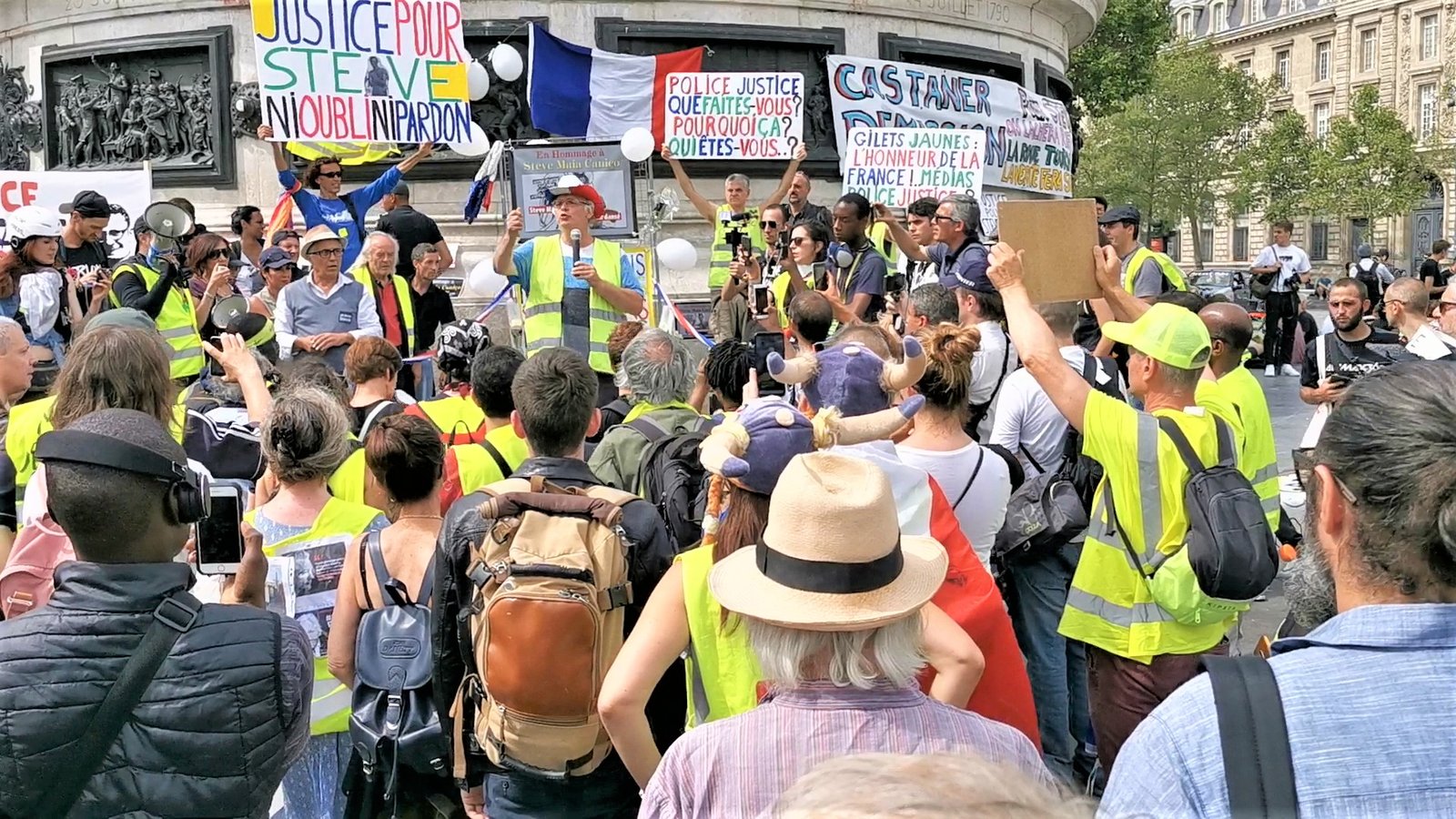
The Paris march set off from Porte de Bagnolet on the capital’s eastern edge and followed the Boulevards des Maréchaux, the ring of avenues skirting the city, after a court battle over the route kept demonstrators out of the centre. For hours the mood was festive, with some marchers in Halloween costume and placards reading “No need for tear gas to make our future look bleak” and “Dressed up as an angry citizen for Halloween”.
Trouble broke out as the march reached its end at Porte de Charenton shortly before 5pm local time. Dozens of masked people dressed in black used hammers to pry up paving stones and hurl them at police, and at least one incendiary device was thrown at security forces, according to French media and police. Officers responded with tear gas and baton charges. The Paris police prefecture said a “hard core of several hundred rioters” was attacking officers with projectiles, including a Molotov cocktail. The Sun’s reporter on the ground said footage showed a gendarme briefly catching fire after a petrol bomb was thrown at police.
Clashes were also reported beyond the capital. In Lyon, demonstrators threw projectiles at police, who answered with tear gas; in Toulouse, police used a water cannon against an unauthorised protest that drew several thousand people, mostly young demonstrators; and tensions flared at the end of the march in Marseille. Police said 27 arrests had been made by 2pm, compared with 217 at the same point a week earlier.
The authorities had braced for trouble. Around 70,000 police and gendarmes were deployed across the country, and Interior Minister Laurent Nuñez had warned that Saturday looked like a “very high risk” day. More than 40 Paris metro stations were closed and tram services disrupted, which organisers said depressed turnout.
The movement began last month among high-school students protesting neglected school buildings, teacher shortages and a university admissions system seen as unfair to disadvantaged pupils. It has since been joined by trade unions, university students and a re-emergent Yellow Vest movement, with demands now spanning the cost of living, public services and police violence. The unrest comes less than six months before France’s presidential election, with the government anxious to avoid a repeat of the looting and arson that marked the first wave of protests on 17 October.
What happens next is unclear. The day’s lower turnout raises questions about whether the movement can sustain its momentum, but organisers have already pointed to further actions, and the government remains braced for more unrest on Halloween night, with parts of central Paris under night-time restrictions.
Sources: Associated Press, “French protesters defy heavy police presence in new demonstrations” (31 October 2026), https://www.tampabay28.com/world/europe/french-protesters-defy-heavy-police-presence-in-new-demonstrations ; AFP via Dubai Telegraph, “Clashes break out as hundreds of thousands protest in France” (31 October 2026), https://www.dubaitelegraph.ae/Boulevard/754329-clashes-break-out-as-hundreds-of-thousands-protest-in-france.html