







Mathematics’ most famous unsolved problem may have been solved twice in a single day — once with the help of artificial intelligence, and once by a human working alone for twelve years. Neither proof has yet been verified, and experts are urging caution, but the twin announcements on Friday have electrified the mathematical world.
Levent Alpöge, a mathematician at the AI company Anthropic and a junior fellow at Harvard, posted a four-page note on his website on Friday. “I believe I have, working with Claude, discovered a proof of the Riemann Hypothesis,” he wrote, referring to Anthropic’s large language model. The claim goes further than the original problem: Alpöge says his argument also settles the generalised Riemann hypothesis, a far broader statement extending the same ordering principle to a whole family of related functions.
What makes the announcement unusual is its form. There is no conventional paper: Alpöge released the proof only as computer code in Lean, a language that checks each step of a mathematical argument. The formalisation runs to 175,187 files across 14 archives; a written version, he says, would fill more than 250,000 pages, and he concedes he has not yet mastered all of the mathematics involved.
Early checks are encouraging but far from conclusive. Andrew Sutherland of the Massachusetts Institute of Technology independently compiled the code: all 175,187 modules compiled, with the Lean kernel validating them without rejection. That shows the code is internally consistent, but experts must still confirm the statement proved is really the Riemann hypothesis. “If this fully checks out, it is clearly a historic milestone,” said James Maynard, a Fields Medal winner at Oxford.
Hours later, a rival claim appeared. Ravi Vakil, president of the American Mathematical Society, published a 940-page draft by Alessandro Masullo, a Stanford postdoctoral scholar, setting out an entirely human proof of the generalised hypothesis — twelve years of work. Brian Conrad, a leading number theorist, has been reviewing it for months. The plan had been to spend a year polishing the draft; Alpöge’s announcement forced it out early. Within about eight hours, Vakil said several people had reported problems in it. Conrad said more work is needed and the paper is “undergoing major revision”.
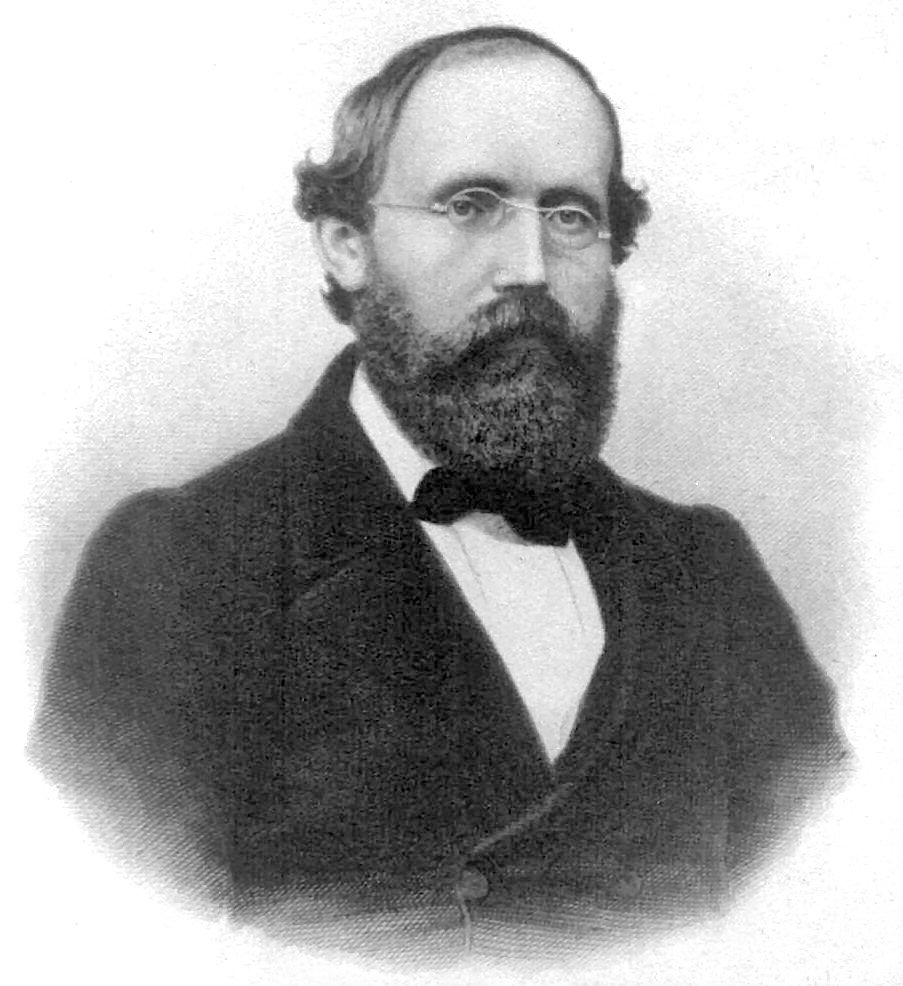
The Riemann hypothesis, first proposed by the German mathematician Bernhard Riemann in 1859, concerns the distribution of prime numbers. It states that all the “nontrivial” zeros of the Riemann zeta function lie on a single vertical line. It is one of the Clay Mathematics Institute’s seven Millennium Prize Problems, each carrying a $1 million bounty.
The timing has drawn scrutiny: the announcement came a day after Anthropic’s record-breaking stock market debut, the largest initial public offering on record, and as its shares fell. Alpöge wrote that “there is an obvious cynical view, to do with the timing, but it is false”. Anthropic declined to comment. Whether either proof survives scrutiny will take weeks or longer to establish.
Sources: Scientific American (https://www.scientificamerican.com/article/anthropic-mathematician-claims-to-prove-riemann-hypothesis-most-famous-problem-in-all-of-math/ and https://www.scientificamerican.com/article/dueling-claims-of-riemann-hypothesis-proofs-emerge/), Nature (https://www.nature.com/articles/d41586-026-03812-7), The Wall Street Journal (https://www.wsj.com/tech/ai/anthropic-mathematician-says-claude-has-solved-the-most-famous-problem-in-math-9361920b), Phys.org (https://phys.org/news/2026-11-anthropic-claude-math-greatest-riddle.html).