





Britain and the European Union have agreed a draft deal to remove most of the border checks imposed on food and agricultural trade since Brexit, in what is being described as the most significant part of the so-called Brexit reset agreed so far.
The 200-page draft text covers sanitary and phytosanitary rules — the health and safety standards governing trade in animals, plants and food products. It has been circulated to EU member states in Brussels and is due to be discussed by EU ambassadors at a meeting of the body known as Coreper on Wednesday, ahead of a UK-EU summit on 20 November. Draft texts on linking emissions trading systems and on a youth travel and work scheme have been circulated alongside it, with a 15-page draft joint statement for leaders.
Under the draft, British exports to the EU of fresh sausages, burgers, shellfish from domestic waters and seed potatoes would be able to resume after years in which many such shipments were blocked or burdened with paperwork. It would remove the need for Export Health Certificates, which cost around £200 each, and for £25 phytosanitary certificates for plants and plant products. Inspector fees, organic certificates, some port fees and sampling costs could also be removed, easing trade in both directions.
In return, Britain is expected to commit to dynamic alignment with EU rules on plant, animal and food trade standards — that is, observing existing EU rules and adapting as they change. The government says the deal will eventually bring £5.1 billion a year in benefits to the UK economy, and the prime minister has said a UK-EU deal could add up to 0.4% to GDP. Defra figures published last year put the cost to UK firms of EU food export licences in 2024 at up to £65 million.
The deal is not yet final, and its timing remains uncertain. Sources quoted by The Guardian said the text had been settled and there would be no further negotiation, although an EU member state could still raise issues when ambassadors meet. Government guidance for food businesses has pointed to mid-2027 as the intended start, while other reports, citing the delay to the summit after a change of prime minister, put implementation in early 2028, when UK legislation bringing food, animal and plant regulations into line with EU standards would be in place. A European Partnerships Bill is expected to provide the legal mechanism for applying new EU rules.
Reaction has split along familiar lines. Business groups have welcomed the prospect of lower costs and simpler crossings for exporters, while Conservative leader Kemi Badenoch told the BBC the UK should work closely with the EU but that dynamic alignment would be a red line and would take Britain backwards. The draft does not restore Britain’s vote over EU rules: Britain would be expected to follow standards it no longer helps to set, though the framework is reported to let it contribute views while rules are being developed.
For exporters, the practical difference would be felt at the border rather than in tariffs, which the existing trade agreement already largely removes for qualifying goods. Tariff-free access has never removed the need to prove that food meets the destination’s health requirements, and it is that layer of certification and inspection — the certificates, the checks, the fees — that the draft agreement is designed to strip away.
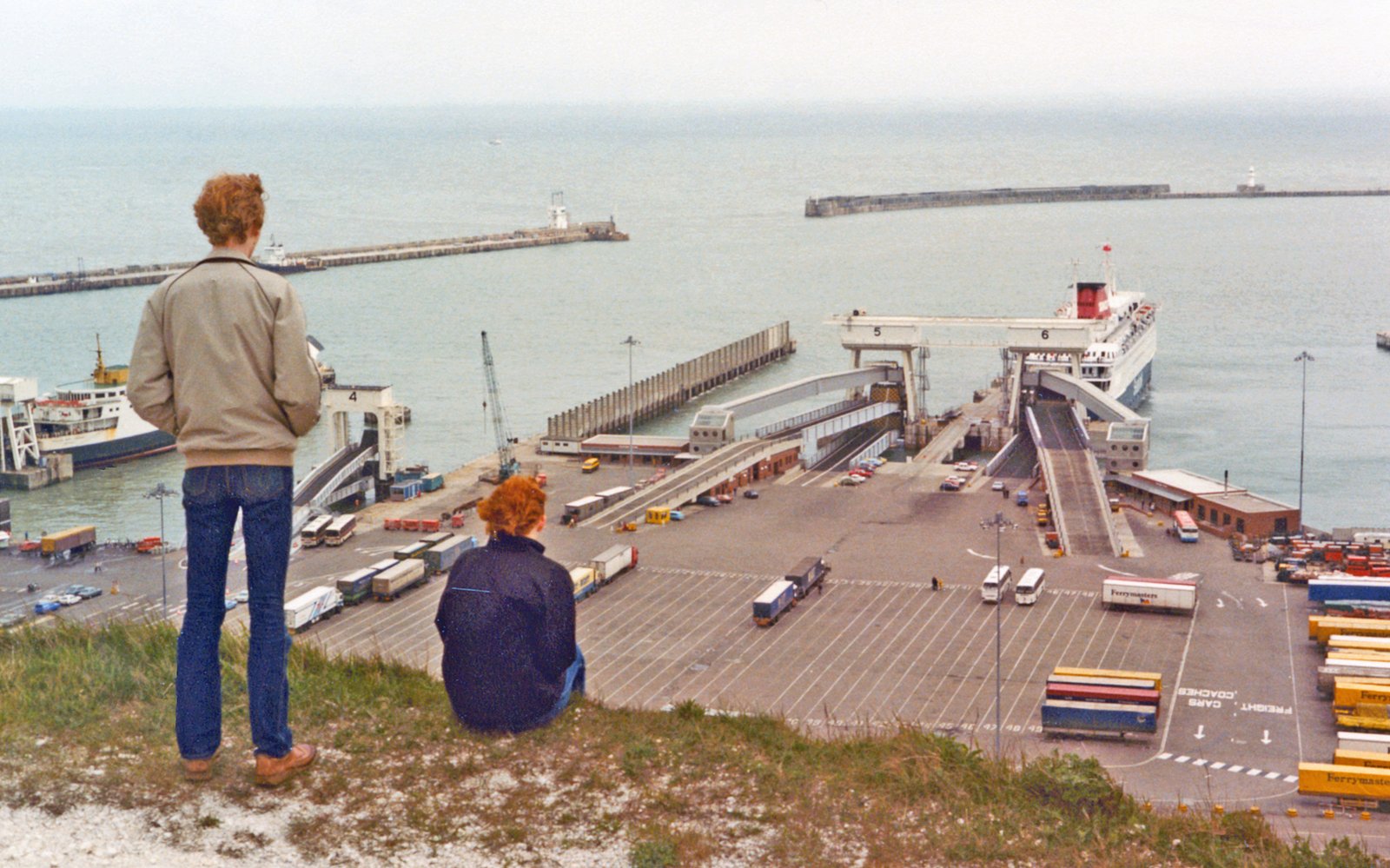
Note: the featured image is a file photo of Dover port in 1983, not a photograph of the current negotiations.
Sources: BBC News, “UK and EU agree draft deal to scrap Brexit red tape over food exports”, 3 November 2026, https://www.everywherenews.net/news/articles/cmp3grwre9xdo ; SupplyChainBrain, “EU, U.K. Reach Draft Deal to Cut Red Tape for Food Exports”, 3 November 2026, https://www.supplychainbrain.com/home/top-stories/article/16424173/eu-uk-reach-draft-deal-to-cut-red-tape-for-food-exports