







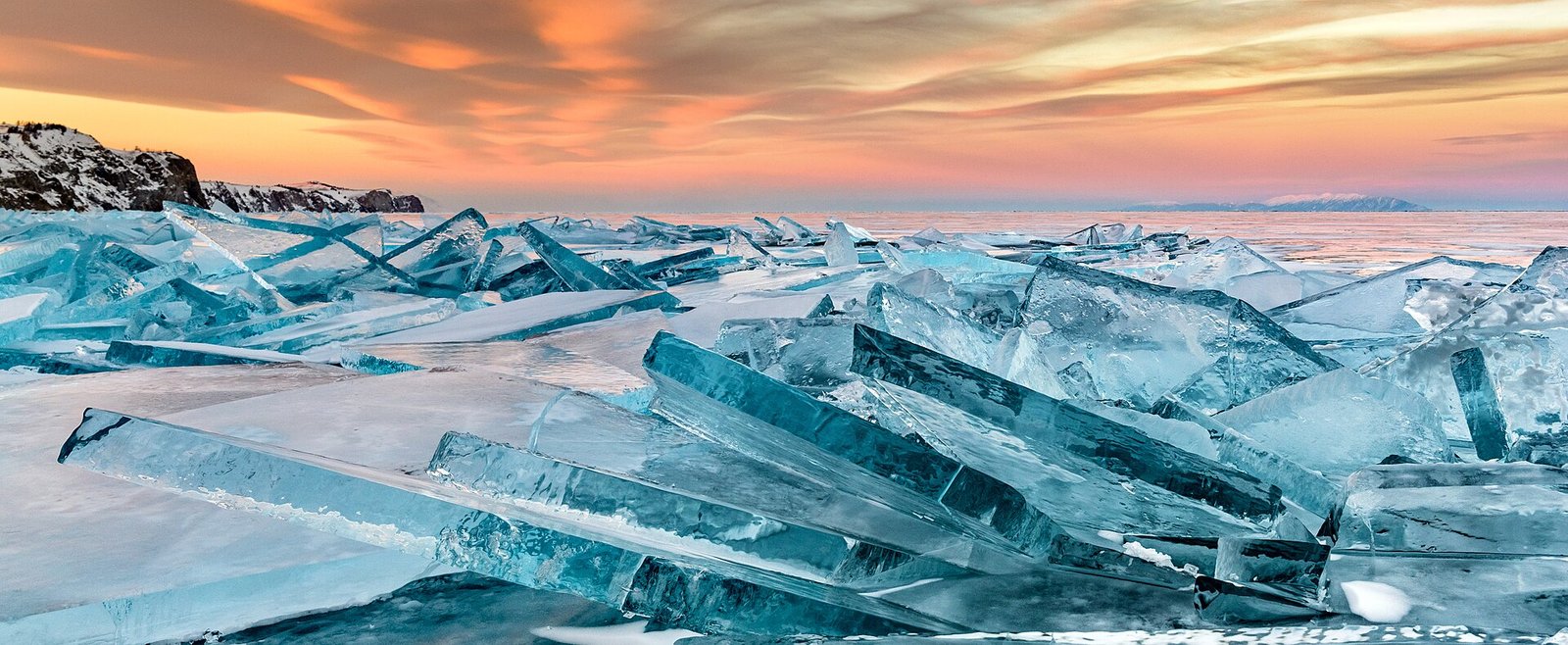
Lake Baikal, the Siberian lake that holds around a fifth of the world’s unfrozen surface freshwater, is recovering after decades of decline, according to a new study.
Researchers reconstructed 343 years of river flows into the lake by analysing tree rings, and found that streamflow from the Selenga River — Baikal’s largest tributary — fell by as much as 90 per cent during the most severe dry periods of the twentieth century. Around half of the years of extreme drought in the record occurred after 1900.
That trend has reversed sharply since 2017. Streamflow has run at about 145 per cent of its long-term average, the researchers report, a shift matched by rising lake levels and greener vegetation across the basin.
The study, led by doctoral researcher Shijie Wang of Yunnan University and published in the journal Geophysical Research Letters, attributes the recovery mainly to changing weather patterns. A recent slowing of Arctic-amplified warming has brought more moisture from the Nordic and Siberian shelf seas, and reduced the loss of sea ice in the Bering, Chukchi and Okhotsk seas.
The authors are careful to stress that the change reflects natural climate variability rather than a reversal of global warming. The recovery is, in their words, unprecedented in the 343-year record, but it does not mean the lake’s long-term future is secure.
Baikal is the world’s deepest and oldest lake, and its water balance depends on inflow from the Selenga and outflow through the Angara River. As the lake dried out in recent decades, concerns grew over water security for the wildlife and the people who depend on it for drinking water, agriculture and hydroelectric power.
The findings underline how quickly large freshwater systems can respond to shifts in atmospheric circulation — and how much remains uncertain about their future as the climate changes.
Note: this account rests on a single peer-reviewed study, reported by phys.org. The researchers describe the recovery as unprecedented in their 343-year reconstruction, but it is a new finding and has not yet been independently confirmed by other studies.
Sources: phys.org — https://phys.org/news/2026-11-world-largest-freshwater-lake-recovering.html ; Geophysical Research Letters (Wang et al., 2026) — https://agupubs.onlinelibrary.wiley.com/doi/10.1029/2026GL124400