








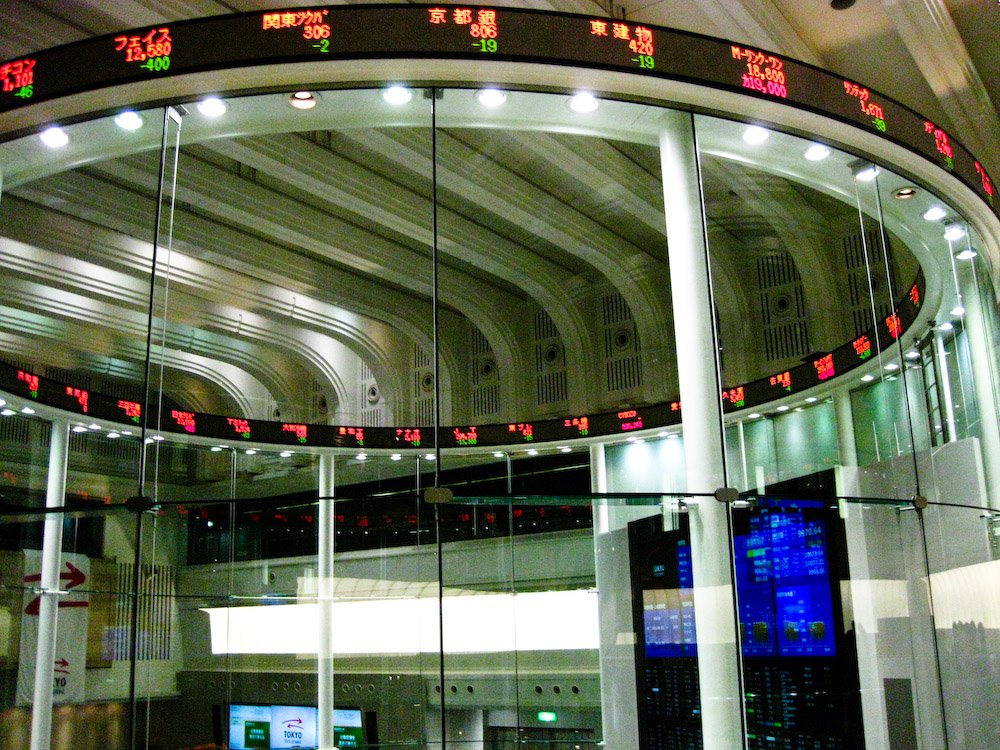
Asian shares fell sharply on Friday, putting the region on course for its worst week since the market turmoil of March 2020, as doubts over the artificial intelligence trade continued to drain confidence from global equities.
MSCI’s broadest index of Asia-Pacific shares outside Japan dropped 2.5% in Friday trading, extending its losing run to six sessions and taking its decline for the week to 7%. Japan’s Nikkei fell 4.1%, heading for a 6.8% weekly loss, while South Korea’s KOSPI slid 4.7% and was set to end the week 7.5% lower.
The falls followed another heavy session on Wall Street, where the S&P 500 and Nasdaq Composite each lost more than 2% on Thursday. US futures pointed to further declines on Friday, with S&P 500 contracts down 0.4% and Nasdaq futures 0.7% lower in Asian trading.
Anthropic’s record stock market debut failed to steady nerves. Shares in the world’s first listed frontier AI company jumped more than 30% on their first day of trading, but the rally did not spread to the wider sector. “Anthropic’s blockbuster IPO proved not enough to assuage the overall concern about the outlook for the AI trade and equities more broadly,” Kyle Rodda, senior financial market analyst at Capital.com, told Reuters.
Investors have grown uneasy about the AI boom on several fronts: the departure of Jensen Huang from Nvidia, the swelling debt taken on to build data centres, a growing backlash against data-centre construction after the Democrats’ sweep of the US midterm elections, and warnings about the risks posed by advanced AI. With the Federal Reserve now seen as likely to raise rates in December, the mood has turned sharply risk-averse.
The rush for safety pushed the dollar to its strongest in 19 months. The dollar index held near 103.9, its highest since early April 2025, and was on track for a fourth consecutive week of gains. Sterling languished near a one-year low at $1.3094, while the euro struggled near its lowest since April 2025 at $1.0972. The yen steadied after Japanese inflation data, edging up to 159.50 per dollar.
Bond markets also reflected the flight to safety. The yield on the benchmark US 10-year Treasury note held near a one-week low of 5.026%, while the two-year yield touched 4.749%.
Gold, usually a refuge in turbulent markets, offered little shelter: it dipped 0.6% to $3,601.40 an ounce and was heading for a 7.3% weekly loss as the stronger dollar weighed on prices. Brent crude was little changed at $91.98 a barrel, on course for a third straight weekly decline.
Rodda warned the gloom could deepen. With the AI trade fading and Fed rate rises seen as likely, he said, general market sentiment was shaky and there was a risk that the bearishness would drag stocks lower still.
Sources: Reuters, “Asian shares head for worst week since 2020 as AI trade gloom fails to abate” (https://www.reuters.com/world/china/global-markets-global-markets-2026-11-20/); Reuters, “Dollar near 19-month peak as AI jitters sap risk appetite” (https://www.reuters.com/business/dollar-near-19-month-peak-ai-jitters-sap-risk-appetite-2026-11-20/).