





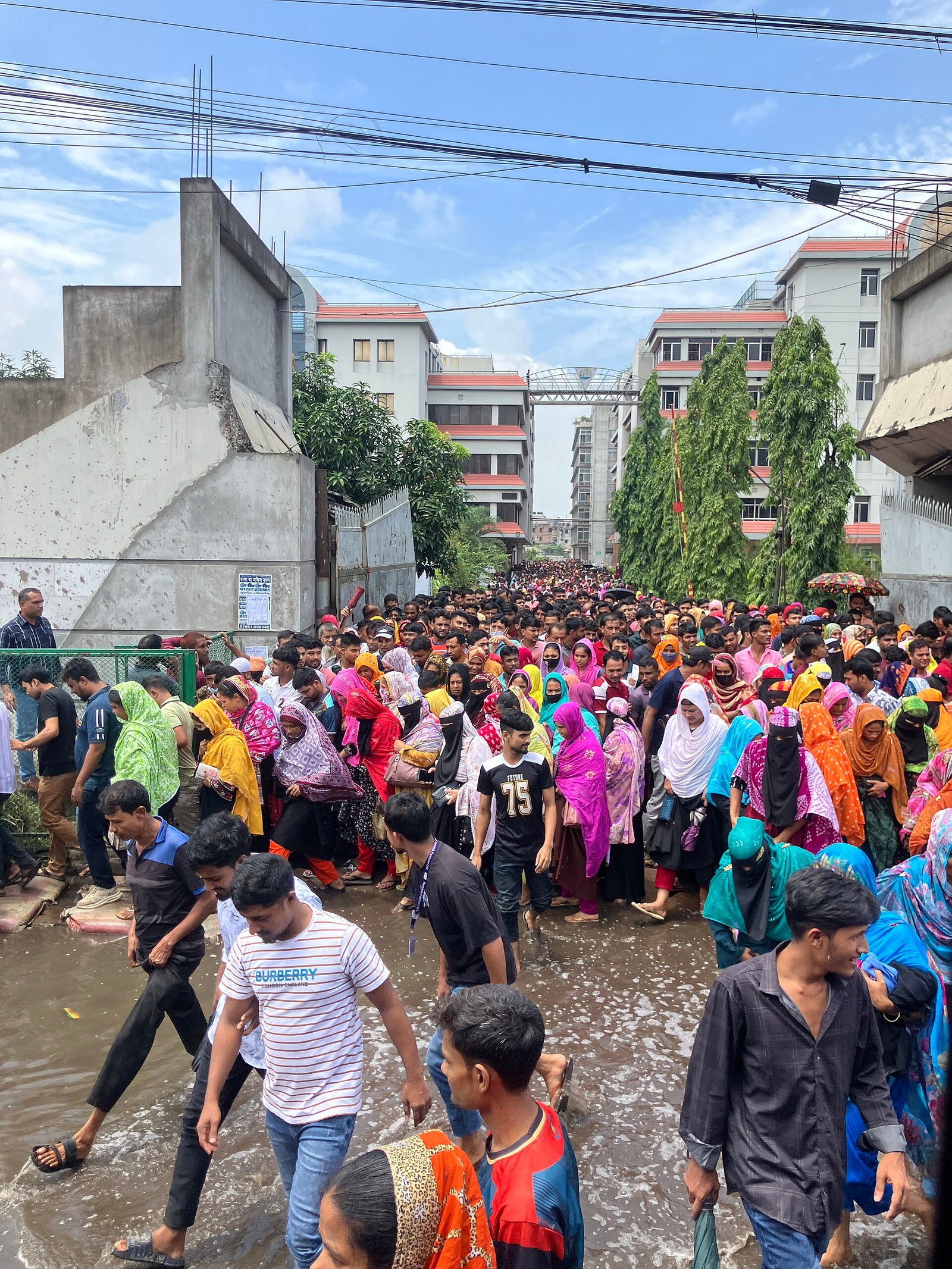
Police in Bangladesh fired tear gas shells and sound grenades on Thursday to disperse garment workers who blocked a major highway in Gazipur to press their demand for better wages, a day after the government approved a pay rise the workers say falls far short of what they need.
Protesters also set fire to a police motorcycle in Gazipur, one of the country’s main garment manufacturing hubs and the centre of weeks of unrest in the sector. Police said calm had since been restored. “The situation is now calm, but we remain on alert,” said Mohammad Amjad Hossain, superintendent of Gazipur Industrial Police.
The fresh protest broke out within hours of a six-member government-appointed wage board approving a 36% increase in the minimum wage for garment workers, the smallest rise in four decades. The new monthly minimum of Tk17,000, about $137, takes effect in January. Workers had demanded Tk30,000, up from the current Tk12,500, and labour rights advocates said the increase would not provide a living wage.
The board’s decision came in the early hours of Wednesday after nearly 12 hours of talks between workers’ and employers’ representatives, and did little to ease tensions. Around 400 factories in Savar and Gazipur failed to resume production on Wednesday, and workers clashed with police at Bhogra Bypass and Naojor in Gazipur from around 8:30am, blocking the Dhaka-Tangail and Dhaka-Mymensingh highways.
IndustriALL Bangladesh Council, the country’s largest platform representing garment workers, said the proposed wage did not reflect workers’ expectations. The wage board said every worker must receive an increase of at least Tk2,000, even where existing pay already matches the new grade rate. Home Minister Salahuddin Ahmed alleged that rumours were being spread to fuel unrest in Gazipur as part of a political conspiracy.
Weeks of protests have shuttered factories, blocked highways, damaged property and disrupted production in a sector that employs more than four million people in a country of around 175 million. Bangladesh is the world’s second-largest garment exporter after China, and the unrest has already caused hundreds of millions of dollars in business losses, according to AFP.
The protests come alongside separate political tensions over former prime minister Sheikh Hasina’s plan to return to Dhaka from self-imposed exile in India, which has fuelled fears of renewed instability in the country.
Sources: Reuters, “Police use tear gas to disperse fresh Bangladesh garment worker protests”, https://www.reuters.com/business/world-at-work/police-use-tear-gas-disperse-fresh-bangladesh-garment-worker-protests-2026-11-26/ ; The Business Standard, “RMG workers clash with police despite wage announcement; 400 factories suspend production”, https://www.tbsnews.net/economy/rmg/rmg-workers-clash-police-despite-wage-announcement-400-factories-suspend-production