








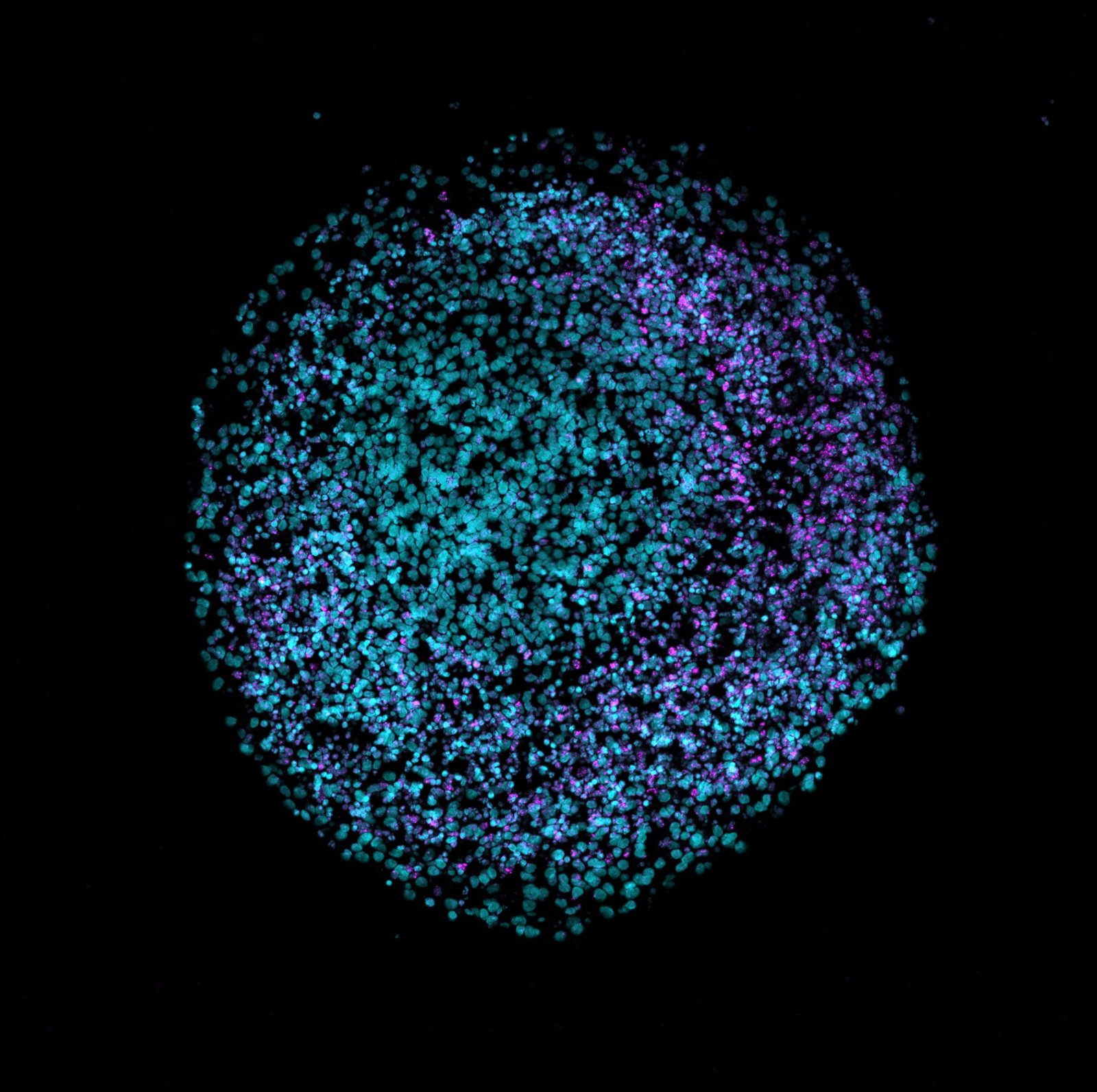
Lab-grown “mini brains” carrying genes linked to Alzheimer’s disease spent 40 days aboard the International Space Station — and the way they changed in orbit depended on which gene they carried, researchers at the University of California San Diego have reported.
The study, published on Tuesday in the journal Science Advances, is the first to send human brain organoids modelling Alzheimer’s into space. Organoids are small, three-dimensional pieces of neural tissue grown from stem cells that reproduce some features of the human brain. The team grew organoids carrying mutations in APP, PSEN1 or PSEN2 — three genes behind rare inherited forms of Alzheimer’s — alongside healthy control organoids without those mutations. In March 2024, the Alzheimer’s-model organoids flew to the space station, where they were monitored for more than 40 days before returning to Earth. Matching organoids stayed on the ground under nearly identical laboratory conditions.
The responses split sharply along genetic lines. Organoids with an APP mutation produced more amyloid-beta 42, a protein fragment particularly prone to clumping into the plaques found in Alzheimer’s brains. Those carrying a PSEN2 mutation showed higher levels of a disease-linked, chemically modified form of tau, the protein that forms tangles inside nerve cells. Organoids with a PSEN1 mutation changed most broadly: 7,404 genes differed in activity between the space-flown samples and the ground controls, compared with 643 in the PSEN2 models.
The team also found changes in genes involved in signalling between nerve cells, in how cells produce energy and in how they process RNA, the molecule cells use to make proteins. Space exposure altered both GABAergic and glutamatergic signalling — pathways whose dysfunction often appears as Alzheimer’s develops.
One protein rose in every group after the flight. CIRBP helps cells cope with environmental and physical stress, and the researchers found shifts in the networks connecting it to nerve-cell signalling and other processes. They describe it as a candidate shared stress marker for further study, not a confirmed one.
“We often talk about Alzheimer’s as though it follows one predictable path,” said Alysson R. Muotri, professor at the UC San Diego School of Medicine and senior author of the study. “Understanding those differences could lead to more targeted treatments for this devastating disease.”
The findings are exploratory, and the researchers stress their limits. Brain organoids are simplified models of brain tissue, not miniature brains, and the mutations studied relate to only a small number of Alzheimer’s cases in people. What the study does not show is how the changes seen in orbit relate to the disease in patients. Its value, the team argues, is that spaceflight — with its microgravity and radiation — can bring out changes in brain cells that are hard to detect on Earth, offering a new setting in which to study neurodegeneration. The work was funded in part by the National Science Foundation, NASA and the Alzheimer’s Association.
Sources: UC San Diego, “UC San Diego Brain Organoids in Space Reveal New Clues to Alzheimer’s Disease” (https://today.ucsd.edu/story/uc-san-diego-brain-organoids-in-space-reveal-new-clues-to-alzheimers-disease); Moreira et al., “Spaceflight reshapes Alzheimer’s disease–associated molecular programs in human brain organoids”, Science Advances (https://www.science.org/doi/10.1126/sciadv.aei3430).