








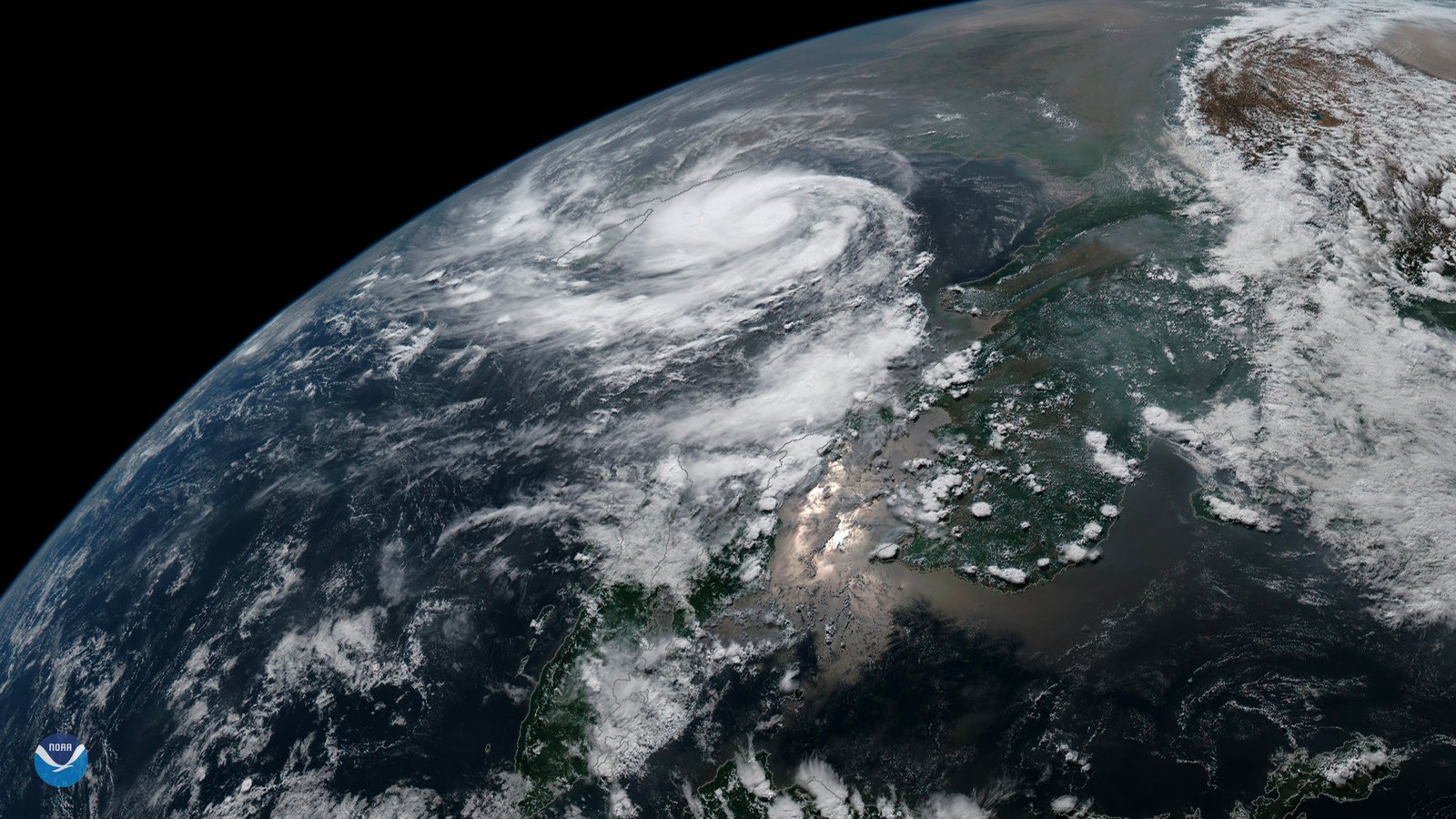
Cyclone Murasu formed over the Bay of Bengal on Sunday, prompting coastal alerts, evacuations and school closures across eastern India ahead of its expected landfall on the southern Andhra Pradesh coast.
The India Meteorological Department (IMD) said the storm, which developed from a deep depression, was moving west-northwestwards and was expected to strengthen into a severe cyclonic storm during the early hours of Monday, 2 November. It is forecast to cross the coast between Nellore and Narsapur, close to Ongole in Prakasam district, between 11.30 p.m. IST on 2 November and 4 a.m. IST on 3 November, with sustained winds of 100 to 110 kilometres per hour and gusts reaching 120 kilometres per hour.
In its Sunday evening bulletin, the IMD placed the storm roughly 420 kilometres east-southeast of Chennai and 490 kilometres east-southeast of Nellore, moving at about 25 kilometres per hour. Forecasters warned of heavy to extremely heavy rainfall over coastal Andhra Pradesh on 2 and 3 November, with the districts of Nellore, Prakasam, Guntur, Krishna and Bapatla among the most exposed. Fishermen have been advised not to venture into the sea from 2 to 4 November, as sea conditions across the west-central and adjoining Bay of Bengal turn hazardous.
Andhra Pradesh Chief Minister N. Chandrababu Naidu cancelled a scheduled visit to New Delhi on Monday to oversee preparations, directing officials to issue status bulletins every four hours, pre-position rescue teams and publish timelines for restoring electricity. State estimates cited in local reporting put some 15,128 electricity poles across 12 districts at risk from high winds, and flagged 20 mandals facing extremely heavy rainfall on 3 November. Tamil Nadu ordered schools in Chennai and Tiruvallur closed on Monday as a precaution.
Further north, southern Odisha was placed on high alert, with rainfall expected from 2 November and intensifying on 3 and 4 November. Authorities in Gajapati district ordered residents evacuated from low-lying and hilly areas by Monday afternoon, identifying around 150 landslide-prone locations, while teams from the National Disaster Response Force and the Odisha Disaster Rapid Action Force were placed on standby. Officials in Andhra Pradesh have also sought personnel and machinery from Tamil Nadu and Karnataka to help restore electricity infrastructure after the storm passes.
Murasu is the second cyclonic storm to develop in the Bay of Bengal in under a week, after Cyclone Arnab made landfall in Andhra Pradesh on 28 October with winds reaching up to 150 kilometres per hour. In neighbouring Odisha, Arnab affected 118,000 people and damaged more than 75,000 hectares of crops and over 1,600 houses, leaving relief teams still managing recovery work as the new system approaches. The IMD also noted that October 2026 recorded India’s highest average maximum temperature for the month since records began in 1901 — a reminder of the warmer backdrop against which the storm season is unfolding.
Sources: India Meteorological Department bulletins (https://mausam.imd.gov.in) and reporting of those bulletins by Mint, Hindustan Times, The Hindu and The Times of India, via https://blazetrends.com/cyclone-murasu-forms-in-bay-of-bengal-set-to-hit-andhra-coast-by-nov-3/