








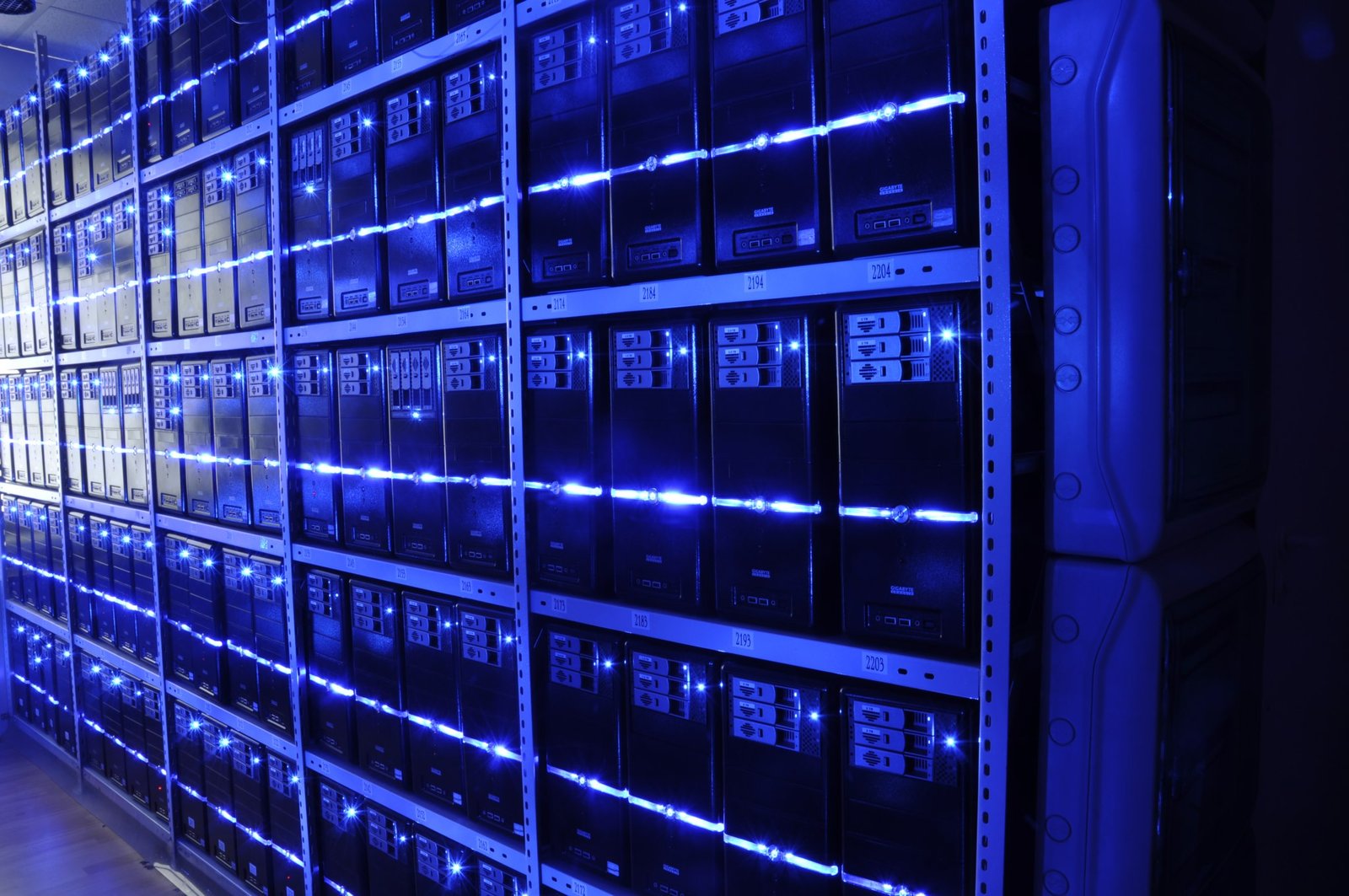
Shares in the manufacturing, utility and mining companies tied to building data centres have lost $4.2 trillion in market value since June, as investor enthusiasm for the artificial intelligence build-out turns sharply into reverse.
The sell-off, documented in an analysis by the Financial Times, has wiped out nearly half of the $9.4 trillion these companies added over the previous 12 months. It marks a dramatic reversal for the so-called “picks and shovels” trade — the bet that the firms supplying the AI boom would profit whatever happened to the technology companies themselves.
Caterpillar, a leading supplier of gas generators to data centres, has been hit hardest in cash terms. The company has lost $214 billion in market capitalisation, or 44 per cent, since its shares reached a record high on 30 June, according to FactSet data. Nuclear power company Oklo has fallen 49 per cent despite signing a contract with Meta in January, while Comfort Systems and fibre-optics maker Corning have each lost about half of their value over the same period.
Investors piled into industrial and energy stocks linked to data centres in the first half of 2026. That trend has swung into reverse since June, as concerns mount over debt-funded capital spending by the big technology companies and political opposition to new facilities in the United States. The industrial sector is now the second-worst performer in the S&P 500 since the summer, behind only technology.
Paul Kedrosky, a venture capitalist and fellow at the Massachusetts Institute of Technology, said investors had been wrong to value traditional industrial companies like semiconductor stocks. Brett Ryan, senior US economist at Deutsche Bank, said institutional money had piled into the trade too aggressively, pushing valuations to overly enthusiastic levels as equity markets catch up with credit market concerns over the risky financing behind data-centre construction.
Yet the operating backdrop, by several measures, remains strong. US spending on data-centre construction, excluding IT equipment and chips, reached $96 billion in the 12 months to September, according to the latest government data. Alex Cordovil of Dell’Oro Group said revenue and earnings prospects remain robust because demand still far exceeds supply.
Corporate order books also continue to show strength. Caterpillar reports a record $78 billion backlog and 75 per cent year-on-year growth in power generation sales driven by data-centre demand. Siemens says orders for electrical equipment from data centres have risen 60 per cent in 2026 to €7 billion, and Eaton reports that orders have doubled from a year earlier. Allient chief executive Richard S. Warzala told investors on a 5 November earnings call that data centres already under construction still need to be completed.
Kedrosky cautioned, however, that backlogs and orders are trailing indicators and may reflect double or triple ordering by buyers trying to secure scarce capacity. Researchers at Citi said that, after this month’s midterm elections, tighter regulation could increase volatility for the data-centre industry, although broad restrictions on construction remain unlikely.
The divergence between tumbling share prices and still-growing order books leaves the central question of the AI boom unresolved: whether the vast spending on computing infrastructure will generate returns to match, or whether investors have simply arrived at that doubt ahead of the companies doing the building.
Sources: Financial Times, “Data centre construction stocks lose $4.2tn as boom in AI trade unravels” (15 November 2026), as reported by Traders Union — https://tradersunion.com/news/stocks/show/4251110-data-centre-industrial-stocks-ai-loss/
Note: The market figures in this article come from a single source, the Financial Times analysis, drawing on FactSet data; the FT article itself is paywalled and was read here through its syndicated summary.